Ancient Nanjing Yunjin Drawloom Weaving in 2026 Xin Zhongshi Fashion
The Resurgence of Nanjing Yunjin in 2026 Xin Zhongshi Design
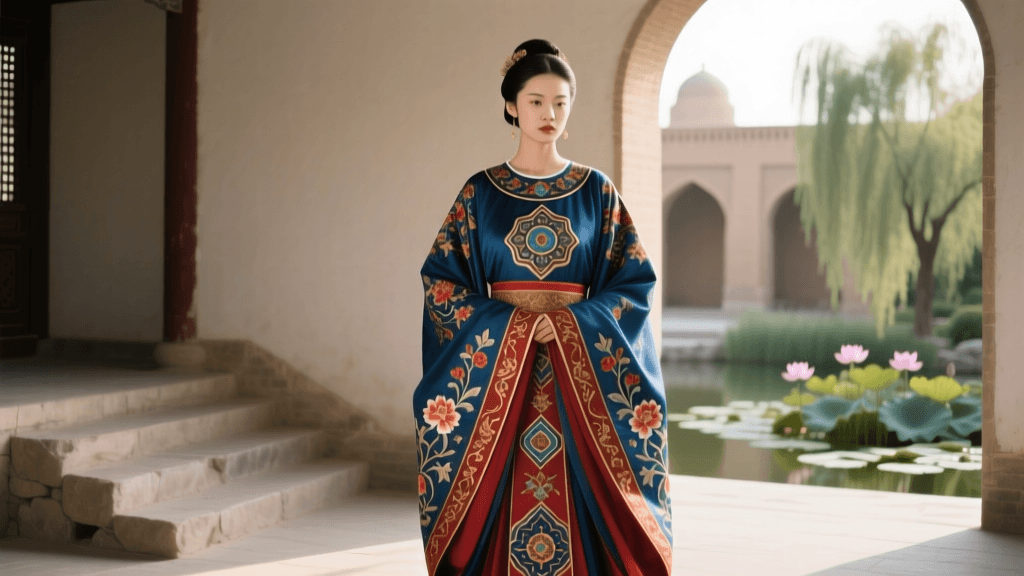
The Xin Zhongshi (New Chinese Style) movement has undergone a radical and necessary transformation by 2026. Moving far beyond the superficial application of printed motifs or mass-produced mandarin collars, contemporary designers and heritage artisans are now focusing on structural authenticity and textile integrity. At the very pinnacle of this material renaissance is Nanjing Yunjin, or Cloud Brocade, a fabric so complex and labor-intensive that it remains one of the few textiles in the world that cannot be fully replicated by modern automated machinery. Woven exclusively on the traditional Da Hua Lou Ji (large drawloom), Yunjin represents the zenith of ancient Chinese weaving technology. In 2026, as global fashion weeks in Shanghai, Paris, and Milan increasingly spotlight heritage craftsmanship, understanding the mechanics, sourcing, and application of hand-loomed Yunjin is essential for serious collectors, historians, and avant-garde designers alike.
Recognized for its breathtaking complexity, the Nanjing Yunjin brocade technique is inscribed on the UNESCO Representative List of the Intangible Cultural Heritage of Humanity. This global acknowledgment has spurred a new generation of weavers and fashion houses to invest heavily in preserving the wooden drawlooms, ensuring that the ancient binary logic of the loom continues to produce textiles that define luxury in the modern era.
Anatomy of the Da Hua Lou Ji: The Ancient Drawloom
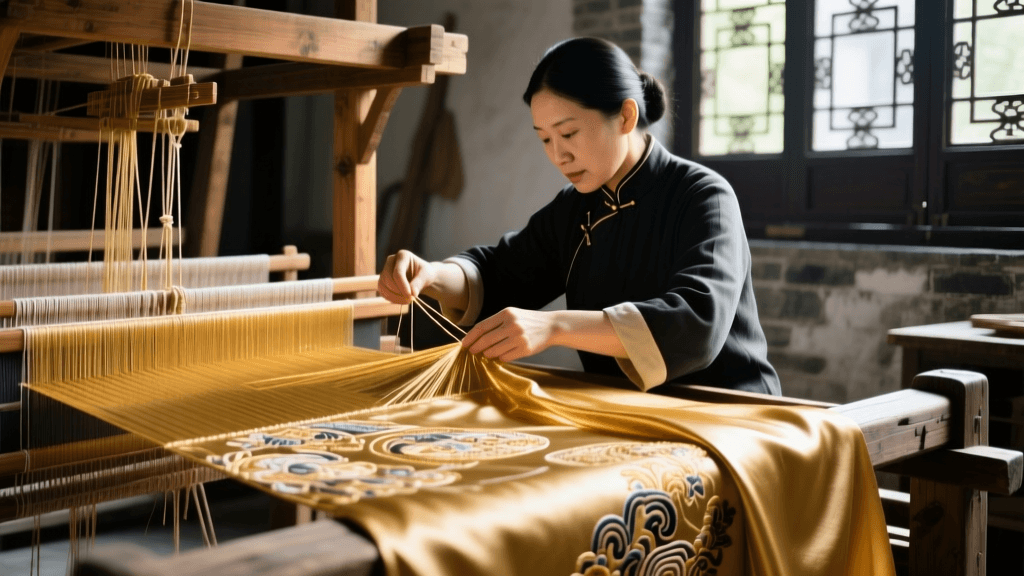
To understand the value of Yunjin brocade in contemporary fashion, one must first understand the formidable machinery required to create it. The traditional Da Hua Lou Ji is a massive wooden structure, typically measuring 5.6 meters in length, 1.4 meters in width, and nearly 4 meters in height. Unlike standard treadle looms operated by a single artisan, the Yunjin drawloom requires a highly synchronized two-person operation.
The Programmer and the Weaver
The operation is divided between two distinct roles. The upper weaver, known as the tiao hua (pattern puller), sits atop the towering loom. Their responsibility is to pull the specific warp threads according to a complex, pre-programmed knotting system to create the intricate shed for the pattern. Below sits the zhi hua (weaver), who operates the treadles, passes the shuttles, and beats the weft threads into place. The coordination between the two is flawless; a single miscommunication or pulled thread can ruin months of work. In 2026, master weaving duos are treated with the same reverence as haute couture atelier heads, with top artisans commanding exclusive contracts with major Xin Zhongshi fashion houses.
The Ancient Binary Code of Silk
Long before the advent of the Jacquard mechanism in 19th-century France, Chinese weavers utilized a sophisticated system of knotted cords to 'program' the drawloom. As detailed in historical analyses of Chinese silk weaving traditions by the Metropolitan Museum of Art, these cord systems acted as an early form of binary code. Each knot represented a specific instruction for lifting warp threads, allowing the weavers to memorize and reproduce incredibly complex, asymmetrical patterns featuring dragons, phoenixes, and cloud motifs without the need for paper drafts. Today, translating digital 2026 CAD designs back into these physical knot-programs is a specialized skill, bridging the gap between modern digital design and ancient mechanical execution.
Material Innovations and Authentic Threads in 2026
Authentic Nanjing Yunjin is renowned for its incorporation of precious materials. Historically, this included peacock feather yarn, gold foil threads, and silver threads woven directly into the mulberry silk warp. In 2026, while traditional materials remain highly sought after for bespoke pieces, the industry has seen the introduction of ethically sourced, lab-grown structural silk blends and advanced metallic yarns that mimic the historical weight and luster without compromising the drape required for modern tailored garments.
- Traditional Gold Thread: Made by flattening gold leaf onto paper or animal membrane and cutting it into micro-strips. It provides an unparalleled, soft luster but is highly fragile.
- 2026 Modern Metallic Blends: Tarnish-resistant, flexible metallic polymers wrapped around a silk core. These are preferred for ready-to-wear Xin Zhongshi outerwear that requires dry-cleaning and frequent movement.
- Peacock Feather Yarn: Still spun by hand, twisting the iridescent barbs of naturally molted peacock feathers with silk. It is used sparingly as a highlight thread in 2026 couture pieces due to its extreme cost and delicate nature.
Sourcing Authentic Yunjin: Market Pricing and Availability
For designers and collectors looking to source authentic, hand-loomed Nanjing Yunjin in 2026, the market is highly regulated and fiercely competitive. True hand-loomed Yunjin cannot be rushed; a skilled team can produce only 5 to 6 centimeters of fabric per day. Consequently, the pricing reflects the immense labor and material costs.
As of early 2026, authentic hand-loomed Yunjin brocade ranges from 12,000 RMB to 28,000 RMB (approximately $1,650 to $3,850 USD) per meter, depending on the density of the gold thread and the complexity of the pattern. By contrast, modern AI-assisted Jacquard reproductions, while visually similar from a distance, lack the structural depth, the distinctive 'watermark' back-weave, and the cultural provenance of the drawloom originals.
Comparison Chart: Hand-Loomed Yunjin vs. 2026 Jacquard Replicas
| Feature | Authentic Hand-Loomed Yunjin (Da Hua Lou Ji) | 2026 AI-Assisted Jacquard Replica |
|---|---|---|
| Production Time | 5-6 cm per day (approx. 2 months per garment length) | 50 meters per hour |
| Weight & Drape | Heavy (120-150 gsm), structured, sculptural drape | Light to Medium (60-90 gsm), fluid, standard drape |
| Reverse Side | Distinctive floating threads, complex tie-downs | Clean, often backed with synthetic stabilizer |
| Thread Materials | Mulberry silk, real gold leaf, peacock feather | Rayon/Polyester blends, synthetic metallic foil |
| Average Cost (per meter) | 12,000 - 28,000 RMB | 150 - 400 RMB |
| Best Use in Xin Zhongshi | Haute couture, heirloom jackets, structural corsets | Ready-to-wear blouses, flowing skirts, linings |
Integrating Heavy Brocade into Modern Tailoring
One of the primary challenges for Xin Zhongshi designers in 2026 is adapting the heavy, sculptural nature of hand-loomed Yunjin to modern silhouettes. Traditional garments, such as the Ming Dynasty mamianqun (horse-face skirt) or the ruqun, were designed to accommodate the stiff drape of the brocade through pleating and flat-cutting techniques. Modern tailoring, which relies on darts, bias cutting, and close-fitting seams, requires a different approach.
Drape Analysis and Structural Support
When designing a modern Xin Zhongshi blazer or structured coat using authentic Yunjin, designers must treat the fabric more like a lightweight upholstery or tapestry than standard apparel silk. The high warp density (often exceeding 14,000 threads) means the fabric does not ease well around tight curves. To solve this, 2026 patternmakers are utilizing 'floating' interfacings and internal corsetry to support the weight of the brocade, allowing the garment to maintain its architectural shape without pulling at the delicate gold threads. Seams are often finished with silk organza binding to prevent the heavy metallic wefts from fraying or cutting through the silk warp over time.
Archival Storage and Care for Yunjin Garments
Given the investment required to acquire a hand-loomed Yunjin garment, proper storage and maintenance are non-negotiable. The presence of real gold leaf and organic protein fibers (silk and peacock feathers) makes these garments highly susceptible to environmental damage. According to the Canadian Conservation Institute's guidelines on textile preservation, fluctuating humidity and improper folding are the primary enemies of historic and luxury textiles.
- Never Fold the Gold: Folding authentic Yunjin can cause the gold leaf threads to crack, flake, and permanently break. Garments must be stored flat in archival, acid-free tissue paper or rolled around acid-free cardboard tubes.
- Climate Control: Maintain a stable environment with a relative humidity (RH) of 45% to 55% and a temperature around 18°C to 20°C (64°F to 68°F). High humidity will cause the silk to mildew, while low humidity will make the fibers brittle.
- Light Exposure: Keep garments away from direct sunlight and unfiltered UV lighting. The dyes used in traditional Yunjin, while vibrant, are organic and will fade rapidly under UV exposure.
- Cleaning: Never wash or dry-clean authentic gold-thread Yunjin. The chemical solvents used in modern dry cleaning will strip the gold leaf from its membrane base. Surface dust should be gently removed using a low-suction vacuum with a micro-screen attachment.
Conclusion: The Future of the Ancient Loom
As we navigate the fashion landscape of 2026, the integration of Nanjing Yunjin drawloom weaving into the Xin Zhongshi movement represents a profound dialogue between the past and the future. It is a rejection of fast fashion's ephemeral nature in favor of garments that carry the literal weight of history, coded into the very structure of the silk. For those willing to invest the time, capital, and care required to work with these ancient textiles, the Da Hua Lou Ji offers not just a fabric, but a wearable masterpiece of human ingenuity.