Nanjing Yunjin Loom Weaving Techniques for 2026 Fashion
The Renaissance of the Drawloom in 2026 Xin Zhongshi Fashion
As the global fashion industry moves deeper into 2026, the Xin Zhongshi (New Chinese Style) movement has evolved far beyond superficial digital printing on silk. Today’s most discerning designers and heritage houses are returning to the structural roots of Asian traditions, specifically the ancient Chinese drawloom. At the pinnacle of this revival is Nanjing Yunjin, or 'Cloud Brocade,' a textile so complex and historically significant that it remains a masterpiece of human engineering. Recognized by the UNESCO Intangible Cultural Heritage list, Yunjin weaving represents the zenith of traditional Chinese silk craftsmanship. In 2026, integrating these ancient weaving techniques into modern garments requires a deep understanding of the loom's mechanics, the meticulous preparation of materials, and the precise execution of pattern drafting.
Anatomy of the Traditional Chinese Drawloom
To understand the 2026 application of Yunjin, one must first understand the vessel of its creation: the Dahualou, or large drawloom. This monumental wooden structure is a two-story engineering marvel, typically measuring 5.6 meters in length and 4 meters in height. The loom requires two artisans to operate in perfect synchronicity. On the ground level sits the primary weaver, who manages the shuttle, the beat-up process, and the tension of the warp threads. Above, perched on the 'flower tower' (huaben), sits the drawboy (or in modern heritage studios, a highly trained pattern-puller).
The drawboy's role is to pull the specific harness cords that lift the exact warp threads required to create the intricate brocade pattern. Historically, this required memorizing thousands of cord sequences. In 2026, while the physical act of pulling the cords remains entirely human to preserve the textile's authentic tension and soul, heritage studios have integrated non-invasive optical sensors on the harnesses. These sensors archive the 'drawboy memory' into digital ledgers for preservation without altering the physical mechanics of the wooden loom, ensuring the ancient technique survives for future generations.
Step-by-Step: The Ancient Weaving Process
1. Silk Degumming and Eco-Dyeing
The journey of a Yunjin garment begins long before the loom is threaded. Raw silk contains sericin, a natural gum that makes the threads stiff and dull. In 2026, master weavers utilize advanced enzymatic degumming baths that operate at precisely 45°C, stripping the gum without damaging the fibroin core of the silk. This yields a thread that is exceptionally soft and highly receptive to dyes. Following degumming, the silk is dyed using traditional botanical sources—such as indigo for deep blues and safflower for vibrant crimson. The 2026 standard for premium Xin Zhongshi brands demands these natural dyes, as they provide a depth of color and a subtle, organic variation that synthetic alternatives cannot replicate.
2. Warp Preparation and Loom Threading
Threading the drawloom is a painstaking process that can take several weeks for a single setup. A standard Yunjin loom may hold over 14,000 individual warp threads. Each thread must be passed through the heddles and the reed in a mathematically perfect sequence. The Metropolitan Museum of Art's Heilbrunn Timeline notes that the complexity of Chinese silk weaving has historically relied on this meticulous warp preparation, which dictates the foundational structure of the brocade. In 2026, artisanal collectives use laser-guided alignment tools to ensure the tension across all 14,000 threads is uniform down to the gram, preventing the catastrophic thread snaps that historically plagued the weaving process.
3. The 'Pick-and-Pull' Pattern Mechanism
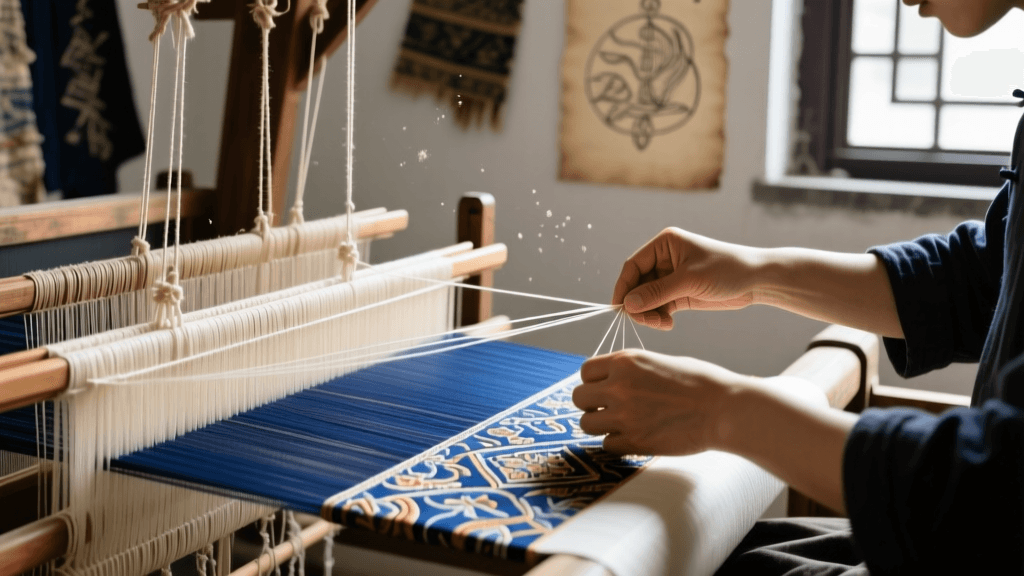
The true magic of the drawloom lies in the 'pick-and-pull' (tiao-hua) technique. Unlike a standard Jacquard loom which uses punch cards or digital files to automate pattern lifting, the traditional drawloom relies on a physical knotting system. The pattern is pre-programmed into a complex web of cords. When the weaver below needs a specific pattern shed, they signal the drawboy above. The drawboy pulls the corresponding bundle of cords, lifting only the precise warp threads needed for that single pass of the weft. This allows for the incorporation of supplementary wefts, including peacock feather filaments and flattened gold or silver leaf threads, which are laid into the shed by hand.
4. Weft Insertion and Beating
Once the shed is open, the weaver passes the shuttle carrying the weft thread. For Yunjin, multiple shuttles are used interchangeably to introduce different colors and metallic threads within the same weft line. After the shuttle passes, the weaver uses a heavy wooden batten to beat the weft tightly against the previous row. The density of a 2026 authentic Yunjin brocade is astonishing, often featuring over 120 weft picks per centimeter, resulting in a fabric that is heavy, structured, and incredibly durable.
Translating Ancient Motifs for 2026 Runways
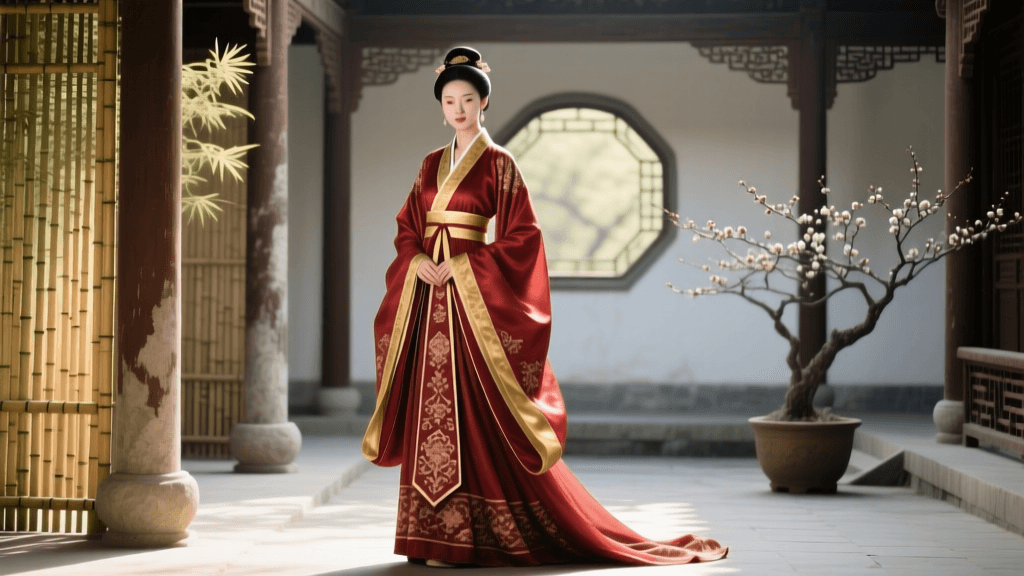
In 2026, the Xin Zhongshi movement is characterized by a departure from rigid, symmetrical historical reproductions toward dynamic, asymmetrical interpretations of classic motifs. The traditional 'Mang' (python) and 'Feiyu' (flying fish) motifs, once strictly regulated by imperial sumptuary laws, are now being deconstructed. Designers are utilizing the drawloom's capability to create 'floating' brocade patterns, where the gold thread only emerges on the interior lining of a tailored jacket, or where the pattern deliberately fades into a plain weave at the garment's hem. This requires the drawboy and weaver to improvise within the ancient cord system, blending 1,500-year-old structural rules with avant-garde 2026 aesthetics.
2026 Production Metrics: Heritage Handloom vs. Hybrid Looms
For fashion houses and collectors navigating the 2026 market, understanding the production realities of Yunjin is critical for pricing and sourcing. The table below outlines the current landscape of Yunjin production.
| Loom Type | Daily Output | Cost per Meter (USD) | Authenticity Certification | Primary 2026 Use Case |
|---|---|---|---|---|
| Traditional Dahualou (Handloom) | 5 - 6 cm | $1,500 - $3,200 | UNESCO Heritage Guild Seal | Haute Couture, Museum Archives, Bridal |
| 2026 Optical-Assisted Handloom | 15 - 20 cm | $600 - $900 | Nanjing Silk Institute Verified | Premium Xin Zhongshi Ready-to-Wear |
| Modern Digital Jacquard | 500+ cm | $45 - $80 | None (Classified as Imitation) | Mass Market Fast Fashion, Linings |
As the data illustrates, authentic hand-loomed Yunjin is an investment-grade textile. The painstakingly slow output of 5 to 6 centimeters per day on a traditional Dahualou ensures that a single meter of fabric represents over two weeks of continuous, coordinated labor by two master artisans.
Sourcing and Caring for Authentic Yunjin in 2026
With the surge in Xin Zhongshi popularity, the market has seen an influx of Jacquard-woven imitations marketed as 'Cloud Brocade.' To source authentic Yunjin in 2026, buyers must look for the microscopic holographic selvedge thread introduced by the Nanjing Yunjin Institute in late 2025. This thread, woven into the edge of the fabric on the drawloom, contains a serialized QR code that links directly to the specific loom, the master weaver, and the exact dates of production.
Once acquired, caring for Yunjin requires strict environmental controls. The metallic threads (gold and silver leaf wrapped around a silk core) are highly susceptible to oxidation and friction. Garments must be stored flat in acid-free, unbuffered tissue paper within cedar chests. The storage environment must be maintained at a strict relative humidity (RH) of 45% to 55% and a temperature of 18°C to 20°C. Exposure to direct UV light will not only fade the botanical dyes but also degrade the protein structure of the silk fibroin, leading to the shattering of the metallic threads.
Conclusion
The survival and 2026 renaissance of the Nanjing Yunjin drawloom is a testament to the enduring power of Asian textile traditions. By refusing to compromise on the structural integrity of the 'pick-and-pull' mechanism, modern heritage studios are ensuring that the tactile richness, three-dimensional depth, and historical soul of ancient Chinese weaving remain intact. For the contemporary fashion industry, the drawloom is not merely a relic of the Silk Road; it is a living, breathing technology that continues to define the absolute pinnacle of luxury and cultural expression in the 21st century.