Nanjing Yunjin Drawloom Weaving: A 2026 Masterclass
The Resurgence of Cloud Brocade in 2026
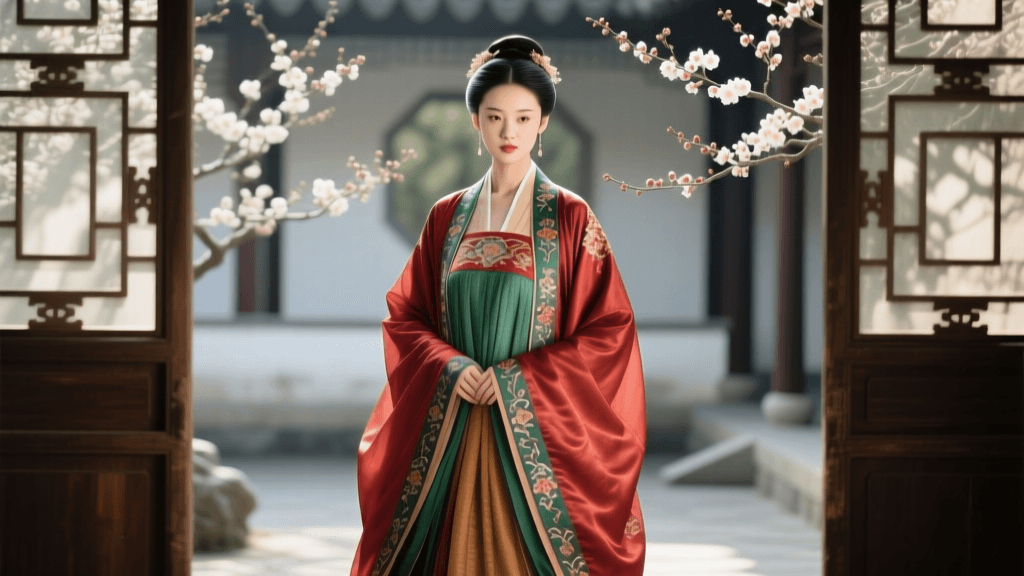
Nanjing Yunjin, translating to "cloud brocade," represents the absolute pinnacle of ancient Chinese silk weaving. Renowned for its intricate patterns, vibrant colors, and the incorporation of precious materials like gold leaf and peacock feathers, this textile was historically reserved for imperial dragon robes. Today, in 2026, the craft is experiencing an unprecedented renaissance. Driven by the explosive global popularity of the Xin Zhongshi (new Chinese style) movement, contemporary fashion houses and heritage artisans are collaborating to integrate Yunjin motifs into modern silhouettes, from modified Mamianqun (horse-face skirts) to structured contemporary blazers.
Despite advancements in digital textile manufacturing, authentic Nanjing Yunjin cannot be replicated by modern power looms. The complexity of its color transitions and the structural integrity of its discontinuous weft require the synchronized effort of human hands and minds. Recognizing its irreplaceable cultural value, the craft was inscribed on the UNESCO Representative List of the Intangible Cultural Heritage of Humanity. As we navigate 2026, understanding the mechanics of the traditional drawloom is essential for textile historians, fashion designers, and cultural preservationists alike.
The Anatomy of the Da Hua Lou Drawloom
The traditional loom used for weaving Yunjin is known as the Da Hua Lou (large floral drawloom). It is a massive, imposing wooden structure that measures approximately 4 meters in length, 1.4 meters in width, and 2.1 meters in height. Unlike standard treadle looms operated by a single weaver, the Da Hua Lou requires a two-person team working in perfect synchronization.
The Roles of the Weaver and the Drawboy
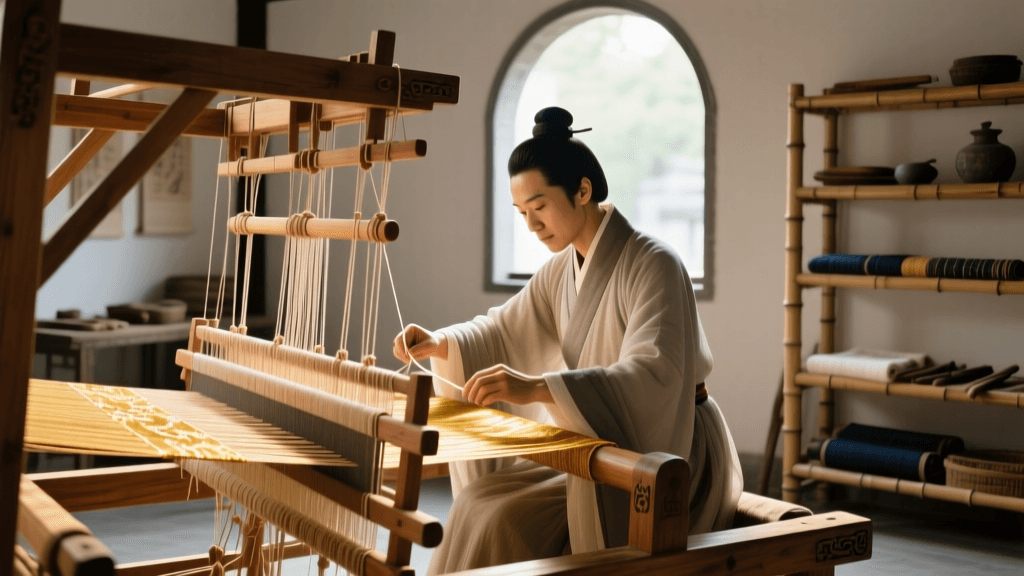
- The Weaver (Bottom): Seated at the lower front of the loom, the master weaver controls the treadles to open the foundation warp sheds. They are responsible for passing the weft threads, beating the weft into place with a heavy wooden reed, and managing the intricate color changes of the discontinuous weft.
- The Drawboy (Top): Positioned on a raised platform at the top of the loom, the "puller" or drawboy manages the pattern harness. This harness consists of thousands of knotted cords, each corresponding to a specific warp thread. Following a complex, memorized sequence (or a digital prompt in modernized 2026 studio setups), the drawboy pulls specific cords to lift the exact warp threads needed to create the intricate brocade pattern.
The communication between the two is a rhythmic, almost musical exchange of calls and responses, ensuring that the pattern harness is lifted at the exact millisecond the weaver is ready to pass the shuttle.
Ancient Technique: Tong Jing Duan Wei
The defining technical achievement of Nanjing Yunjin is the Tong Jing Duan Wei (通经断纬) technique, which translates to "continuous warp, discontinuous weft." According to historical textile analyses documented by institutions like The Metropolitan Museum of Art, Chinese silk weaving has long pushed the boundaries of structural textile design, but Yunjin takes this to its zenith.
In standard weaving, the weft thread passes continuously from one edge of the fabric to the other (selvedge to selvedge). In Tong Jing Duan Wei, the weft threads are only woven where their specific color is needed for the pattern. The weaver uses dozens of small, individual bobbin shuttles, each carrying a different colored silk or metallic thread. When a color area ends, the weft is "broken" or turned back on itself, interlocking with the adjacent color weft.
Advantages of Discontinuous Weft
This technique allows for an unlimited color palette within a single weft row without creating long, messy "floats" of unused thread on the back of the fabric. The result is a textile that is structurally sound, relatively lightweight despite its visual density, and features a reversible back that is nearly as clean as the front. In 2026, mastering this technique remains the ultimate benchmark for a Yunjin artisan, often requiring a decade of apprenticeship.
2026 Market Context: Yunjin in the Xin Zhongshi Era
The intersection of heritage craft and modern luxury has created a booming market for authentic Yunjin in 2026. With the Xin Zhongshi aesthetic dominating Asian international design weeks, demand for hand-woven cloud brocade has outpaced the supply of master weavers.
Current Pricing and Material Sourcing
As of 2026, authentic, hand-woven Nanjing Yunjin fabric retails between ¥18,000 and ¥45,000 per meter, depending on the density of gold thread and the complexity of the motif. Artisans are increasingly sourcing premium 20/22 denier raw mulberry silk from sustainable sericulture cooperatives in Zhejiang and Jiangsu provinces. Furthermore, the use of ethically sourced, naturally molted peacock feather threads has become a hallmark of high-end 2026 couture collections, replacing historical practices that were less ecologically mindful.
Comparing Loom Technologies in 2026
While purists maintain the use of all-wooden antique looms, many contemporary heritage studios in 2026 have adopted hybrid technologies to assist the drawboy and reduce physical strain, without compromising the hand-woven nature of the textile.
| Feature | Traditional Da Hua Lou (Wooden) | 2026 Hybrid Jacquard-Drawloom |
|---|---|---|
| Pattern Control | Manual knotted cord harness (Drawboy) | Computer-assisted harness lifting (Pedal/Button) |
| Weft Insertion | 100% Manual (Hand shuttles) | 100% Manual (Hand shuttles) |
| Production Speed | 5 to 6 centimeters per day | 12 to 15 centimeters per day |
| Setup Time | 3 to 6 months for harness knotting | 2 weeks for digital harness mapping |
| Market Value (2026) | ¥35,000+ per meter (Collector Grade) | ¥18,000+ per meter (Couture Grade) |
It is crucial to note that in the 2026 Hybrid model, the Tong Jing Duan Wei discontinuous weft insertion remains entirely manual. The machine only assists in lifting the warp threads, preserving the textile's classification as hand-woven brocade.
Step-by-Step: Preparing the Warp for a Yunjin Loom
For textile students and heritage enthusiasts setting up study looms, preparing the warp is the most mathematically rigorous phase of the process. A standard Yunjin warp density ranges from 110 to 130 ends per centimeter.
- Silk Sizing (Jiang Sha): Raw mulberry silk is incredibly fine and prone to snapping under the high tension of the drawloom. The warp threads must be sized using a traditional rice starch or modern bio-polymer solution. In 2026, eco-friendly enzymatic sizing agents are preferred to prevent long-term degradation of the silk fibers.
- Warping the Creel: The sized threads are loaded onto a massive creel. Because the warp is continuous, thousands of threads must be measured to the exact same length (usually 20 to 30 meters for a production run) and aligned with zero cross-overs.
- Threading the Heddles: Each individual warp thread is passed through the eye of a heddle on the foundation harness. This dictates the basic weave structure (usually a satin or twill ground).
- Reeding: The threads are then drawn through the dents of the reed. For a heavy brocade, multiple warp ends (often 3 or 4) are grouped into a single dent to provide the necessary structural backbone for the heavy metallic wefts.
- Tying the Pattern Harness: For traditional looms, the drawboy harness is tied. A single pattern repeat might require 14,000 individual knots. This process, known as "picking the flowers," is essentially physical programming, translating the graph paper design into a three-dimensional matrix of cords.
"The loom is not merely a tool; it is a binary computer made of wood and silk. Every knot tied by the drawboy is a line of code that dictates the emergence of the dragon from the cloud." — 2026 Nanjing Intangible Heritage Institute Symposium.
Preservation and the Future of the Craft
The survival of Nanjing Yunjin drawloom weaving in 2026 relies on a delicate balance between uncompromising traditional standards and innovative market applications. While the Xin Zhongshi movement has provided the financial lifeblood necessary to fund new apprenticeships, the core challenge remains the physical toll of the craft. Initiatives to improve the ergonomics of the Da Hua Lou, combined with global academic research into ancient textile preservation, ensure that the cloud brocade will continue to weave its way through the fabric of Asian cultural history for generations to come. For designers and collectors, investing in authentic Yunjin is not just a purchase of luxury fabric; it is the active sponsorship of human ingenuity and ancient engineering.