Reviving Chinese Drawlooms & Kesi Weaving in 2026
The Intersection of Ancient Tech and 2026 Fashion
As the global fashion landscape moves deeper into 2026, the Xin Zhongshi (New Chinese Style) movement has transcended its origins as a niche aesthetic to become a dominant force in luxury and ready-to-wear markets. At the very heart of this sartorial renaissance lies a profound appreciation for ancient textile engineering. Today’s most coveted garments are not merely inspired by historical silhouettes; they are woven on replicas of ancient Chinese traditional looms, utilizing techniques that predate modern computing by centuries. For collectors, designers, and cultural enthusiasts, understanding the mechanics of the traditional Chinese drawloom and the delicate art of Kesi (cut silk) tapestry is essential to navigating the 2026 luxury textile market.
The Engineering Marvel of the Hualou Drawloom
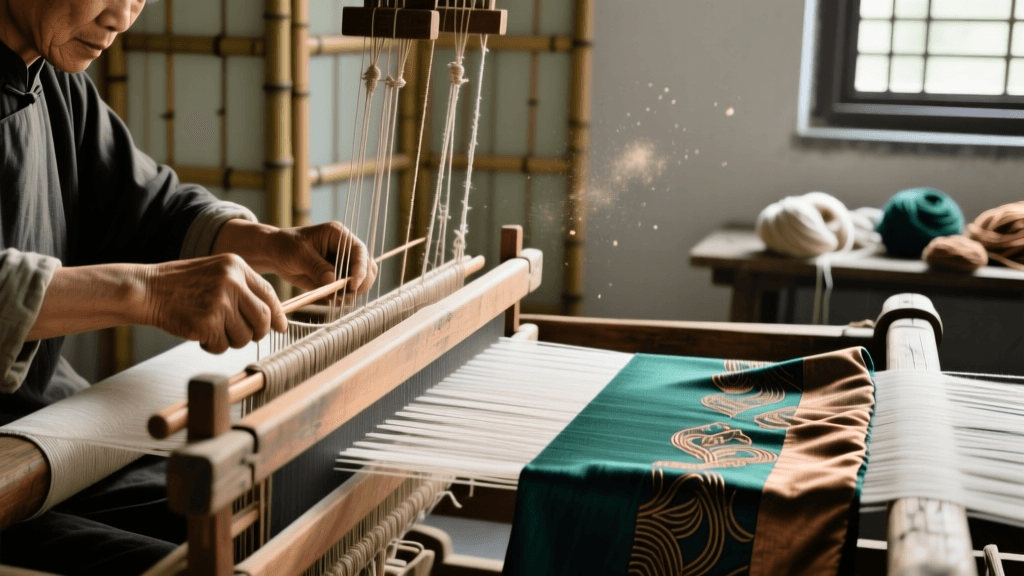
The traditional Chinese drawloom, known as the Hualou (花楼), is a colossal wooden structure that represents the pinnacle of pre-industrial mechanical engineering. Measuring up to 5 meters in length and 4 meters in height, the Hualou is the direct ancestor of the Jacquard loom. According to the UNESCO Intangible Cultural Heritage archives, the weaving of Nanjing Yunjin (Cloud Brocade) on this loom requires an intricate duet between two highly skilled artisans.
The weaver sits at the front of the loom, operating the treadles and shuttle to interlace the weft threads. Meanwhile, the "drawboy" (or in modern 2026 studios, a second master weaver) sits atop the towering loom. This top operator manually pulls specific harness cords based on a complex, pre-programmed pattern draft encoded in knotted strings. This physical "code" dictates which warp threads are raised, allowing for the insertion of supplementary weft threads—often spun with real gold or peacock feather filaments. In 2026, authentic Hualou-woven Yunjin remains one of the most expensive and time-consuming textiles in the world, with master artisans producing a mere 5 to 6 centimeters of fabric per day.
The Magic of Kesi: "Cut Silk" Tapestry Weaving
While the Hualou creates warp-faced brocades, the ancient art of Kesi (缂丝) relies on a completely different structural approach: weft-faced slit tapestry. Translating literally to "cut silk," Kesi weaving creates the illusion of carved, uninterrupted blocks of color. The Metropolitan Museum of Art notes that this technique involves using small, boat-shaped shuttles to weave individual colored weft threads only where that specific color is needed in the pattern.
Because the weft threads do not span the entire width of the fabric, tiny slits are left between adjacent color fields. When held up to the light, a genuine Kesi textile resembles a delicate stained-glass window or a finely carved jade relief. Unlike embroidery, which is applied to a pre-woven base, the Kesi pattern and the ground cloth are woven simultaneously. In 2026, contemporary Chinese fashion houses are integrating Kesi panels into structured blazers and modern qipaos, contrasting the ancient, matte-finish silk with modern, high-gloss lapels.
Comparative Guide: China’s Premier Silk Weaving Traditions
To navigate the 2026 luxury textile market, it is crucial to understand the distinctions between China's major historical weaving techniques. Below is a structured comparison of the top traditional textiles currently influencing the Xin Zhongshi movement.
| Technique | Loom Type | Weave Structure | 2026 Avg. Price (Per Meter) | Primary Modern Application |
|---|---|---|---|---|
| Nanjing Yunjin | Hualou Drawloom | Warp-faced compound | $1,200 - $2,500 | Haute couture, ceremonial wear |
| Kesi Tapestry | Flat Tapestry Loom | Weft-faced slit | $2,500 - $6,000 | Art pieces, luxury accessories |
| Song Brocade | Multi-shaft Brocade Loom | Weft-faced patterned | $400 - $800 | Ready-to-wear Xin Zhongshi |
| Shu Brocade | Standard Harness Loom | Warp-faced patterned | $500 - $900 | Home textiles, winter jackets |
Investing in Authentic Handwoven Textiles in 2026
With the surging demand for Xin Zhongshi garments, the market has seen an influx of power-loom imitations masquerading as handwoven heritage pieces. For collectors and buyers investing in traditional textiles this year, authentication is paramount.
- Examine the Reverse Side: True Kesi tapestry looks nearly identical on both the front and the back, as the weft threads are entirely concealed within the weave structure. If the back shows loose, floating threads or a messy web of jump stitches, it is likely machine-embroidered or power-loomed.
- Look for the "Slits": In authentic Kesi, you should be able to see tiny, natural vertical slits where two different colored weft threads meet. Modern digital printing or continuous-weft power looms will attempt to fake this with printed lines, but they lack the physical depth and structural gap of true slit tapestry.
- Check for Tension Variations: Hand-operated Hualou drawlooms and traditional wooden tapestry looms rely on human tensioning. Look closely at the warp threads; a slight, organic irregularity in the tension is a hallmark of human craftsmanship. Power looms produce mathematically perfect, sterile grids.
- Request the Weaver’s Seal: In 2026, certified master weavers from Suzhou and Nanjing embed micro-woven digital NFC threads or physical silk seals into the hems of their highest-grade pieces, linking directly to provincial heritage registries.
Digital Preservation and the Future of the Loom
While the physical act of weaving remains steadfastly analog, the preservation and drafting of ancient patterns have embraced 2026’s technological frontier. The China National Silk Museum in Hangzhou has recently expanded its digital archiving initiative, utilizing high-resolution 3D LiDAR scanning to map the exact geometry of surviving Ming and Qing dynasty drawlooms. This data allows structural engineers to mill precise, replacement wooden gears and harness rods using sustainably sourced hardwoods, ensuring the physical looms can continue to operate for centuries.
Furthermore, AI-assisted pattern translation is revolutionizing how designers interact with historical drafts. Designers can now input a damaged, ancient textile fragment into specialized heritage software, which calculates the original Hualou cord-knotting sequence required to recreate the pattern. This bridge between ancient mechanical coding and modern algorithmic design is accelerating the creation of new, historically accurate Yunjin patterns for the contemporary market.
Experiencing the Looms: Top Cultural Hubs
For those looking to witness these towering wooden machines in action, travel itineraries in 2026 should prioritize specific heritage hubs where the rhythmic clacking of the wooden batten still echoes through the courtyards:
- The Nanjing Yunjin Museum (Nanjing): Home to the largest collection of operational Hualou drawlooms. Visitors can watch the two-person weaving process live and purchase authenticated, small-scale Yunjin accessories directly from the resident artisans.
- The Suzhou Silk Museum (Suzhou): The epicenter of Kesi and Song Brocade. Suzhou’s master weavers are renowned for their ability to translate traditional Chinese ink wash paintings into breathtaking silk tapestries.
- The China National Silk Museum (Hangzhou): Offers comprehensive exhibitions on the evolution of the loom, from early backstrap looms to the complex multi-shaft structures of the Han Dynasty, alongside interactive digital loom simulations.
As the Xin Zhongshi movement continues to mature, the reverence for the physical loom and the human hands that operate it remains unshaken. The garments born from the Hualou and the Kesi loom are not merely clothing; they are wearable archives of human ingenuity, carrying the weight of centuries into the future of global fashion.