Astana Silk Road Textiles: 2026 Archaeological Finds Guide
The Astana Cemetery: An Underground Time Capsule of the Silk Road
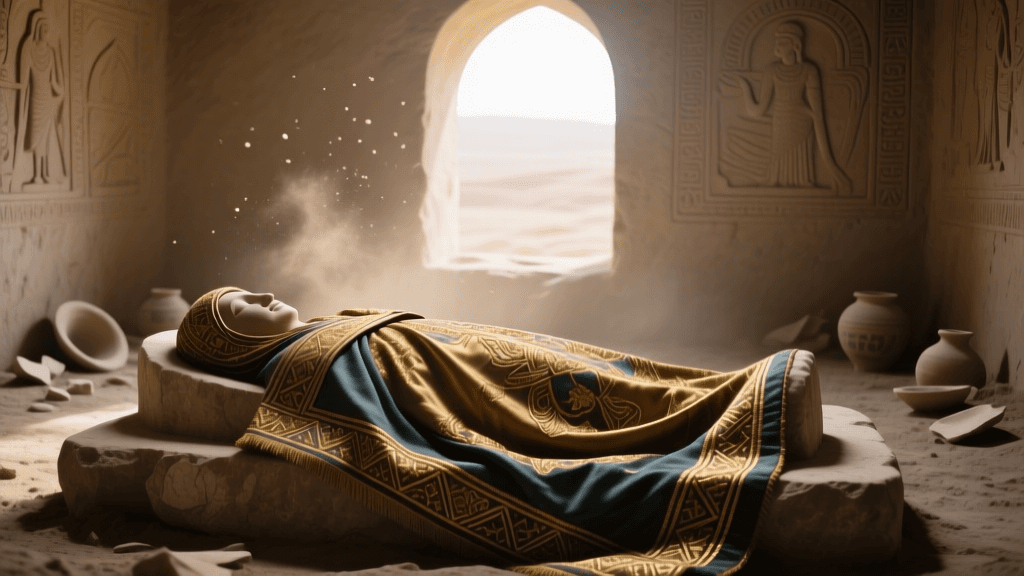
The arid expanse of the Turpan Depression in Xinjiang, China, has long been recognized as one of the most vital repositories of ancient textile history. Often referred to as the 'Underground Museum,' the Astana Cemetery served as the burial ground for the Gaochang Kingdom and later the Tang Dynasty administration. Due to the extreme desert climate, with summer temperatures frequently exceeding 40°C (104°F) and negligible annual rainfall, organic materials that would normally decompose within decades have been preserved in astonishing detail. As of 2026, the Astana archaeological site continues to yield critical insights into the trans-Eurasian exchange of garments, weaving technologies, and aesthetic motifs.
For textile historians, fashion archaeologists, and enthusiasts of Asian traditions, the Astana finds represent a unparalleled cross-section of Silk Road commerce. Unlike the fragmented textile scraps found in many European or Central Asian bogs, Astana provides complete garments. Excavations have unearthed intact silk jackets, hemp paper hats, brocade shoes, and intricate tapestry pillows. These artifacts reveal a sophisticated society that blended indigenous Chinese tailoring with imported Sasanian and Sogdian textile traditions. In 2026, ongoing conservation efforts and advanced digital archiving have made these fragile masterpieces more accessible to the global research community than ever before.
Decoding the Weaves: Warp-Faced Jin vs. Weft-Faced Samite
To truly understand the Silk Road textile exchanges documented at Astana, one must analyze the structural collision of Eastern and Western weaving technologies. Ancient China traditionally favored warp-faced weaves, where the longitudinal threads (warp) dominate the surface to create patterns. The West, particularly the Sasanian Empire and the Sogdian weavers of Central Asia, specialized in weft-faced weaves, where the horizontal threads (weft) create the design. The Astana cemetery captures the exact historical moment when these two technologies merged.
Below is a comparative analysis of the primary weave structures identified in the Astana and broader Tarim Basin archaeological finds, updated with the latest 2026 structural classifications:
| Weave Type | Structure | Origin/Hub | Silk Road Usage & Garment Application |
|---|---|---|---|
| Jin (Brocade) | Warp-faced compound tabby | Han/Tang China | Diplomatic gifts, luxury banners, and elite caftan trims. |
| Samite | Weft-faced compound twill | Sasanian/Sogdian | Heavy, draping luxury caftans, round-collared robes, and equestrian gear. |
| Kesi | Slit tapestry (silk) | China (Tang/Song) | Intricate pictorial robes, Buddhist sutra covers, and ceremonial sashes. |
| Damask | Monochromatic figured weave | China / Syria | Garment linings, under-tunics, and everyday elite wear. |
| Zhicheng | Warp-faced polychrome weave | Central Asian Hubs | Sashes, belts, and decorative borders for nomadic riding coats. |
The introduction of the drawloom from the West allowed Chinese weavers in the Tang Dynasty to adopt weft-faced compound twills (samite), resulting in wider, more heavily patterned fabrics that draped beautifully over the body. This technological synthesis is vividly preserved in the Astana tombs, where garments featuring both traditional Chinese warp-brocades and Western-style samites are often found buried side-by-side, sometimes even integrated into a single ensemble.
The 'Five Stars Rise in the East' Brocade: A Masterpiece of Han-Tang Transition
Among the most celebrated textile artifacts recovered from the broader Tarim Basin region—closely related to the Astana and Niya sites—is the legendary 'Five Stars Rise in the East Benefit China' (Wu xing chu dong fang li zhong guo) brocade. This Han Dynasty warp-faced compound tabby is a marvel of early textile engineering. Woven with vibrant threads dyed using madder (red), indigo (blue), and weld (yellow), the fabric features an intricate pattern of mythical beasts, birds, and celestial motifs interwoven with ancient Chinese seal script.
In 2026, non-invasive spectroscopic analysis of similar Astana brocades has allowed researchers to map the exact mordanting techniques used to fix these natural dyes to the silk fibroin. The Astana textiles demonstrate that by the 5th and 6th centuries, local weavers were not only importing finished silks from the Chinese heartland but were also cultivating local mulberry orchards and rearing silkworms in the Turpan oasis, creating a localized Silk Road textile economy that supplied both local elites and passing merchant caravans.
Motif Migration: Sasanian Pearls and Sogdian Merchants
Textiles were not merely garments; they were the primary vehicles for the transmission of visual culture across the Silk Road. The Astana cemetery provides definitive proof of the 'Pearl Roundel' motif's migration from Persia to China. Originating in Sasanian art, the pearl roundel—a circular border of pearls enclosing facing animals like boars, roosters, or the mythical Senmurv (simurgh)—was woven into heavy samites by Sogdian merchants who dominated the overland trade routes.
At Astana, these motifs appear on silk fragments used to line the coffins of Chinese officials and on the lapels of local Uyghur and Turkic nobility. By the mid-Tang Dynasty, Chinese weavers had fully appropriated the pearl roundel, replacing the Sasanian boar with native Chinese birds or auspicious floral medallions, yet retaining the distinct structural layout. According to the The Metropolitan Museum of Art's Heilbrunn Timeline, this motif adaptation represents one of the earliest and most successful examples of cross-cultural design appropriation in global fashion history.
2026 Digital Archives: Accessing High-Resolution Textile Data
For academic researchers, textile conservators, and independent historians, accessing the Astana textile collection has been revolutionized in 2026. The physical fragility of these silks means that original garments are rarely subjected to the light levels required for prolonged public display. However, the integration of AI-assisted weave mapping and ultra-high-resolution photogrammetry has created unprecedented digital access.
Researchers can now access detailed structural analyses through the International Dunhuang Project (IDP), which has expanded its 2026 database to include thousands of high-resolution TIFF files of Turpan and Astana textiles. These digital archives allow users to zoom in to the individual warp and weft intersections, facilitating remote study of thread counts, selvedge finishes, and loom setups. Furthermore, the UNESCO Silk Roads Programme continues to fund collaborative digital exhibitions, linking the Astana finds with contemporaneous textiles discovered in Palmyra, Syria, and Nara, Japan, providing a truly global view of the Silk Road garment trade.
Planning Your 2026 Visit to the Xinjiang Uygur Autonomous Region Museum
While digital archives are invaluable, viewing the Astana textiles in person remains a profound experience. The Xinjiang Uygur Autonomous Region Museum in Urumqi houses the majority of the Astana cemetery's most significant textile finds. In 2026, the museum has implemented state-of-the-art conservation protocols to protect these light-sensitive artifacts.
Actionable Tips for the 2026 Visitor:
- Booking and Entry: As of 2026, walk-in admissions are no longer permitted for the specialized textile wings. Visitors must reserve a time slot via the museum's official WeChat mini-program at least 72 hours in advance. International visitors should utilize the newly integrated English-language passport verification portal on the museum's website.
- Lighting and Photography: To prevent photo-degradation of the ancient silk dyes, the textile galleries are maintained at a strict 50 lux. Flash photography is strictly prohibited and will trigger automated gallery sensors. We recommend bringing a high-ISO capable camera or relying on the museum's augmented reality (AR) tablets, available for rent at the gallery entrance, which illuminate the garments digitally without harming the physical artifacts.
- Best Time to Visit: The galleries are least crowded on weekday mornings between 10:30 AM and 12:00 PM. Avoid Chinese national holidays (such as the Golden Week in October), when the museum reaches maximum capacity, making close inspection of the intricate weave structures nearly impossible.
- Conservation Awareness: The display cases are sealed anoxic environments filled with nitrogen to halt oxidative decay. Never tap on the glass or lean against the cases, as the vibration sensors will alert security and compromise the micro-climate seals.
Conclusion: The Enduring Legacy of Silk Road Garments
The textiles of the Astana cemetery are far more than ancient clothing; they are the physical manifestation of a globalized ancient world. From the warp-faced brocades of the Han Dynasty to the weft-faced samites of the Sogdian merchants, these garments tell a story of technological exchange, aesthetic adaptation, and human mobility. As we navigate the archaeological landscape of 2026, the ongoing preservation and digital democratization of these Silk Road finds ensure that the sartorial brilliance of ancient Central Asia will continue to inspire and educate generations of textile scholars and cultural enthusiasts worldwide.