Mythology-Inspired Hanfu: A Guide to Deity Styling
The Allure of Chinese Mythological Fashion
The modern Hanfu movement has evolved far beyond strict historical reenactment, branching into the realm of fantasy, folklore, and divine aesthetics. Traditional clothing in Chinese mythology offers a rich tapestry of visual storytelling, drawing heavily from ancient texts like the Shanhaijing (Classic of Mountains and Seas) and epic novels such as Journey to the West. For enthusiasts, conventions, and themed photoshoots, mythology-inspired hanfu allows wearers to embody celestial beings, earth spirits, and legendary heroes.
Styling a mythological look requires a delicate balance between historical garment structures and fantastical embellishments. Unlike everyday traditional wear, deity cosplay demands an ethereal, larger-than-life presence. This guide will walk you through the essential elements of mythology-inspired hanfu, from selecting the right silk weights to sourcing the perfect jade accessories, ensuring your divine transformation is both culturally respectful and visually stunning.
Deity Archetypes and Their Sartorial Signatures
Chinese mythology is populated by a diverse pantheon of gods, goddesses, and spirits, each with distinct visual motifs. When designing or purchasing a mythology-inspired hanfu set, aligning your silhouette and color palette with the specific archetype is crucial for instant recognition and thematic coherence.
| Deity Archetype | Hanfu Silhouette | Color Palette | Primary Fabric |
|---|---|---|---|
| Chang'e (Moon Goddess) | Ming-style Aoqun (Jacket and Skirt) | Icy blues, silver, pearl white | Silk organza, charmeuse |
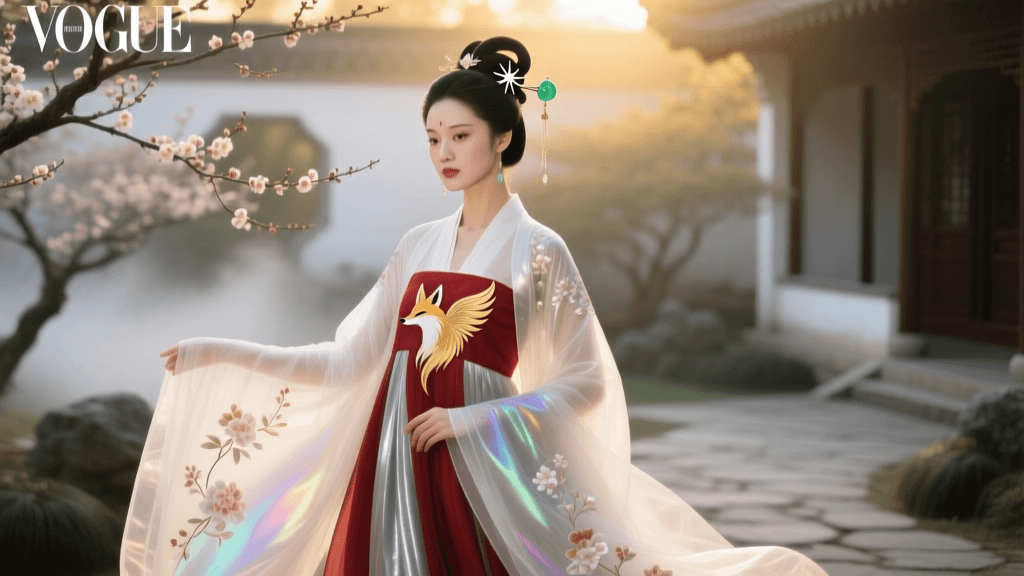
| Huli Jing (Fox Spirit) | Tang-style Qixiong Ruqun (Chest-high skirt) | Vibrant crimson, gold, sunset orange | Chiffon, embroidered tulle |
| Longwang (Dragon King) | Yuanlingpao (Round-collar robe) | Deep teal, azure, black with gold accents | Heavy brocade, jacquard |
| Nuwa (Creator Goddess) | Wei-Jin style Daxiushan (Large-sleeved robe) | Earthy terracotta, jade green, ochre | Raw silk, textured linen |
Embodying the Moon Goddess
Chang'e is synonymous with grace, melancholy, and lunar elegance. To capture her essence, opt for a Ming dynasty-style Aoqun featuring a pleated mamianqun (horse-face skirt). The skirt should ideally measure around 4.5 meters in circumference to create a sweeping, floating effect when in motion. Cool, desaturated tones like icy blue and silver mimic moonlight, while subtle pearl embellishments along the collar and cuffs add a celestial touch.
Channeling the Fox Spirit
The Huli Jing is a creature of passion, illusion, and vibrant energy. The Tang dynasty Qixiong Ruqun, with its high waistline tied just above the bust, is the perfect canvas for this archetype. Look for sets that feature voluminous, wide sleeves (Daxiushan) and bold embroidery of peonies or nine-tailed fox motifs. The key to the fox spirit aesthetic is movement; lightweight chiffon layers that catch the wind will give you an otherworldly, untamed appearance.
Fabric Selection for an Ethereal Aesthetic
The foundation of any mythological garment is its fabric. Historical accuracy often takes a backseat to visual impact in fantasy styling, making modern textile choices vital for achieving a 'divine' aura. Silk remains the undisputed king of Chinese traditional textiles. According to the UNESCO Intangible Cultural Heritage records on Chinese sericulture, the ancient techniques of silk weaving and embroidery continue to influence modern textile production, providing contemporary designers with materials that perfectly bridge history and fantasy.
When shopping for mythology-inspired hanfu, pay close attention to the momme (mm) weight of the silk:
- 8mm to 10mm Silk Chiffon and Organza: These ultra-lightweight fabrics are essential for outer layers, pibo (silk scarves), and floating sleeves. They provide a misty, translucent quality that mimics clouds and celestial mist. However, they are delicate and prone to snagging.
- 12mm to 14mm Silk Charmeuse: Ideal for base layers, bodices, and inner skirts. Charmeuse offers a beautiful, liquid drape and a subtle sheen that catches studio lighting beautifully without being overly reflective.
- 16mm to 19mm Silk Crepe de Chine: Best for structured jackets (Ao) and elements that require opacity and durability. It provides a matte finish that grounds the ethereal outer layers.
For budget-conscious cosplayers, high-quality polyester chiffon and synthetic organza are acceptable alternatives, provided they are heat-treated to reduce excessive shine. Avoid stiff, cheap costume satins, as they reflect light harshly and ruin the illusion of divine grace.
Essential Accessories for Divine Transformation
A hanfu set is incomplete without its accompanying accessories. In mythological styling, accessories are not merely decorative; they are symbols of the deity's power and domain.
The Pibo (Silk Scarf)
The Pibo is a long, flowing silk scarf draped over the arms and shoulders, originating in the Sui and Tang dynasties. For a mythological look, the Pibo should be significantly longer than standard historical versions. Aim for a length of at least 250cm to 300cm, with a width of 30cm. This exaggerated length allows the scarf to trail behind you, creating a halo-like effect in photographs. Secure it lightly at the elbows with hidden pearl pins to prevent it from slipping during movement.
Hair Ornaments and Buyao
Deities are often depicted with elaborate, gravity-defying hairstyles. The Buyao (step hairpin) is a must-have. Characterized by dangling, swaying elements that tremble with the wearer's every step, Buyao made from carved jade, freshwater pearls, and cloisonne enamel elevate a look from mortal to divine. For a Chang'e cosplay, seek out Buyao featuring rabbit and moon motifs. For a Dragon King look, opt for intricate gold-plated hairpins shaped like crashing waves and dragon scales.
Jade Pendants (Yupei)
Jade has been revered in Chinese culture for millennia, symbolizing purity, moral integrity, and protection. A layered Yupei (jade pendant assembly) tied to the waist sash adds a melodic, clinking sound as you walk, which historically was believed to ward off evil spirits. Ensure your jade pendants are strung with high-quality silk macrame knots in colors that complement your primary garment.
Makeup and Styling for Mythological Beings
Makeup plays a pivotal role in bridging the gap between human and deity. While historical makeup tutorials focus on period-accurate brow shapes and lip stains, mythological styling allows for creative, editorial interpretations.
For Tang dynasty-inspired fox spirits, the Huadian (forehead applique) is essential. Traditionally made of gold leaf, pearl, or painted directly onto the skin, the Huadian can be stylized into floral or flame patterns using liquid eyeliner and cosmetic-grade glitter. Use warm, sunset-toned eyeshadows and a sharp, elongated winged liner to mimic the cunning, alluring gaze of a fox.
Conversely, lunar and celestial deities require a cooler, more detached aesthetic. Focus on a flawless, porcelain-like base using a full-coverage foundation. Apply cool-toned, iridescent highlighters to the high points of the face, the collarbones, and even the shoulders to simulate the glow of moonlight. Keep the lips stained in soft, muted berry tones, and use white or silver eyeliner to create subtle, ethereal motifs near the outer corners of the eyes.
Budgeting and Sourcing Your Mythology Hanfu
Building a mythology-inspired wardrobe can range from an affordable hobby to a high-end couture investment. Understanding the market will help you allocate your budget effectively.
- Budget Tier ($50 - $120): Mass-produced sets found on platforms like AliExpress or entry-level Taobao stores. These often use synthetic fabrics and machine embroidery. They are excellent for first-time cosplayers or convention wear where durability is a concern, but they may lack the ethereal drape of real silk.
- Mid-Tier ($150 - $350): Established Hanfu brands such as Shisan Yu, Ting Yue, or Zhong Ling offer stunning, original designs that blend historical accuracy with fantasy elements. These sets typically feature real silk blends, intricate jacquard weaving, and high-quality hardware. This is the sweet spot for serious photoshoots and community events.
- Couture and Custom ($500+): For screen-accurate mythological dramas or professional modeling, commissioning an independent artisan is necessary. Custom tailoring ensures the garment fits your exact measurements, accommodating specific corset structures or hidden pockets for convention essentials. Expect a lead time of 2 to 4 months for hand-embroidered, custom-dyed silk pieces.
Caring for Delicate Mythological Garments
Mythology-inspired hanfu, particularly those featuring delicate silks and intricate embroidery, require meticulous care to maintain their divine appearance.
- Washing: Never machine wash silk organza or charmeuse. Hand wash in cold water using a pH-neutral silk detergent. Gently press the water out—never wring or twist the fabric, as this will permanently damage the silk fibers and distort the pleats of a mamianqun.
- Drying: Lay the garments flat on a clean, dry towel in a shaded, well-ventilated area. Direct sunlight will rapidly fade the vibrant dyes used in fox spirit and dragon king garments.
- Storage: Store your hanfu folded loosely in breathable cotton garment bags. Place natural cedar blocks or dried lavender sachets inside the bags to deter moths and absorb moisture. Avoid wire hangers, which will create permanent shoulder bumps in heavy robes.
Cultural Respect and Mythological Accuracy
While fantasy styling encourages creativity, it is important to approach Chinese mythology with respect. As noted in Britannica's comprehensive guide to Chinese mythology, these legends are deeply intertwined with Chinese philosophy, religion, and cultural identity. Deities like Nuwa and Longwang are not merely fictional characters; they are objects of historical veneration and cultural pride.
When attending conventions or public events, avoid mixing sacred religious iconography with overly revealing or parody elements. Strive to honor the dignity of the archetype you are portraying. By combining high-quality traditional garments with a deep understanding of the lore, you transform a simple costume into a living, breathing tribute to Asian traditions.
Conclusion
Dressing the divine is an art form that merges the historical mastery of Chinese textile craftsmanship with the boundless imagination of ancient folklore. Whether you are sweeping across the floor in a silver-pleated mamianqun as the Moon Goddess, or commanding attention in a crimson chiffon Qixiong Ruqun as a Fox Spirit, mythology-inspired hanfu offers a profound connection to the past. By carefully selecting your fabrics, mastering the accessories, and respecting the cultural roots of these legends, you can step out of the mortal realm and into the pages of myth.