Starting a Kimono Rental Shop: Business Guide & Costs
The Rising Demand for Authentic Cultural Experiences
The global fascination with Japanese culture has transformed the kimono from a traditional garment into a highly sought-after experiential product. For entrepreneurs, starting a kimono rental business offers a lucrative intersection of fashion, tourism, and cultural heritage. According to the Japan National Tourism Organization (JNTO), cultural immersion activities consistently rank among the top priorities for inbound tourists, with kimono dressing and photography tours leading the charge in historical hubs like Kyoto, Kamakura, and Tokyo's Asakusa district.
However, running a successful kimono rental shop requires much more than simply purchasing a few vintage garments. It demands a deep understanding of textile care, the intricate art of kitsuke (kimono dressing), inventory logistics, and customer flow management. This comprehensive guide breaks down the exact steps, costs, and operational strategies required to launch and scale a profitable kimono rental business.
Step 1: Business Planning and Legal Setup
Before acquiring inventory, you must establish a legal business entity. If you are a foreign entrepreneur looking to open a shop in Japan, the Japan External Trade Organization (JETRO) provides essential frameworks for business incorporation, visa requirements, and commercial leasing. You will need to register your business (typically as a Kabushiki Kaisha or Godo Kaisha), secure a commercial lease that explicitly permits retail and customer-facing dressing services, and obtain comprehensive liability and property insurance.
Additionally, you must draft robust rental agreements. These contracts should clearly outline late fees, damage policies (especially for delicate silk garments), and staining penalties. Because tourists are often in a rush, having digital, multi-language waivers that can be signed via tablet at the reception desk streamlines the onboarding process significantly.
Step 2: Location Strategy and Store Layout
Location is the lifeblood of a kimono rental shop. You need high foot traffic, proximity to major tourist attractions, and easy access to public transit. However, the physical layout of the store is equally critical. A standard 50-square-meter shop should be divided into four distinct zones:
- Reception and Selection Area: Well-lit racks organized by color, season, and formality. Full-length mirrors are mandatory.
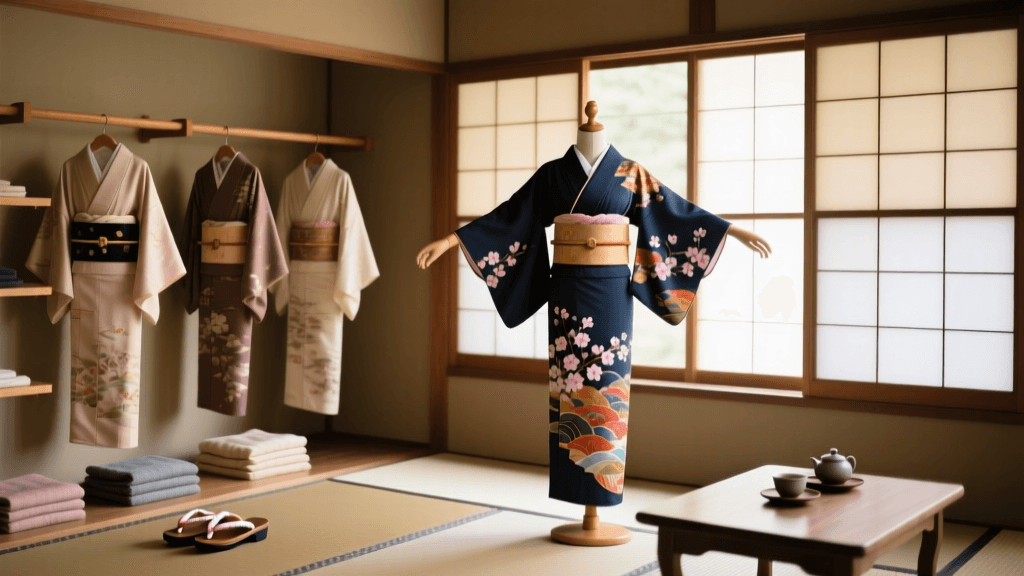
- Dressing Rooms (Kitsuke Space):strong> Unlike Western clothing fitting rooms, kimono dressing requires open floor space. Dressers need a 2-meter radius around the client to wrap the obi (sash). Traditional tatami mats or clean, slip-resistant wooden floors are preferred.
- Hair and Makeup Station: Many clients opt for traditional Japanese updos (nihongami) or modern curled styles. Allocate space for two to three styling chairs with bright, color-accurate lighting.
- Photo Studio/Backdrop: A dedicated corner with traditional props (wagasa umbrellas, folding screens, faux cherry blossoms) allows clients to take high-quality photos before heading out, reducing the risk of outdoor weather damaging the garments.
Step 3: Inventory Acquisition and Management
Building your initial inventory requires balancing aesthetic appeal, durability, and budget. A startup shop typically needs between 300 and 500 complete kimono sets to accommodate daily walk-ins and advance bookings. You must decide between vintage silk (authentic, breathable, but high-maintenance) and modern polyester (machine-washable, vibrant, durable, but less prestigious).
Below is a breakdown of the essential inventory matrix for a first-year rental shop:
| Garment Type | Seasonality | Target Audience | Est. Wholesale Cost (JPY) | Startup Qty Needed |
|---|---|---|---|---|
| Yukata (Cotton) | Summer (June-Sept) | Casual tourists, festivals | 3,000 - 8,000 | 150 |
| Komon (Casual Silk/Poly) | Year-round | Standard sightseeing | 5,000 - 15,000 | 150 |
| Houmongi (Formal) | Year-round | Weddings, tea ceremonies | 20,000 - 50,000 | 40 |
| Furisode (Long Sleeve) | Winter/Spring | Coming-of-Age, premium tours | 30,000 - 80,000 | 20 |
| Haori (Jacket) | Autumn/Winter | Cold weather add-on | 2,000 - 10,000 | 60 |
Note: Costs reflect bulk wholesale or vintage market (furugi) pricing. Modern, rental-specific polyester kimono from wholesalers may cost between 15,000 and 30,000 JPY per set but offer vastly superior longevity.
Step 4: Sourcing Accessories and Consumables
The kimono itself is only half the equation. A complete rental set requires a complex ecosystem of undergarments and accessories. You must source:
- Nagajuban: The under-kimono that protects the outer garment from sweat. You need at least 1.5 times the number of your outer kimono, as these require more frequent washing.
- Susoyoke and Hadajuban: The base layer slip and top. Modern rental shops often use one-piece 'slip nagajuban' for faster dressing.
- Obi and Obijime: You need a mix of fukuro-obi (formal), nagoya-obi (semi-formal), and hanhaba-obi (casual/yukata). Obijime (decorative cords) and obiage (silk scarves) are inexpensive ways to completely change the look of a single obi.
- Tabi and Zori: Tabi (split-toe socks) are a consumable item. For hygiene reasons, you must either gift them to the client or sell them at cost. Zori (sandals) should be purchased in bulk, focusing on free-size and large (LL) sizes to accommodate Western tourists.
Step 5: Staffing and Kitsuke (Dressing) Operations
The bottleneck of any kimono rental shop is the dressing process. A certified kitsuke-shi (kimono dresser) takes an average of 30 to 45 minutes to dress a single client properly. This includes adjusting the ohashori (the waist fold that customizes the length), tying the obi, and ensuring the collar sits perfectly at the nape of the neck.
Operational Mathematics: If you employ three dressers and operate for 8 hours a day, your maximum theoretical capacity is roughly 32 clients per day (assuming 45 minutes per client plus 15 minutes for turnover and selection). To increase throughput, hire dedicated 'assistants' who handle the preparatory steps (tying the koshihimo waist ties and datejime under-sashes) while the senior dresser focuses solely on the complex obi knots.
Sizing Challenges: Traditional kimono are 'free size,' meant to be tailored to the wearer's height via the ohashori fold. However, standard vintage kimono were made for women averaging 150-155 cm in height. For clients taller than 170 cm, the ohashori will be non-existent, resulting in an awkward, ankle-baring fit. You must allocate 15% of your budget to sourcing 'tall-size' modern kimono or custom-ordering longer garments to prevent negative reviews from Western tourists.
Step 6: Marketing, Etiquette, and Customer Experience
Marketing a kimono rental shop is inherently visual. Instagram, TikTok, and Xiaohongshu (for the Chinese tourist market) are your primary acquisition channels. Partner with local influencers and offer free premium rentals in exchange for high-quality video content.
Furthermore, as the volume of tourists in traditional garments has surged, so have concerns regarding cultural respect and public etiquette. The Kyoto City Tourism Association actively promotes sustainable and respectful tourism. As a business owner, it is your responsibility to educate your clients. Provide a beautifully designed, multi-language 'Kimono Etiquette Card' with every rental. This card should gently explain rules such as keeping the left side of the kimono wrapped over the right (the reverse is reserved for the deceased), avoiding dragging the hem on dirty streets, and being mindful of blocking narrow pedestrian pathways in historic districts like Gion.
Financial Projections and Pricing Strategy
A standard pricing model for a mid-tier rental shop includes tiered packages:
- Basic Plan (5,000 - 7,000 JPY): Komon or Yukata, standard obi, basic hair styling, zori rental, and tabi socks.
- Premium Plan (9,000 - 12,000 JPY): Access to Houmongi or Furisode, elaborate obi knots, premium hair accessories, and a complimentary photo shoot.
- Add-ons: Professional outdoor photography tours (15,000 JPY+), rickshaw partnerships (20% commission), and next-day return extensions (2,000 JPY).
With an average ticket size of 8,000 JPY and a daily capacity of 30 clients, a well-managed shop can generate 240,000 JPY in daily revenue during peak seasons (cherry blossom spring and autumn foliage). By strictly managing your inventory turnover, investing in durable polyester blends for high-use items, and delivering an impeccable, culturally respectful customer experience, your kimono rental business can become a cornerstone of the local tourism economy.