Children and Coming-of-Age Kimono: Shichi-Go-San and Seijin no Hi
The Lifecycle of Japanese Traditional Dress
In Japan, the transition from childhood to adulthood is marked not just by the passing of years, but by the profound symbolism of traditional garments. The lifecycle of Japanese dress is deeply intertwined with cultural milestones, serving as a visual language that communicates age, status, and familial hopes. For parents and young adults navigating these rites of passage, understanding the nuances of children's kimono and coming-of-age attire is essential. This guide explores the foundational traditions of Shichi-Go-San (the Seven-Five-Three Festival) and Seijin no Hi (Coming-of-Age Day), offering actionable advice on garment selection, budgeting, and preparation.
According to historical textile archives maintained by institutions like the Metropolitan Museum of Art's Asian Art Department, the evolution of children's silk garments in Japan reflects a broader cultural emphasis on protecting youth through auspicious motifs and protective layering systems. Today, these traditions remain a vibrant, albeit modernized, cornerstone of Japanese family life.
Shichi-Go-San: Celebrating Childhood Milestones
Held annually on November 15th (though shrine visits often occur throughout October and November), Shichi-Go-San celebrates the growth and well-being of children at the ages of three, five, and seven. Historically, these ages represented critical survival milestones in early childhood. Today, it is a day of vibrant photography, shrine visits, and the donning of exquisite silk garments.
Age Three (San-sai): The Hifu and First Hakama
At age three, both boys and girls traditionally participate, though modern celebrations often focus primarily on girls. A three-year-old girl wears a standard kimono paired with a hifu—a padded, sleeveless silk vest worn over the obi. The hifu eliminates the need for a tightly tied sash, ensuring the toddler's comfort. Boys of this age may wear a simple kimono with a hakama (pleated trousers), though this is less common today than the five-year-old ceremony.
Age Five (Go-sai): The Hakama Ceremony for Boys
The five-year-old milestone is traditionally reserved for boys, marking their first time wearing a hakama and haori (a formal jacket). The outfit is typically adorned with auspicious motifs like hawks, samurai helmets (kabuto), or dragons, symbolizing courage and strength. A crucial element is the kaku-obi (stiff, woven sash) and the himotsuki-haori, a haori jacket tied at the front with decorative white cords.
Age Seven (Nana-sai): The Obi-ki Ceremony for Girls
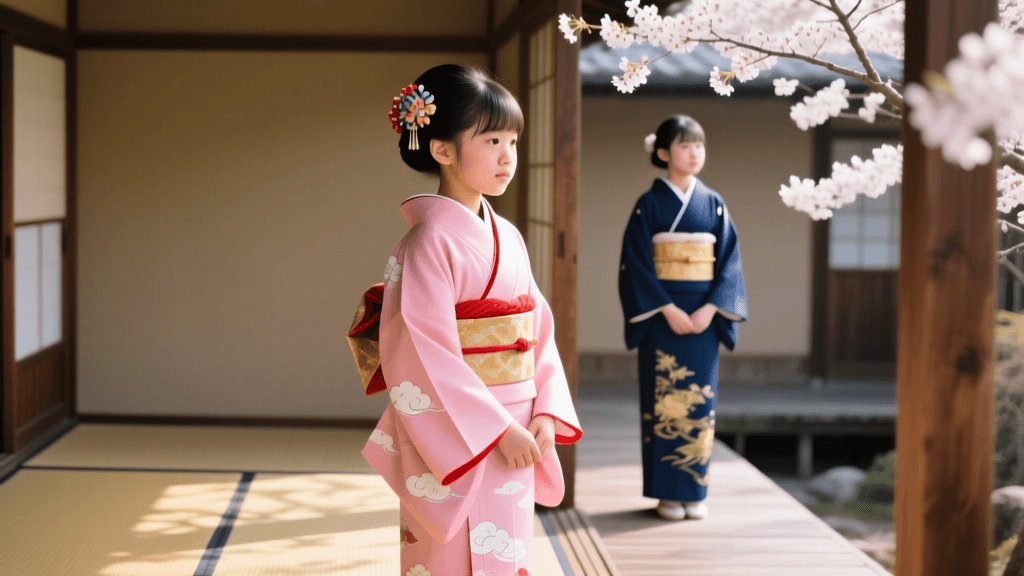
At age seven, girls undergo the obi-ki (obi-tying) ceremony, transitioning from the simple cord-tied garments of early childhood to the more structured, adult-like kimono silhouette. They wear a full-length kimono with a real, tied obi. The sash is often tied in a fukura-suzume (plump sparrow) or bunko (butterfly) knot. The garments feature vibrant chirimen (silk crepe) fabrics adorned with cranes, pine trees, and peonies, representing longevity and prosperity.
Seijin no Hi: The Coming-of-Age Transition
Held on the second Monday of January, Seijin no Hi celebrates young adults who have reached the age of maturity. It is a day of municipal ceremonies, reunions, and highly formal dress. Recent socio-legal shifts have impacted these traditions. As noted by cultural commentators at Nippon.com, Japan's 2022 revision of the Civil Code lowered the legal age of adulthood from 20 to 18. However, because 18-year-olds are typically in the midst of rigorous university entrance exams, the vast majority of municipalities and families continue to hold the kimono ceremonies and gatherings at age 20.
The Furisode: A Young Woman’s Canvas
The undisputed centerpiece of a young woman's Coming-of-Age Day is the furisode, characterized by its dramatically long, swinging sleeves. The sleeve length denotes formality and youth:
- Oburisode (Large Furisode): Sleeves measuring roughly 114 cm. The most formal and traditional choice.
- Chuburisode (Medium Furisode): Sleeves measuring roughly 100 cm. The most common and practical choice for modern ceremonies.
- Koburisode (Small Furisode): Sleeves measuring roughly 85 cm. Often worn for slightly less formal events like graduation.
The furisode is heavily patterned across the entire garment (e-ba), featuring continuous landscapes or floral motifs that flow seamlessly across the seams. It is paired with a highly decorative maru-obi or fukuro-obi, often tied in elaborate, sculptural knots at the back.
Men’s Formalwear: Montsuki Hakama vs. Modern Suits
While many young men opt for Western business suits, those who embrace tradition wear a montsuki hakama. This ensemble consists of a black, five-crested (itsutsu-mon) silk kimono worn beneath a matching black haori and a striped hakama (often Sendai-hira silk). The family crests (kamon) are prominently displayed, connecting the young man to his ancestral lineage.
Cost, Booking, and Preparation Guide
Preparing for these milestones requires significant logistical planning. The kimono industry operates on strict seasonal timelines, and popular rental shops book out over a year in advance for Coming-of-Age Day.
| Milestone | Garment Type | Average Rental Cost (JPY/USD) | Purchase Cost (JPY/USD) | Booking Lead Time |
|---|---|---|---|---|
| Shichi-Go-San (Age 3) | Hifu Set | ¥15,000 - ¥30,000 ($100 - $200) | ¥80,000+ ($550+) | 2 - 3 Months |
| Shichi-Go-San (Age 5) | Hakama Set | ¥20,000 - ¥40,000 ($135 - $270) | ¥150,000+ ($1,000+) | 2 - 3 Months |
| Shichi-Go-San (Age 7) | Yuitsu / Obi Set | ¥30,000 - ¥60,000 ($200 - $400) | ¥250,000+ ($1,700+) | 3 - 4 Months |
| Seijin no Hi (Women) | Furisode | ¥150,000 - ¥350,000 ($1,000 - $2,300) | ¥500,000 - ¥2,000,000+ ($3,400 - $13,500+) | 12 - 18 Months |
| Seijin no Hi (Men) | Montsuki Hakama | ¥30,000 - ¥60,000 ($200 - $400) | ¥300,000+ ($2,000+) | 3 - 6 Months |
Pro Tip for Parents: When renting for Shichi-Go-San, opt for 'full-service' packages that include dressing (kitsuke), hair styling, and professional photography. Many local studios offer these bundled at a 15-20% discount compared to booking vendors separately.
Actionable Advice for Dressing and Day-Of Logistics
The physical act of wearing a kimono (kitsuke) is a multi-layered process that dictates the schedule of the entire day. For Seijin no Hi, young women often begin their preparations before dawn.
Undergarments and Layering
A kimono is never worn directly against the skin. The foundation begins with the hadajuban (a thin cotton under-kimono) and susuyoke (a half-slip). For historical context on the evolution of these layering systems and textile artistry, the Victoria and Albert Museum's Asian Collections provide extensive documentation on how under-layers protect the delicate outer silk from body oils and sweat. Over this, the nagajuban (a decorative under-robe) is worn, featuring a contrasting silk collar (han-eri) that peeks out at the neckline.
Footwear Considerations
Traditional footwear requires specific tabi (split-toe socks). For children, purchase tabi with elastic stretches at the heel rather than traditional metal clasps (kohaze), which are difficult for toddlers to manage. For young women in furisode, the zori (sandals) should be sized slightly smaller than the foot; ideally, the heel should overhang the back of the sandal by about 1 to 2 centimeters to prevent the hem of the kimono from being stepped on.
The Day-Of Timeline (Seijin no Hi Example)
- 6:00 AM: Arrive at the salon for hair styling and makeup. (Hair must be completely clean and dry; avoid heavy conditioners the night before so styling pins can grip).
- 7:30 AM: Begin kitsuke (dressing). This takes 30 to 45 minutes.
- 8:30 AM: Final adjustments, outdoor photography (morning light is optimal and avoids the midday winter chill).
- 10:00 AM: Attend the municipal Coming-of-Age ceremony.
- 1:00 PM: Return to the salon or a hotel to carefully remove the garments. (Never attempt to remove a furisode without assistance, as the heavy obi can cause injury or damage the silk if pulled incorrectly).
Preserving Heirlooms: Fabric Care and Seasonality
Many families pass down Shichi-Go-San and Furisode garments through generations. Proper care is paramount. Silk kimono are highly sensitive to humidity and light. After wearing, the garment must be aired out in a shaded, well-ventilated room for 24 hours before being folded. This process, known as kage-boshi, allows trapped moisture to evaporate, preventing mold.
Garments should be stored in a tansu (a traditional cedar chest), which naturally repels insects and regulates humidity. Furthermore, understanding seasonality is crucial: awase (lined) kimono are worn from October to May, while hitoe (unlined) kimono are reserved for the brief transitional months of June and September. Because both Shichi-Go-San and Seijin no Hi occur in deep winter, garments are heavily lined, and the addition of a plush dochu-gake (winter cape) or a fluffy white fur shawl is both culturally appropriate and practically necessary for outdoor shrine visits.
By understanding the deep symbolism, logistical requirements, and proper care of these garments, families can ensure that these vital coming-of-age traditions are honored with the respect and beauty they deserve.