Mythology-Inspired Hanfu: Dressing as Chinese Deities
The Intersection of Myth and Silk
Chinese mythology is a vast, intricate tapestry of creation stories, celestial bureaucracies, and nature spirits. For modern Hanfu enthusiasts and cosplayers, these ancient legends provide endless inspiration for sartorial expression. According to the World History Encyclopedia, these myths have shaped Chinese cultural identity, art, and ritualistic dress for millennia. Today, the revival of traditional clothing has merged with mythological storytelling, allowing wearers to embody gods, goddesses, and mythical beasts through meticulously crafted garments. This guide explores how to accurately source, tailor, and style mythology-inspired Hanfu for conventions, photoshoots, and cultural festivals.
Iconic Mythological Figures and Their Hanfu Styles
When translating myth to fabric, accuracy in color, silhouette, and motif is paramount. Different deities require distinct Hanfu styles to reflect their status, element, and lore. Below is a comprehensive comparison chart detailing the standard garments, color palettes, and estimated costs for popular mythological archetypes.
| Mythological Figure | Primary Hanfu Style | Key Colors & Motifs | Primary Fabric | Est. Cost (USD) |
|---|---|---|---|---|
| Chang'e (Moon Goddess) | Qixiong Ruqun (Chest-high skirt) | White, Silver, Pale Blue; Moon/Rabbit motifs | Silk Chiffon, Organza | $80 - $150 |
| Nuwa (Creator Goddess) | Daxiushan (Large-sleeve robe) | Crimson, Gold, Earth Tones; Snake/Scale motifs | Heavy Brocade, Damask | $150 - $300 |
| Dragon King (Ao Guang) | Yuanlingpao (Round-collar robe) | Azure, Gold, Black; Water/Wave motifs | Silk Twill, Embroidered Satin | $120 - $250 |
| Nine-Tailed Fox Spirit | Aoqun or Mamianqun (Horse-face skirt) | Crimson, White, Pink; Floral/Fox motifs | Georgette, Faux Fur Trim | $100 - $200 |
Deconstructing the Archetypes
Chang'e, the goddess of the moon, is best represented by the Qixiong Ruqun. This style features a skirt tied high above the bust, creating an elongated, ethereal silhouette that mimics the weightlessness of floating through the night sky. To achieve this, look for skirts with a 3-meter hem circumference to ensure dramatic billowing during photography.
Conversely, Nuwa, the mother goddess and creator of humanity, demands a more grounded, authoritative presence. The Daxiushan, a formal robe with massive, sweeping sleeves, conveys her divine power. Because Nuwa is often depicted with a serpent's tail in ancient texts, incorporating subtle scale-like embroidery along the hem of the robe or the collar adds a layer of mythological accuracy.
Sourcing and Styling: A Practical Guide
Sourcing mythology-inspired Hanfu requires navigating between mass-market costume shops and specialized traditional artisans. For authentic, high-quality garments, search platforms like Taobao or specialized international Hanfu boutiques using specific Chinese keywords. For example, searching '神仙风汉服' (fairy/celestial style Hanfu) or '九尾狐汉服' (nine-tailed fox Hanfu) will yield specialized results.
Fabric Selection for Ethereal and Divine Looks
The illusion of divinity relies heavily on fabric weight and drape. For celestial deities like Chang'e or the Heavenly Maidens, opt for 30D or 50D silk chiffon and organza. These lightweight fabrics catch the wind beautifully, creating the 'floating' effect essential to immortal beings. For earthly deities, dragon kings, or warrior spirits, heavier fabrics like silk twill, brocade, and damask are necessary. A 100% mulberry silk brocade with metallic thread weaving will cost approximately $40 to $60 per yard but provides the structural integrity needed for heavy embroidery and regal posture.
Precision Measurements for Dramatic Silhouettes
Mythological Hanfu often exaggerates traditional proportions for theatrical effect. When ordering a custom Daxiushan (large-sleeve robe), the sleeve wingspan should measure between 200cm and 240cm (78 to 94 inches) from cuff to cuff. The sleeve opening itself should be at least 60cm (24 inches) wide to allow the inner layers to cascade out when the arms are raised. For a Qixiong Ruqun skirt, ensure the waist circumference is at least 1.5 times your actual chest measurement (e.g., 54 inches for a 36-inch chest) to allow for the overlapping wrap and to prevent the skirt from slipping down during movement.
Accessorizing the Divine
A deity's outfit is incomplete without the proper regalia. Hair and makeup are where the mythological transformation is finalized.
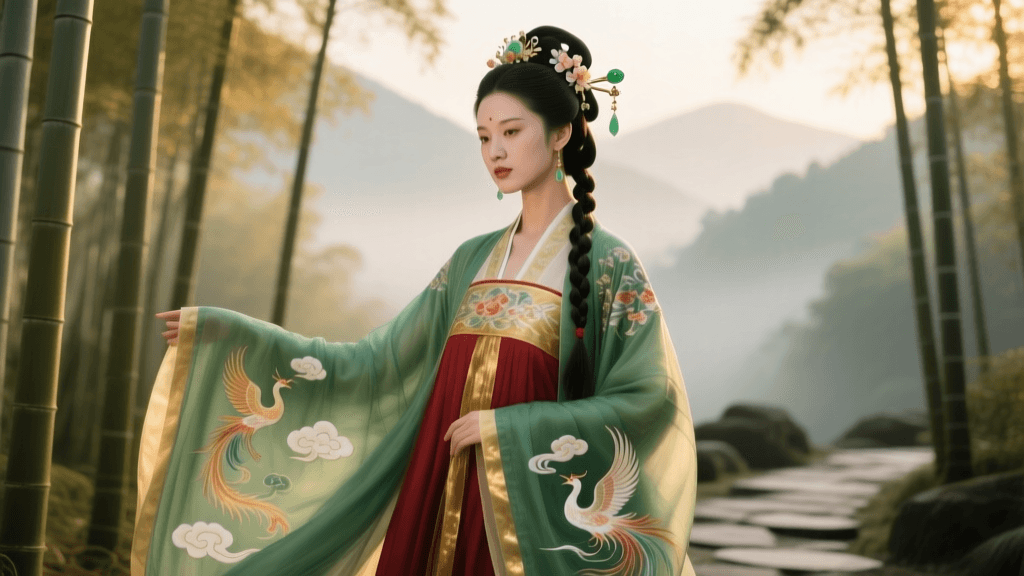
- Headpieces: For goddesses, invest in a 'Buyao' (步摇) hairpin. Authentic metalwork Buyao with pearl drops and jade pendants cost between $40 and $120. The swaying motion of the Buyao mimics the graceful movement of celestial beings.
- Forehead Ornaments: 'Huadian' (花钿) are traditional forehead decals. For a Nine-Tailed Fox spirit, use red or gold foil Huadian shaped like lotus petals or fox flames to denote spiritual power.
- Props: Carry thematic props such as a silk ribbon (Pibo) for moon goddesses, which should be at least 3 meters long to wrap around the arms and trail behind, or a jade-handled fan for dragon deities.
Symbolism and Color Theory in Mythological Dress
Understanding color is crucial when dressing as a figure from Chinese lore. As noted in Britannica's guide to Chinese mythology, colors and symbols are deeply tied to the five elements (Wu Xing) and cosmic balance. Yellow and gold are historically reserved for the highest celestial authorities, such as the Jade Emperor or Nuwa, representing the earth element and imperial divinity. Azure and black correspond to water, making them mandatory for the Dragon Kings of the Four Seas. Red, associated with fire and luck, is frequently used for fox spirits and martial deities like Guan Yu. Wearing the correct elemental colors demonstrates a deep respect for the source material and elevates the authenticity of your portrayal.
Navigating Conventions in Mythological Hanfu
The Hanfu movement has exploded in popularity over the last decade, as documented by BBC News, leading to massive cultural conventions and street fashion gatherings globally. Wearing complex, multi-layered mythological garments in crowded convention halls requires strategic preparation.
Convention Survival Kit
When wearing a heavy, multi-layered deity costume, mobility and garment security are your primary concerns. Pack the following essentials:
- Anti-Slip Headband: Essential for securing heavy Buyao crowns. A velvet-lined, grippy headband worn beneath the wig or natural hair will distribute the weight and prevent the crown from slipping.
- Double-Sided Fashion Tape: Apply to the inner bodice of a Qixiong Ruqun to prevent the chest-high skirt from shifting during active movement or photoshoots.
- Portable Handheld Steamer: Chiffon and organza wrinkle easily when packed. A compact steamer ensures your ethereal sleeves remain crisp and flowing.
- Skirt Hem Clips: For trailing Daxiushan robes, use hidden magnetic clips to temporarily lift the hem when navigating stairs or crowded vendor halls, releasing them only for photos.
Caring for Embroidered and Layered Garments
Mythological Hanfu often features dense, metallic embroidery that can easily snag or tarnish. Never machine-wash heavily embroidered brocades or damasks. Instead, spot clean with a mild, pH-neutral detergent and cold water. For silk chiffon layers, hand-wash gently and lay flat to dry on a mesh rack to maintain the fabric's structural integrity. Store your garments in breathable cotton garment bags, and wrap metallic-threaded sections in acid-free tissue paper to prevent oxidation. By investing time in proper maintenance, your mythological garments will remain vibrant and structurally sound for years of conventions and cultural celebrations.
Conclusion
Dressing as a figure from Chinese mythology is more than just cosplay; it is an immersive exploration of ancient folklore, traditional textile arts, and cultural symbolism. By paying close attention to historical silhouettes, elemental color theory, and precise tailoring, you can bring the gods and spirits of Chinese legend into the modern world with breathtaking authenticity and respect.