Evolution of the Kosode: Heian to Edo Kimono Fashion
The Heian Period (794–1185): The Hidden Foundation
The Japanese kimono is globally recognized as a symbol of traditional Asian fashion. Yet, the iconic T-shaped robe we know today was not always the outermost expression of Japanese style. Its direct ancestor, the kosode, underwent a radical transformation over nearly a millennium. From its humble beginnings as a hidden undergarment in the Heian period to its explosive flourishing as a canvas for artistic expression in the Edo period, the evolution of the kosode mirrors the socio-political shifts of Japan itself. For modern enthusiasts, collectors, and practitioners of kitsuke (the art of kimono dressing), understanding this historical trajectory is essential.
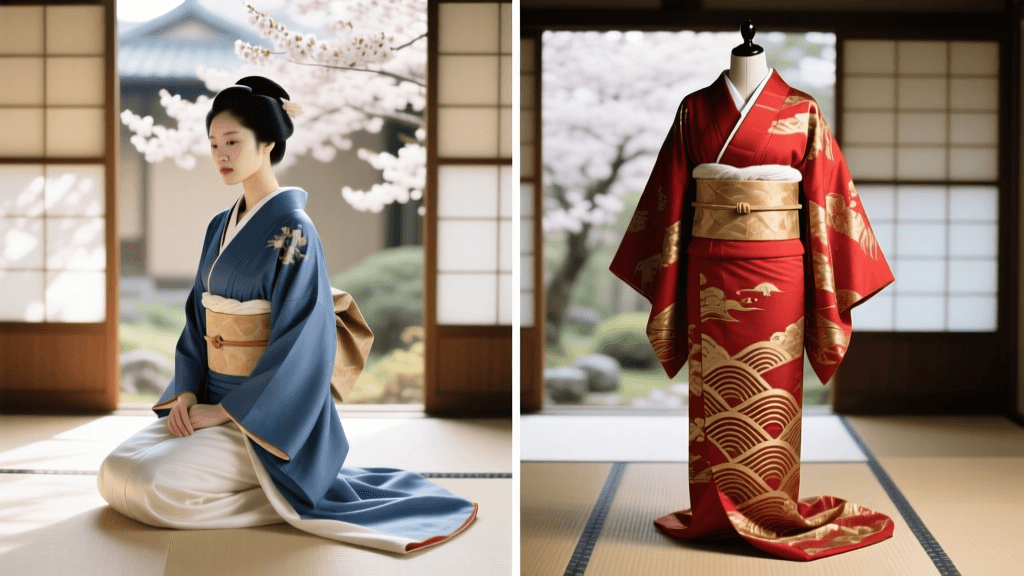
During the Heian period, the aristocratic elite favored extreme layering. The female court dress, known as the jūnihitoe (twelve-layer robe), was a breathtaking display of color theory and seasonal awareness. According to the Metropolitan Museum of Art's Heilbrunn Timeline of Art History, the kosode—which translates literally to "small sleeves"—was originally worn as the innermost undergarment, directly against the skin. Its sleeves were relatively narrow compared to the sweeping, wide sleeves of the outer karaginu and uchigi layers. Because it was hidden from public view, the kosode was typically made of plain, undyed silk or simple hemp. The aesthetic focus of Heian fashion was entirely on the layered edges, known as kasane no irome, where the subtle gradation of colors at the collar and cuffs conveyed the wearer's refined taste and awareness of the changing seasons.
The Muromachi Period (1336–1573): The Kosode Steps Out
As aristocratic power waned and the samurai class rose to prominence, the elaborate, multi-layered Heian garments became impractical for daily life and military governance. The Muromachi period marked a pivotal shift in Japanese textile history. Women began to discard the heavy outer layers of the jūnihitoe, wearing the kosode as a standalone outer garment. However, because the kosode was originally designed as an undergarment, it lacked the structural integrity to stay closed on its own. This practical necessity birthed the obi—a simple, narrow braided cord or thin sash used to tie the robe securely at the waist.
During this era, the kosode also began to feature surface decoration. Techniques like surihaku (gold leaf application) and basic embroidery started to adorn the silk, transitioning the kosode from a utilitarian base layer to a primary vehicle for personal adornment. The garment became a symbol of the newly empowered warrior class's desire for visual opulence, setting the stage for the textile revolutions to come.
The Edo Period (1603–1867): The Golden Age of the Kimono
The Edo period, characterized by over two centuries of internal peace under the Tokugawa shogunate, catalyzed the kosode's evolution into the modern kimono. As highlighted by the Victoria and Albert Museum, the rise of the wealthy merchant class (chōnin) in urban centers like Kyoto, Osaka, and Edo (modern Tokyo) led to a massive boom in textile arts. Sumptuary laws frequently restricted commoners from wearing overtly luxurious fabrics, which inadvertently fueled incredible innovation in dyeing techniques.
The invention of yuzen dyeing—a resist-dye method using rice paste—allowed artisans to paint intricate, pictorial designs directly onto the silk, much like a canvas. The sleeves of the kosode elongated, particularly for unmarried women, giving rise to the furisode (swinging sleeves). The obi widened significantly, moving from a simple tie to a broad, decorative sash tied in elaborate knots at the back. By the late Edo period, the kosode was no longer just an item of clothing; it was the defining cultural garment of Japan. As noted in the Metropolitan Museum of Art's overview of Edo Fashion, the garment became a vital medium for communicating social status, regional identity, and artistic trends.
Historical Garment Comparison Chart
| Era | Primary Role | Sleeve Dimensions | Obi Style | Dominant Decoration |
|---|---|---|---|---|
| Heian (794–1185) | Innermost Undergarment | Narrow, wrist-length | None (tied with inner cords) | Plain white silk or hemp |
| Muromachi (1336–1573) | Standalone Outerwear | Moderate width | Narrow braided cord (hoso-obi) | Surihaku, basic embroidery |
| Edo (1603–1867) | Primary Cultural Garment | Elongated (Furisode) to standard | Wide, decorative sash (Maru/Fukuro) | Yuzen dyeing, Nishijin weaving |
Practical Guide: Sourcing and Wearing Historical Styles Today
For modern practitioners, wearing historical styles requires navigating contemporary markets, understanding traditional measurements, and adhering to seasonal rules. Whether you are purchasing a vintage piece that mimics Edo aesthetics or commissioning a modern reproduction, the following actionable guidelines will ensure an authentic and comfortable experience.
Understanding Measurements and Sizing
Unlike Western clothing, which is tailored to the body's contours, the kimono is cut from straight bolts of fabric (tanmono) and adjusted to the wearer through folding and tying. A standard tanmono is approximately 36 cm (14 inches) wide and 12 meters (13 yards) long. When sourcing garments, you must understand two critical measurements:
- Yuki (Sleeve Length): Measured from the center of the back of the neck, across the shoulder, and down to the wrist. For an authentic Edo-style silhouette, the yuki should ideally reach the wrist bone when the arm is relaxed at a 45-degree angle. Modern standard yuki ranges from 64 cm to 68 cm (25 to 27 inches).
- Mitake (Back Length): Measured from the base of the neck to the hem. Historically, the hem was meant to trail slightly, but modern practical wear dictates the hem should sit precisely at the ankle bone. Average mitake is between 100 cm and 120 cm (39 to 47 inches), depending on the wearer's height.
Cost Breakdown: Vintage vs. Reproductions
Acquiring garments that reflect Edo-period aesthetics requires understanding the market. True Edo-period antiques are museum pieces and rarely worn. However, late Taisho and early Showa era (1910s–1940s) vintage kimono heavily feature Edo-inspired yuzen motifs and are widely available.
- Vintage Silk Kimono (Taisho/Showa): $40 to $150 USD. These offer authentic hand-painted yuzen and high-quality silk but may require dry cleaning or stain treatment.
- Modern Silk Commissions (Kyoto Artisans): $2,000 to $10,000+ USD. Hand-painted Kyo-yuzen kimono crafted using traditional Edo methods. Lead times often exceed 6 to 12 months.
- Modern Polyester Reproductions: $80 to $200 USD. Machine-printed washable silk alternatives. Excellent for beginners practicing kitsuke, though they lack the breathability and prestige of authentic silk.
Seasonal Timing and Fabric Rules
Historical Japanese fashion is intrinsically linked to the seasons. Wearing the correct fabric weight at the correct time of year is a strict rule in traditional dressing:
- Awase (Lined): Worn from October 1st to May 31st. These garments feature a solid silk lining for warmth.
- Hitoe (Unlined): Worn in June and September. A single layer of silk, suitable for transitional weather.
- Ro and Sha (Sheer): Worn in July and August. Made from loosely woven, translucent silk gauze. Historically, wearing ro/sha outside of high summer was considered a severe faux pas.
Achieving the Edo Silhouette
The Edo silhouette is cylindrical, minimizing the natural curves of the body to create a smooth, column-like drape. To achieve this, modern wearers use padding (kimono pads or folded towels) around the waist and hips. The collar should be pulled snug at the nape of the neck, allowing exactly two fingers of space between the collar and the skin, while the front lapels are crossed tightly over the chest.
For the obi, the Edo period popularized the taiko musubi (drum knot) for married or older women, which sits flat and elegant against the lower back. Unmarried women wearing furisode utilize the fukura-suzume or elaborate bunko variations, which feature large, wing-like bows that showcase the lengthy, heavily decorated sleeves.
Preserving the Textile Heritage
The journey of the kosode from a hidden Heian undergarment to the globally revered Edo kimono is a testament to Japanese resilience and artistic ingenuity. By understanding the historical context, respecting the seasonal rules, and investing in proper measurements, modern wearers do more than just put on a garment—they participate in a living, breathing timeline of Asian traditions. Whether you are tying a vintage silk obi or admiring the intricate yuzen dye of a museum piece, the legacy of the kosode continues to wrap its wearers in centuries of history.