Mythology-Inspired Hanfu: Styling Chinese Legends & Deities
The Allure of Chinese Mythology in Modern Hanfu
The intersection of ancient Chinese mythology and the contemporary Hanfu movement has birthed one of the most visually stunning subcultures in traditional fashion. Drawing from foundational texts like the Shanhaijing (Classic of Mountains and Seas), epic novels like Journey to the West, and enduring folk tales of the Moon Goddess Chang'e, modern enthusiasts are not merely recreating historical dress—they are resurrecting the divine. Mythology-inspired Hanfu, often referred to within the community as Xianxia (immortal hero) or fantasy styling, allows wearers to embody celestial deities, animal spirits, and underworld warriors.
Unlike strict historical reconstruction, which adheres rigidly to archaeological evidence from specific dynasties, mythological styling embraces creative liberty. It merges historical silhouettes with ethereal fabrics, exaggerated proportions, and symbolic motifs. Whether you are preparing for a Hanfu convention, a themed photoshoot at a historical site, or simply wish to channel the energy of a legendary spirit, understanding the archetypes and their sartorial requirements is essential.
Iconic Mythological Archetypes and Their Garments
To accurately portray a figure from Chinese legend, one must align the garment's silhouette, color palette, and fabric weight with the entity's mythological domain. Here are the three primary archetypes and how to style them.
1. The Celestial Deity (Xian)
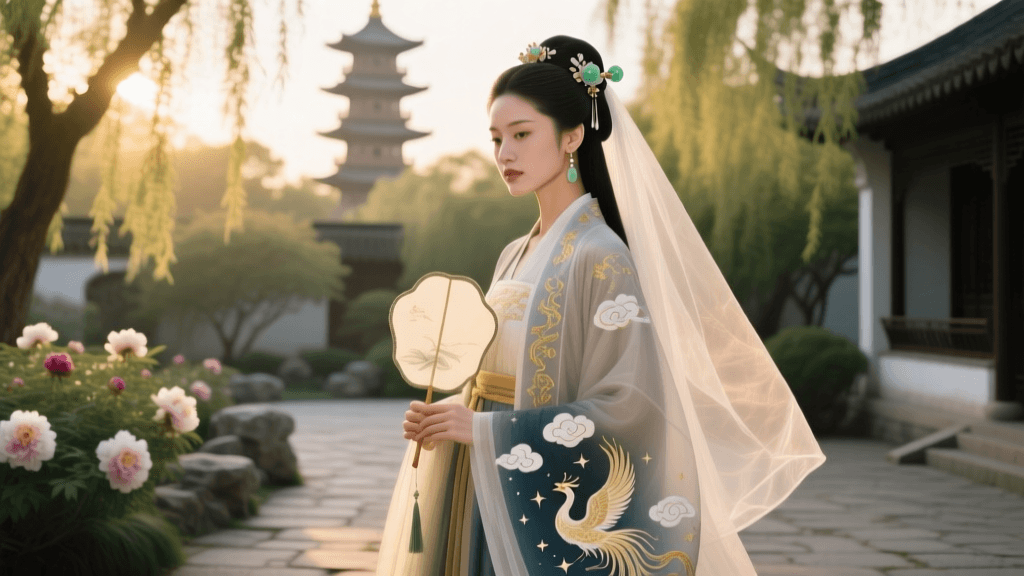
Celestial beings, such as the Heavenly Maidens or the Moon Goddess Chang'e, are defined by their weightlessness and connection to the sky. The quintessential garment for this archetype is the Tang Dynasty-inspired Qixiong Ruqun (chest-high skirt) paired with a Daxiushan (large-sleeved robe). The defining accessory is the Pibo, a long silk shawl that drapes over the arms and trails behind the wearer, mimicking the clouds and mist of the heavenly realms.
- Color Palette: Pearlescent whites, icy blues, soft lavenders, and pale golds.
- Fabric Choice: 8mm silk chiffon, silk organza, and lightweight tulle to create a floating, translucent effect.
- Styling Tip: Ensure your Pibo is at least 3 meters long. When walking outdoors, allow the wind to catch the shawl to create the illusion of flight.
2. The Animal Spirit (Yaojing)
Spirits who have cultivated human form—most notably the Huli jing (fox spirit) or dragon deities—require garments that hint at their wild, untamed origins. The Ming Dynasty Mamianqun (horse-face skirt) is highly favored here, as its structured pleats provide a canvas for elaborate, nature-inspired embroidery. Animal spirits often incorporate elements of their true forms, such as faux fur trims, scale-like jacquard weaves, or dramatic, sweeping sleeves that mimic tails or wings.
- Color Palette: Deep crimsons, emerald greens, obsidian blacks, and metallic golds.
- Fabric Choice: Heavy silk brocade, jacquard with woven animal motifs, and velvet or faux fur for winter collars.
- Styling Tip: Incorporate a Yunjian (cloud shoulder) featuring embroidered flora and fauna to symbolize the spirit's connection to the natural world.
3. The Martial or Underworld Deity
Figures like Zhong Kui (the demon queller) or Erlang Shen demand a more structured, authoritative silhouette. This style borrows heavily from Song and Ming dynasty military and official wear, incorporating elements of light armor, structured collars, and bold, imposing accessories. The Yuanlingpao (round-collar robe) worn with a leather or heavy silk belt is a staple for this archetype.
- Color Palette: Crimson, black, bronze, and dark indigo.
- Fabric Choice: Heavy silk twill, cotton-linen blends for structure, and leather accents.
- Styling Tip: A structured Guan (hair crown) made of metal or carved wood is mandatory to convey martial authority and divine rank.
Comparison Chart: Mythological Hanfu Styles & Costs
When budgeting for a mythology-inspired wardrobe, costs vary wildly based on fabric authenticity and embroidery complexity. Below is a structured guide to help you plan your investment.
| Archetype | Core Garment | Fabric Recommendation | Key Accessories | Estimated Cost (USD) |
|---|---|---|---|---|
| Celestial (Xian) | Qixiong Ruqun & Pibo | 8mm Silk Chiffon, Organza | Lotus Buyao, Jade Pendants | $120 - $350 |
| Animal Spirit (Yao) | Mamianqun & Ao | Jacquard Brocade, Faux Fur | Fox-motif Hairpins, Hand Fans | $150 - $400 |
| Martial Deity | Yuanlingpao & Yunjian | Heavy Silk Twill, Leather | Metal Guan, Cloud Shoulders | $200 - $600 |
Note: Entry-level polyester blends can reduce these costs by 50%, but they lack the fluid drape required for authentic mythological photography.
Crafting the Ethereal: Textiles and Heritage
The magic of mythological Hanfu relies entirely on the behavior of the textile. To capture the essence of a deity, the fabric must move like water or float like mist. The mastery of these textiles is deeply rooted in China's history of sericulture. As recognized by UNESCO's Intangible Cultural Heritage list, the craftsmanship of Chinese silk involves complex reeling and weaving techniques that give mythological garments their signature ethereal drape. Traditional silk gauze (Luo) and lightweight crepes are essential for achieving the translucent layering seen in celestial styling.
Furthermore, the historical evolution of these draped silhouettes can be traced through artifacts preserved in major institutions. According to the Metropolitan Museum of Art's Heilbrunn Timeline of Art History, the use of lightweight silk gauzes and intricate brocades has been a staple of Chinese elite and ceremonial dress since the Han and Tang dynasties, directly informing today's fantasy Hanfu designs. When sourcing fabric for custom pieces, look for 19 momme silk charmeuse for structured spirit skirts, and 6 to 8 momme silk chiffon for celestial overlays.
Practical Guide: Tailoring and Measurements
If you are commissioning a custom piece or altering an off-the-rack garment for a mythological look, standard historical measurements must be exaggerated to achieve a fantasy aesthetic.
- Sleeve Length: For a true celestial or high-ranking spirit look, ensure your sleeves extend at least 30 cm past your fingertips. This allows the fabric to pool elegantly when your arms are resting.
- Skirt Sweep: A standard historical skirt might have a 2-meter circumference. For mythological styling, especially for twirling in photography, request a skirt sweep of 4 to 4.5 meters.
- Layering: Deities are rarely depicted in single layers. Plan for a base layer (Zhongyi), a primary skirt, an outer jacket or robe, and the trailing Pibo. This requires careful tailoring at the waist to prevent bulkiness.
DIY Accessory: Crafting a Celestial Pibo
The Pibo is the most cost-effective way to transform a basic Hanfu set into a mythological ensemble. To make your own:
- Purchase 3.5 meters of 8mm silk chiffon or silk organza, cut to a width of 45 cm.
- Use a rolled hem foot on your sewing machine to create a delicate, nearly invisible edge.
- For a deity-inspired touch, hand-embroider subtle silver or gold thread motifs (like clouds or cranes) at the very ends of the shawl, leaving the center plain so it rests softly against your neck without scratching.
Where to Wear Mythological Hanfu
While everyday Hanfu is suitable for city streets, mythological Hanfu demands an environment that matches its grandeur. The community highly recommends destination styling at locations steeped in lore:
- Mount Emei (Sichuan): Shrouded in mist and home to ancient temples, it is the perfect backdrop for Celestial and Buddhist deity styling.
- Hangzhou West Lake: The legendary meeting place of the White Snake Spirit and Xu Xian makes it an iconic location for Animal Spirit (Yaojing) photography.
- Hengdian World Studios: For those seeking elaborate palace or underworld sets without traveling to remote mountains, this massive film studio offers rentable mythological backdrops.
'To wear the garments of the gods is not merely to play dress-up; it is to drape oneself in the cultural memory of a civilization, weaving ancient myths into the fabric of the modern world.'
Conclusion
Mythology-inspired Hanfu is a celebration of imagination, heritage, and artistry. By understanding the distinct silhouettes of celestial beings, animal spirits, and martial deities, and by investing in the proper silks and tailoring proportions, you can bring the legends of the Shanhaijing to life. Whether you are attending a cultural convention or embarking on a destination photoshoot, the right mythological garments will ensure you step out of the mortal realm and into the pages of legend.