Mythology-Inspired Hanfu: Dressing As Chinese Deities
The Allure of Mythological Hanfu
Chinese mythology is a vast, intricate tapestry of gods, spirits, and celestial beings that has captivated imaginations for millennia. From the ancient texts of the Shanhaijing (Classic of Mountains and Seas) to the epic tales of the Investiture of the Gods, these legends offer endless inspiration for traditional fashion. Today, the modern Hanfu movement has embraced these mythological archetypes, transforming ancient lore into wearable art. As noted by BBC Travel, the Hanfu revival is not just about historical accuracy; it is a dynamic cultural expression where youth blend historical silhouettes with fantasy and myth to forge a unique identity.
For enthusiasts looking to embody celestial deities, fox spirits, or dragon kings, styling mythology-inspired Hanfu requires a careful balance of historical garment structures and ethereal, fantastical elements. This guide provides actionable advice on garment selection, fabric sourcing, accessory styling, and photoshoot logistics to help you bring Chinese legends to life.
Key Mythological Archetypes and Their Garments
To accurately portray a mythological figure, you must first understand the historical garment styles that best translate their legendary attributes. Here are three popular archetypes and the specific Hanfu styles required to achieve their iconic looks.
1. Chang’e: The Moon Goddess
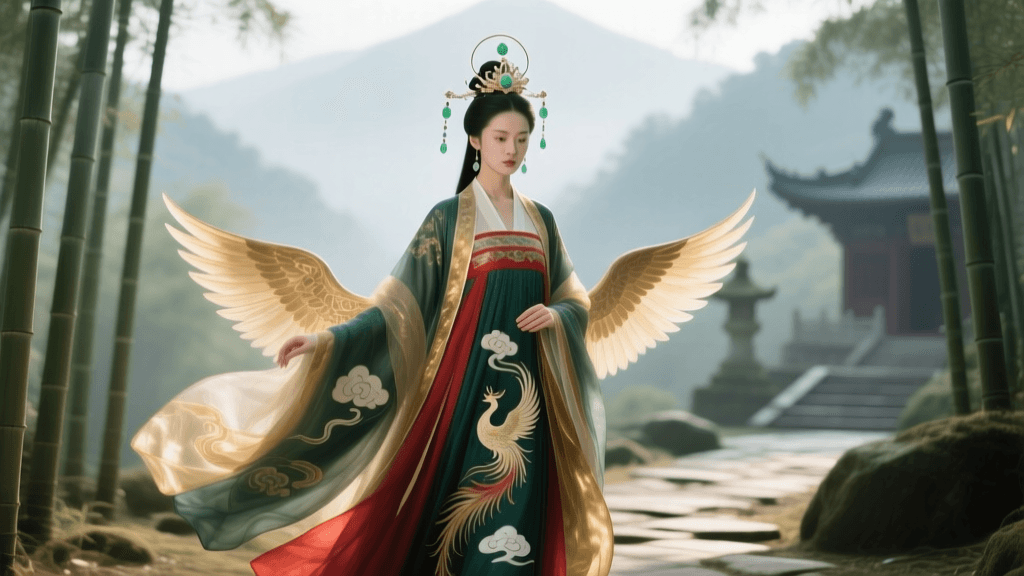
Chang’e is the epitome of celestial grace, often depicted floating toward the moon with flowing ribbons and sweeping sleeves. To capture her essence, the Tang Dynasty Qixiong Ruqun (chest-high skirt) paired with a Daxiushan (large-sleeve shirt) is the ultimate choice.
- The Skirt: Opt for a Qixiong skirt with a circumference of at least 300 cm to allow for dramatic pooling on the ground. The waistband should be 8-10 cm wide to support the heavy fabric without slipping.
- The Sleeves: The Daxiushan must have a sleeve width of 120 cm to 150 cm. This extreme width creates the 'celestial wind' effect when you move.
- Colors & Motifs: Pastel blues, silvers, and pearlescent whites. Look for subtle embroidery of jade rabbits, cassia trees, or crescent moons.
- Budget: A high-quality, ethereal Chang’e set from reputable vendors typically costs between $120 and $250 USD.
2. Huli Jing: The Nine-Tailed Fox Spirit
Fox spirits are alluring, mysterious, and deeply tied to nature and illusion. The Ming Dynasty Aoqun (jacket and skirt) or the Tang Dynasty Banbi (half-sleeve jacket) layered over a Mamianqun (horse-face skirt) perfectly encapsulates their grounded yet magical aura.
- The Skirt: The Mamianqun is essential. Its structured, flat front panels and deep side pleats mimic the swishing tail of a fox. Choose skirts with woven gold motifs (Zhijin) featuring floral or beast patterns.
- The Layers: Layer a form-fitting, cross-collar inner shirt beneath a slightly cropped, wide-sleeved Ao jacket to accentuate movement.
- Colors & Motifs: Fiery crimsons, deep forest greens, and stark whites. Faux fur stoles or collars are a modern, community-driven addition to emphasize the 'spirit' aspect.
3. Longwang: The Dragon King
For a commanding, regal presence, the Dragon King archetype relies on the Yuanlingpao (round-collar robe). This garment was historically worn by officials and nobility, making it perfect for celestial rulers.
- The Robe: Select a robe with a stiff, structured collar and wide sleeves. The hem should brush the floor, requiring precise height measurements (usually custom-ordered based on your height plus 5 cm for hem allowance).
- Headwear: A structured Futou (official's hat) or a dragon-horned crown is mandatory. Use hidden U-shaped metal hairpins (at least 15 cm in length) to anchor the heavy headwear securely into a foam base or wig.
- Colors & Motifs: Imperial yellow, deep azure, or black, heavily embroidered with five-clawed dragons and crashing wave motifs.
Fabric and Material Guide for Ethereal Styling
The success of a mythological Hanfu outfit hinges entirely on fabric choice. Historical accuracy is often bent in favor of 'fantasy aesthetics' in mythology styling. According to The Metropolitan Museum of Art's Heilbrunn Timeline of Art History, silk has been the cornerstone of Chinese luxury and spiritual dress for thousands of years, prized for its luster and drape. However, modern synthetics offer practical alternatives for dramatic effects.
| Fabric Type | Drape & Movement | Best Mythological Archetype | Estimated Cost (per yard) |
|---|---|---|---|
| Mulberry Silk (Chiffon) | Fluid, lightweight, catches wind beautifully | Chang’e, Fairies, Water Spirits | $25 - $45 USD |
| Silk Brocade (Zhijin) | Stiff, heavy, holds pleats perfectly | Dragon King, Fox Spirit, Heavenly Generals | $40 - $80 USD |
| Pearl Organza | Stiff but sheer, creates glowing silhouettes | Star Deities, Ethereal Ghosts | $10 - $20 USD |
| Velvet | Heavy, absorbs light, deeply textured | Underworld Deities, Demonic Spirits | $15 - $30 USD |
Actionable Tip: If you are sewing your own Daxiushan, avoid standard cotton or linen. These fabrics absorb moisture and cling to the body, ruining the 'floating deity' illusion. Always line sheer organza or chiffon with a lightweight, anti-static silk blend to ensure the fabric billows away from your body rather than sticking to it.
Sourcing Accessories: Hairpins, Jade, and Spirit Motifs
Accessories elevate a historical garment into a mythological costume. The hair is where the magic happens, serving as a canvas for celestial storytelling.
Hairpins and Crowns (Buyao and Shuguan)
For mythological styling, minimalism is discarded in favor of opulence. You will need Buyao (dangling hairpins) that feature long, trembling metal springs (usually 10-15 cm long) topped with resin flowers, faux pearls, or enamel butterflies.
- Sourcing: Platforms like Taobao and AliExpress are the primary sources. Search terms like 'Hanfu fairy hairpin' (汉服仙女发簪) or 'Bridal phoenix crown' (凤冠) will yield the best results for deity styling.
- Cost: A complete, heavy metal crown set can cost between $80 and $150, while lightweight alloy dangling pins range from $10 to $25 each.
- Securing the Style: Mythological hairstyles are heavy. Use a hair donut (foam base) wrapped in your natural hair or a wig. Insert two 15cm metal U-pins in an 'X' formation through the base of every heavy pin to lock it into the foam.
Jade and Spirit Ornaments
Jade has historically been associated with immortality and spiritual protection. Incorporating jade pendants (Yupei) into your waist sash is crucial for deity portrayals. While genuine Hetian jade is prohibitively expensive for most hobbyists, high-quality serpentine jade or carved resin replicas offer the same visual weight and translucent glow for photography, usually costing between $20 and $50 per piece. Attach these to a braided silk sash using traditional macrame knots, allowing the jade to rest at the hip or thigh to accentuate movement when walking.
Practical Tips for Mythology Hanfu Photoshoots
Capturing the essence of a Chinese deity requires specific environmental and logistical planning. The goal is to make the subject look as though they are unbound by gravity or earthly constraints.
Timing and Lighting
Never shoot mythological Hanfu at high noon; the harsh shadows will flatten the intricate embroidery and ruin the ethereal mood. The optimal timing is Golden Hour (45 minutes before sunset) or Blue Hour (20 minutes after sunset). If you are portraying a moon deity or an underworld spirit, Blue Hour provides a natural, moody backdrop that requires minimal color grading. Use a portable LED panel with a warm gel (3200K) to cast a subtle rim light on the gold embroidery of your Mamianqun or Yuanlingpao, separating you from the darkening sky.
The 'Celestial Wind' Technique
Static poses do not suit deities. The sweeping sleeves of the Daxiushan and the wide pleats of the Mamianqun require motion. If you are shooting outdoors on a still day, bring a battery-powered portable leaf blower or a high-velocity camera fan. Position the fan low to the ground, angled slightly upward. This will catch the inner layers of your skirt and the trailing ribbons of your sash, creating a continuous, billowing effect that mimics the magical auras seen in Chinese fantasy dramas.
Wardrobe Malfunction Prevention
Mythological Hanfu sets are heavy and prone to slipping, especially the chest-high Qixiong skirts. Before your shoot, apply double-sided fashion tape along the inner edge of the skirt's waistband, pressing it firmly against your skin or inner shirt. Additionally, use hidden elastic suspenders attached to the waistband and looped over your shoulders, completely concealed by the large sleeves of your Daxiushan. This ensures you can leap, twirl, and pose without fear of a wardrobe failure.
Conclusion
Dressing as a figure from Chinese mythology is more than just cosplay; it is a profound engagement with cultural heritage and storytelling. As highlighted by The World of Chinese, the modern Hanfu movement allows younger generations to reclaim and reinterpret their history, blending the ancient with the imaginative. By carefully selecting the right historical silhouettes, investing in fluid fabrics, and mastering the art of mythological styling, you can step out of the mortal realm and embody the timeless legends of China's celestial pantheon.