Dressing the Divine: Mythological Motifs in Traditional Hanfu
The Intersection of Myth and Silk
For millennia, Chinese mythology has transcended oral storytelling and classical literature, weaving itself directly into the sartorial fabric of the nation. Traditional Chinese clothing, particularly Hanfu, serves as a wearable canvas for the divine. From the celestial courts of the Jade Emperor to the mystical mountains inhabited by immortals, mythical creatures and deities have long dictated the motifs, colors, and structures of ceremonial and everyday garments. Today, the Hanfu revival movement has sparked a renewed interest in these mythological designs, allowing modern enthusiasts to don the symbols of ancient legends.
Understanding how to source, style, and care for mythology-inspired Hanfu requires a blend of historical knowledge and practical tailoring insight. Whether you are preparing for a traditional wedding, a cultural festival, or a high-end cosplay event, integrating mythical motifs into your wardrobe demands attention to fabric weight, embroidery techniques, and symbolic accuracy. This guide will walk you through the legendary bestiary of Chinese textiles and provide actionable advice for commissioning and styling your own divine garments.
Decoding Mythical Motifs in Traditional Garments
The creatures of Chinese mythology are not merely decorative; they are deeply symbolic, representing cosmic balance, moral virtues, and auspicious blessings. According to the Metropolitan Museum of Art's analysis of dragons in Chinese art, these mythical beings were strictly regulated by sumptuary laws in imperial times, but today they are celebrated as universal symbols of cultural heritage. Below is a practical comparison chart to help you choose the right mythical motif for your specific occasion and budget.
| Mythical Creature | Symbolic Meaning | Recommended Garment Type | Average Custom Embroidery Cost (USD) | Lead Time |
|---|---|---|---|---|
| Dragon (Long) | Imperial power, yang energy, strength, and good fortune | Yuanlingpao (Round-collar robe) or Panling Pao | $300 - $800 | 4 - 8 weeks |
| Phoenix (Fenghuang) | Yin energy, marital harmony, virtue, and grace | Xiuhefu (Wedding jacket/skirt) or Xiapei (Ceremonial cape) | $400 - $1,000 | 6 - 10 weeks |
| Qilin | Benevolence, prosperity, protection, and male offspring | Aoqun (Ming dynasty jacket and pleated skirt) | $250 - $600 | 4 - 6 weeks |
| Nine-Tailed Fox (Huli Jing) | Mysticism, love, transformation, and enchantment | Daxiushan (Large-sleeved robe) or Beizi (Open-front coat) | $200 - $500 | 3 - 5 weeks |
| Crane (Xianhe) | Longevity, immortality, scholarly purity, and peace | Pifeng (Cape) or Shenyi (Deep robe) | $150 - $400 | 3 - 5 weeks |
The Dragon and Phoenix: A Celestial Union
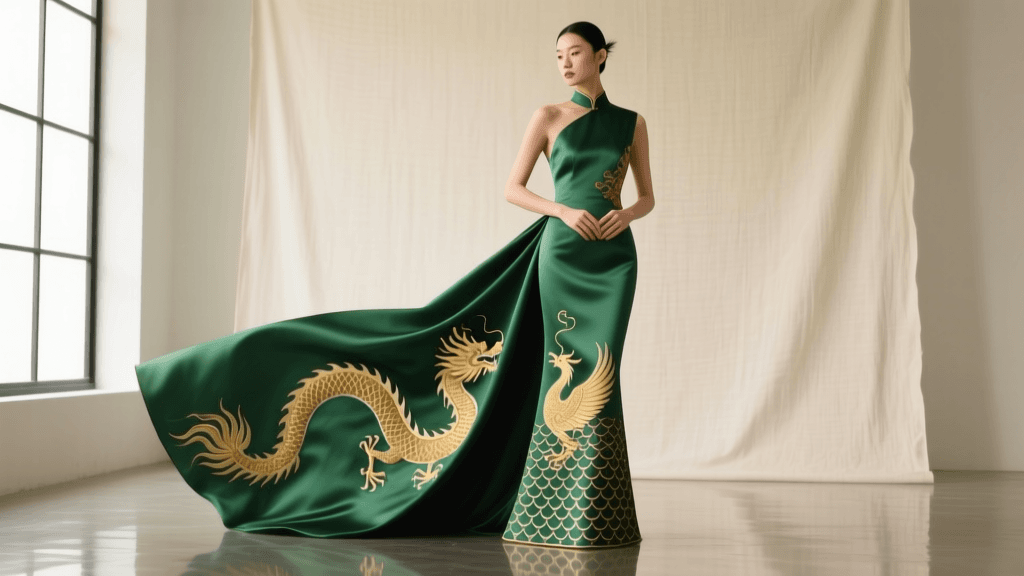
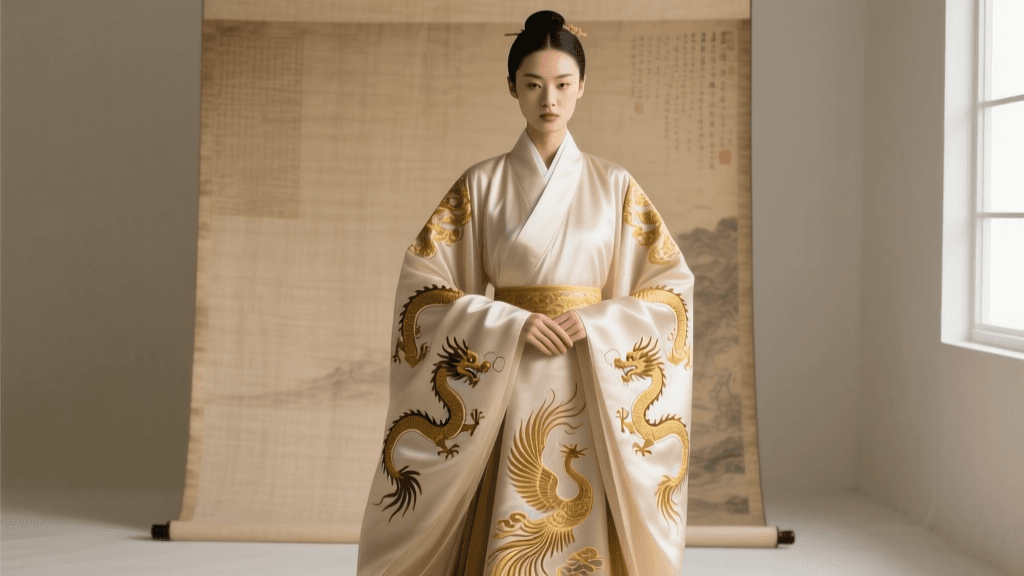
The pairing of the dragon and phoenix (Longfeng Chengxiang) is the ultimate symbol of marital bliss and cosmic balance. For brides seeking a mythology-inspired Xiuhefu, look for dense, raised embroidery using gold and silver metallic threads (Panjin). The dragon should traditionally feature five claws if you are aiming for historical imperial accuracy, though four-clawed or three-clawed dragons are more appropriate for general ceremonial wear to avoid historical faux pas.
The Qilin and the Nine-Tailed Fox
The Qilin, often described as a gentle creature with a dragon's head and a scaled body, is a popular motif for Ming dynasty-style Aoqun, particularly for those seeking blessings of prosperity and family growth. Conversely, the Nine-Tailed Fox, popularized by the classic text Classic of Mountains and Seas (Shan Hai Jing), has become a favorite among younger Hanfu enthusiasts. Fox motifs are often rendered in ethereal, flowing Su-style embroidery on lightweight silk chiffon, perfect for the sweeping sleeves of a Tang dynasty Daxiushan.
Practical Guide to Sourcing and Commissioning Mythological Hanfu
While mass-produced Hanfu with printed mythical motifs are widely available on e-commerce platforms, true enthusiasts often seek custom-commissioned pieces featuring hand-embroidery or traditional brocade weaving. Commissioning a garment requires precise communication with artisans, particularly those based in Suzhou or Hangzhou.
Fabric Selection for Divine Drape
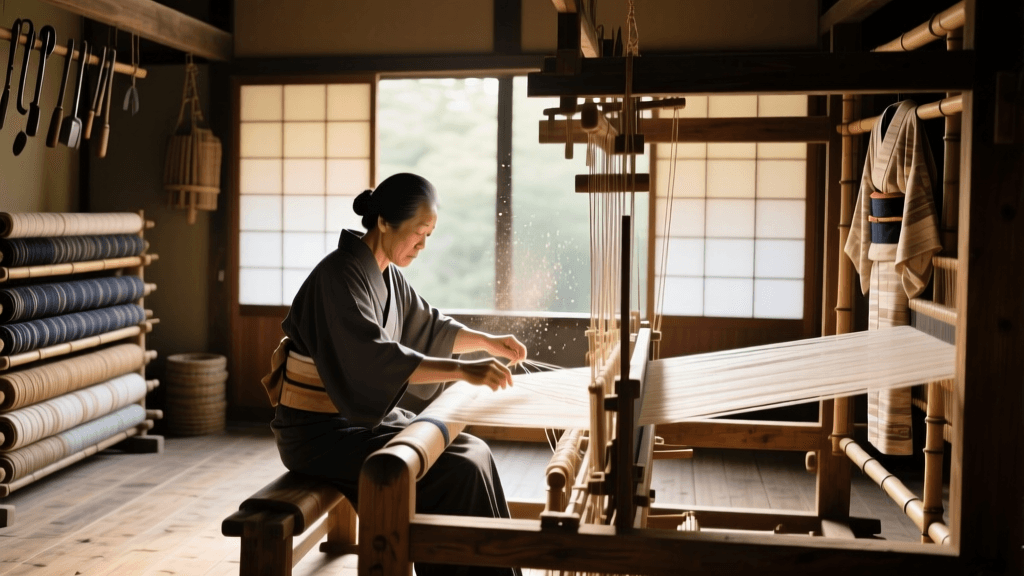
The foundation of any mythological garment is its fabric. The history of silk production in China reveals a dizzying array of weaving techniques, each suited to different mythical aesthetics:
- Song Brocade (Songjin): Known for its matte finish and intricate, repeating geometric and mythical patterns. It is relatively lightweight and holds its shape well, making it ideal for structured Ming dynasty jackets (Ao) featuring Qilin or crane motifs.
- Yun Brocade (Yunjin): A luxurious, heavy fabric often woven with real gold leaf and peacock feather threads. Yunjin is the premier choice for heavy ceremonial wedding wear (Xiuhefu) featuring dragon and phoenix motifs. Expect to pay upwards of $150 per yard for authentic, hand-loomed Yunjin.
- Mulberry Silk Charmeuse: For garments depicting ethereal beings like the Nine-Tailed Fox or celestial maidens (Chang'e), a high-momme (19mm to 22mm) silk charmeuse provides the necessary fluid drape and luminous sheen.
The dedication to these traditional weaving methods is so profound that UNESCO has officially recognized Chinese sericulture and silk craftsmanship as an Intangible Cultural Heritage of Humanity, ensuring these ancient techniques survive into the modern era.
Taking Measurements for Traditional Tailoring
Unlike Western bespoke tailoring, which emphasizes close-fitting silhouettes, traditional Hanfu relies on flat-pattern cutting and generous ease. When sending your measurements to a Hanfu tailor, provide the following specific data points:
- Bust (Xiongwei): Measure around the fullest part of your chest. Add 2 to 4 inches (5-10 cm) for ease, especially for cross-collared (Jiaoling) tops to ensure the collar lays flat without gaping.
- Waist (Yaowei): Measure at your natural waist. For Ming dynasty jackets, add 1 to 2 inches for ease.
- Shoulder Span (Jiankuan): Measure from the edge of one shoulder bone to the other. This is critical for the drop-shoulder look of traditional robes.
- Arm Length (Bizhang): Measure from the base of your neck, over the shoulder, and down to your wrist (or mid-hand for the traditional "covering the hands" sleeve length).
- Skirt Length (Qunchang): Measure from your natural waist down to your desired hemline. For a floor-grazing Mamianqun (pleated skirt), subtract 1 inch to prevent tripping, and always specify the heel height of the shoes you plan to wear.
Accessorizing the Legend
A mythological Hanfu ensemble is incomplete without the appropriate accessories. Hair and waist ornaments serve to anchor the ethereal nature of the clothing to the physical realm.
Hairpins (Buyou and Zanzi)
For phoenix or crane motifs, opt for dangling Buyou hairpins crafted from brass with kingfisher feather inlay (Diancui) or blue enamel. The swaying motion of the Buyou mimics the flight of birds. For dragon motifs, a sturdy, single-pronged Zanzi carved from dark green Hetian jade provides a grounding, masculine, or scholarly contrast to heavily embroidered robes.
Waist Pendants (Yapei)
In ancient times, jade pendants were worn to weigh down the hems of robes and regulate the wearer's gait, ensuring a dignified, gliding walk reminiscent of immortals. Source a multi-tiered jade Yapei featuring a carved Qilin or Ruyi (cloud) motif. Ensure the silk tassels match the secondary color of your garment's embroidery to create a cohesive visual flow.
Caring for Heavily Embroidered Mythological Garments
Garments featuring dense metallic embroidery or delicate silk brocades require meticulous care to preserve their structural integrity and vibrant colors.
- Cleaning: Never machine wash or hand-wash heavily embroidered Yunjin or Xiuhefu. The metallic threads will tarnish, and the silk base will warp. Always seek a professional dry cleaner who specializes in heritage textiles and bridal wear.
- Storage: Do not hang heavily embroidered jackets or robes on standard hangers, as the weight of the embroidery will stretch the silk shoulders over time. Instead, fold the garments using acid-free tissue paper to cushion the folds and prevent the metallic threads from creasing or snapping. Store them in a breathable cotton garment bag in a cool, dark, and dry environment.
- Steaming: To remove wrinkles, use a handheld steamer on the lowest heat setting. Always steam from the inside of the garment, placing a clean cotton pressing cloth between the steamer and the fabric to prevent water spots on the silk.
Conclusion
Dressing in the garments of Chinese mythology is an immersive experience that connects the wearer to thousands of years of cultural storytelling. By understanding the symbolism of the dragon, phoenix, Qilin, and fox, and by carefully selecting the appropriate fabrics, tailoring measurements, and accessories, you can build a Hanfu wardrobe that is not only visually stunning but deeply resonant with ancient legends. Whether you are commissioning a bespoke Xiuhefu for your wedding or styling a flowing Daxiushan for a cultural festival, the divine aesthetics of Chinese mythology offer endless inspiration for the modern traditionalist.