Dressing the Immortals: A Guide to Mythological Hanfu
The Celestial Wardrobe: Where Myth Meets Material
Chinese mythology is populated by a vast pantheon of deities, spirits, and immortals known as Xian. In ancient texts and classical paintings, these celestial beings are rarely depicted in mundane clothing. Instead, they are draped in flowing, gravity-defying silks, shimmering brocades, and intricate jade ornaments that signify their divine status and cosmic power. According to Encyclopedia Britannica's guide to Chinese Mythology, the visual hierarchy of the heavens is deeply intertwined with the earthly concepts of imperial and spiritual authority, which is directly mirrored in their sartorial choices.
For modern Hanfu enthusiasts, cosplayers, and cultural historians, recreating these mythological garments is a thrilling pursuit. It requires moving beyond standard historical replicas and venturing into the realm of theatricality, specialized textiles, and symbolic motifs. This guide provides actionable advice on sourcing celestial fabrics, drafting mythological proportions, and budgeting for your own immortal wardrobe.
Archetypes of the Heavens: A Styling and Sourcing Guide
When designing a mythological Hanfu ensemble, it is essential to align your fabric choices and silhouettes with the specific archetype you wish to embody. Below is a structured comparison of three major mythological figures and the practical details required to recreate their iconic looks.
| Mythological Archetype | Hanfu Style | Primary Fabric | Key Colors | Est. DIY Cost |
|---|---|---|---|---|
| Chang'e (Moon Goddess) | Qixiong Ruqun + Pibo | Silk Organza, Chiffon | Pearl White, Moonstone Blue | $80 - $150 |
| Nine-Tailed Fox (Huli Jing) | Aoqun + Daxiushan | Faux Fur Trim, Brocade | Crimson, Gold, Forest Green | $120 - $250 |
| Dragon King (Longwang) | Yuanlingpao (Round Collar) | Heavy Brocade, Satin | Imperial Yellow, Azure | $150 - $350 |
Chang'e and the Ethereal Pibo
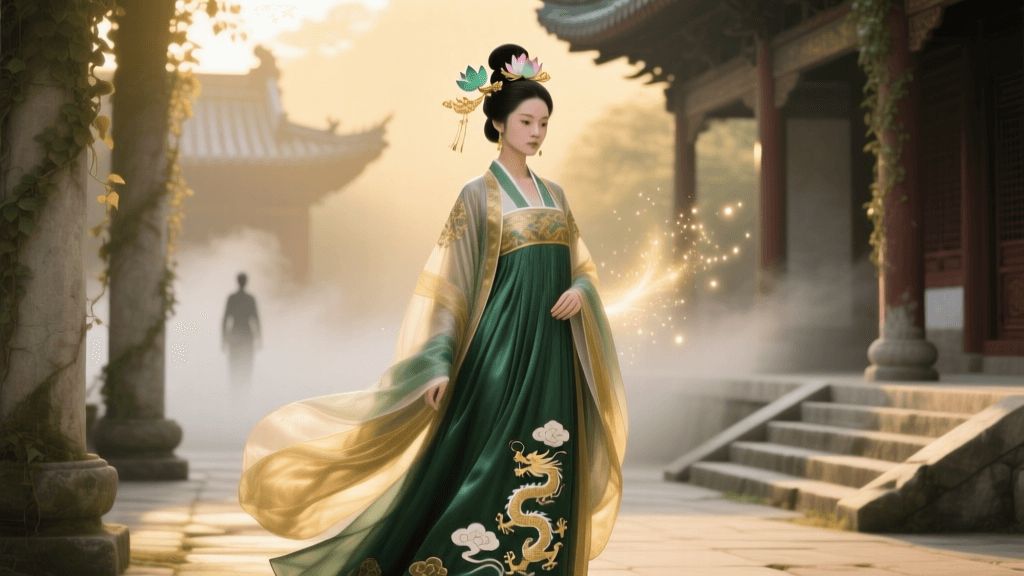
The Moon Goddess Chang'e is synonymous with weightlessness and lunar grace. Her defining garment is the Qixiong Ruqun (chest-high skirt) paired with a Pibo (a long, flowing silk ribbon draped over the arms). To achieve the 'celestial flight' look, avoid heavy cottons or standard polyester. Instead, source 8mm to 12mm weight 100% mulberry silk organza. This fabric provides the necessary stiffness to hold the ribbon's shape while remaining translucent enough to catch the light. For the skirt, a 19mm silk charmeuse offers a luxurious, pearlescent drape that mimics moonlight.
The Dragon King and Imperial Motifs
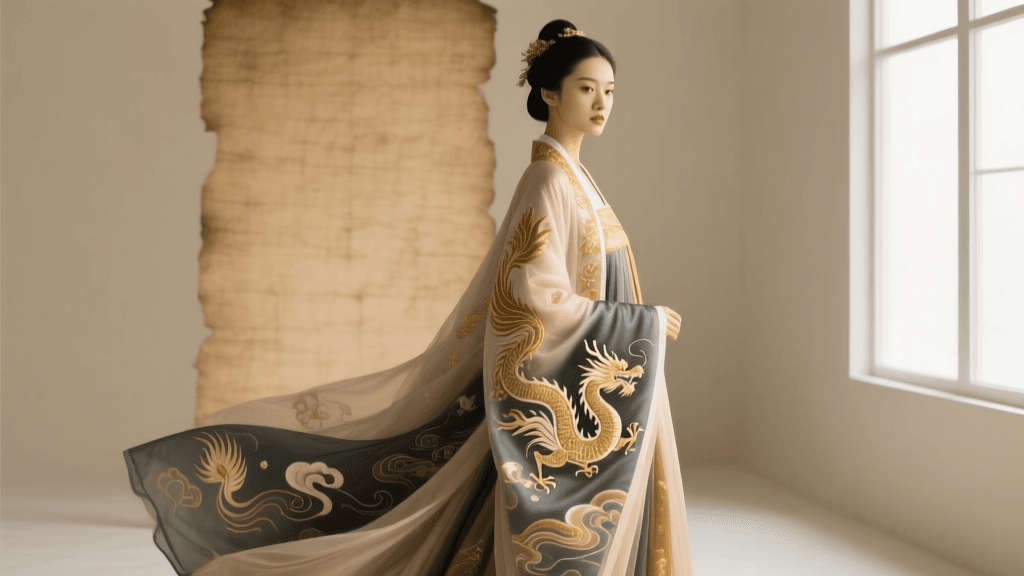
The Dragon King of the Four Seas commands water and weather, requiring garments that project absolute authority. The Yuanlingpao (round-collar robe) is the ideal canvas. As detailed in the Metropolitan Museum of Art's exploration of Chinese Dragons, the dragon motif evolved significantly across dynasties, with the five-clawed dragon becoming strictly reserved for the highest echelons of power. For a Dragon King cosplay or convention piece, seek out heavy Jacquard brocade featuring metallic gold or silver threading. Ensure the dragon motif has five claws to maintain mythological accuracy, and use a stiff interfacing on the collar and cuffs to give the robe an imposing, structured silhouette.
Sourcing Celestial Fabrics for Modern Creators
The foundation of any mythological Hanfu is its textile. Historically, silk was considered a gift from the heavens, a notion supported by The Met Museum's Heilbrunn Timeline of Art History, which notes silk's ancient origins and its profound association with the divine and the elite. Today, sourcing authentic silk is more accessible, but knowing what to search for is crucial.
- Xiangyunsha (Gambiered Canton Gauze): Ideal for earth-bound spirits or ancient deities. This fabric is dyed with yam juice and mud, giving it a unique, crinkled texture and a rich, dark sheen. Expect to pay $40 to $80 per meter.
- Song Brocade (Song Jin): Perfect for structured outer robes (Daxiushan). It features intricate, flat woven patterns that do not snag easily, making it ideal for garments with massive sleeves. Costs range from $30 to $60 per meter.
- Crushed Silk Velvet: Excellent for Fox Spirit (Huli Jing) garments, providing a rich, tactile depth that mimics animal pelts without using real fur. Pair with gold foil appliques for a mystical effect.
Pattern Drafting: The Daxiushan and Pibo Measurements
Mythological garments are defined by their exaggerated proportions. Standard historical Hanfu measurements will not suffice if you want to capture the sweeping, dramatic flair of an immortal. Use the following actionable measurements when drafting or commissioning your pieces:
The Pibo (Celestial Ribbon)
Standard historical ribbons are often too short to create the dramatic, wind-blown loops seen in mythological art. For a true goddess effect, your Pibo should measure 350cm in length and 60cm in width. This allows the ribbon to drape over both wrists, cross the back, and trail at least 50cm on the floor behind you. Finish the edges with a narrow 5mm rolled hem to prevent fraying while maintaining a delicate edge.
The Daxiushan (Large Sleeve Robe)
The Daxiushan is the quintessential immortal outerwear. To achieve the correct 'swallow-tail' drape, the sleeve length must be extreme. Measure from the center back of the neck, across the shoulder, down to the floor. For most adults, this results in a sleeve span of 160cm to 200cm per arm. The armhole depth should be cut generously, at least 35cm to 40cm, to allow the fabric to pool elegantly at the elbow when the arms are raised. Use a lightweight silk lining (like 12mm habotai) to ensure the heavy brocade does not drag the garment off the shoulders.
Crowning the Immortals: Hair and Jade Accessories
No mythological ensemble is complete without elaborate hair styling and jade ornaments. In Chinese cosmology, jade represents purity, moral integrity, and a bridge between the earthly and spiritual realms.
- Buyao (Step-Shake Hairpins): For goddesses and fox spirits, invest in brass or copper Buyao featuring dangling pearls and enamel lotus motifs. Avoid cheap plastic; the weight of metal is necessary to anchor the elaborate updos. Budget $25 to $60 for high-quality, handcrafted resin and metal pieces from specialized artisans on platforms like Etsy or Taobao.
- Jade Pendants and Waist Chains: Immortals often wear intricate jade waist chains (Yujin) over their skirts. While authentic Hetian nephrite is prohibitively expensive (often thousands of dollars), you can source high-grade 'Dongling jade' (a type of quartz) or carved serpentine for $30 to $80. These stones offer the same translucent, verdant aesthetic on camera and in person.
- Guan (Hair Crowns): For male deities like the Dragon King or Erlang Shen, a structured metal or carved wood Guan is mandatory. Look for open-work silver or brass crowns featuring cloud or wave motifs, securing them with a single, polished wooden or bone hairpin.
Budgeting and Commissioning Your Mythological Wardrobe
Building a mythological Hanfu wardrobe requires careful financial planning. Depending on your sewing skills and timeline, you have three primary avenues for acquisition:
- The DIY Route ($100 - $250): Best for creators who already own a sewing machine and understand basic pattern drafting. Your primary costs will be raw silk, brocade, and metallic trims. Allow 2 to 3 weeks of dedicated work for cutting, lining, and finishing a multi-layered Qixiong Ruqun and Daxiushan set.
- Taobao and Weidian Hauls ($150 - $400): Many specialized Chinese Hanfu brands release 'Xianxia' (immortal hero) themed collections. These are mass-produced but highly accurate to mythological tropes. Use a shopping agent to purchase directly from Chinese domestic markets. Timing Tip: Order at least 6 to 8 weeks before your convention or photoshoot to account for manufacturing pre-orders and international shipping.
- Bespoke Couture Commission ($800 - $2,000+): For screen-accurate, competition-level garments, commission a bespoke Hanfu tailor. You will need to provide precise body measurements, fabric swatches, and reference art. This route is ideal for the Dragon King's heavily embroidered Yuanlingpao, as hand-embroidering a five-clawed dragon motif can take an artisan several months.
Conclusion
Recreating traditional clothing from Chinese mythology is an exercise in translating ancient poetry and cosmic philosophy into tangible textiles. By understanding the specific fabric weights, exaggerated measurements, and symbolic motifs required for deities like Chang'e and the Dragon King, you can elevate your Hanfu practice from historical replication to mythological storytelling. Whether you are dyeing your own silk organza or commissioning a master tailor, the pursuit of the celestial wardrobe is a deeply rewarding journey into the heart of Asian traditions.