Vintage Silk Kimono & Hanbok Restoration: 2026 Care Guide
The Challenge of Preserving Heritage Silk in 2026
As the global appreciation for East Asian heritage garments continues to surge in 2026, the responsibility of preserving vintage silk kimonos and hanboks has fallen increasingly into the hands of private collectors, vintage curators, and cultural enthusiasts. These garments are not merely clothing; they are intricate canvases of history, featuring complex weaving techniques, natural dyes, and delicate metallic embellishments. However, silk is a protein-based fiber (fibroin) that is inherently susceptible to environmental degradation, light damage, and chemical instability.
Modern conservation philosophy has shifted dramatically. In 2026, the focus is strictly on minimal intervention, preventive care, and the use of reversible, museum-grade materials. Whether you are dealing with a Meiji-era uchikake (wedding kimono) or a mid-century silk hanbok featuring fragile gold leaf, understanding the science of textile degradation is the first step toward effective preservation and restoration.
Understanding Silk Degradation and Foxing
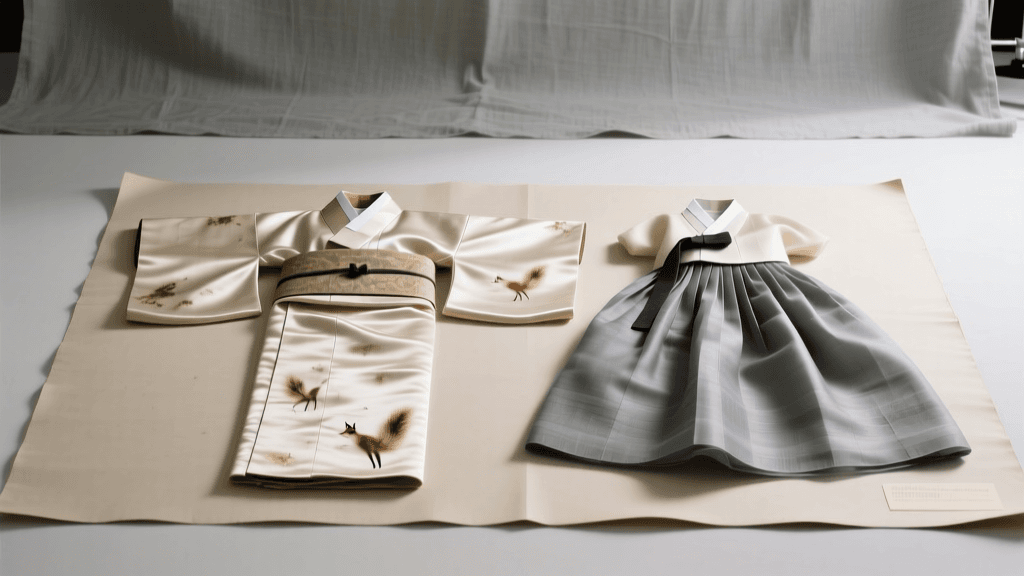
The most common issue collectors face when acquiring vintage Asian garments is 'foxing'—the appearance of small, yellowish-brown spots on the silk. Foxing is typically caused by one of two factors: fungal growth due to historical humidity fluctuations, or the oxidation of metallic salts used in historical dyeing and weighting processes.
In the late 19th and early 20th centuries, silk was often 'weighted' with tin chloride to give it a heavier, more luxurious drape. Over decades, these metallic salts react with moisture and atmospheric pollutants, causing the silk fibroin to shatter and the surrounding areas to stain. According to the Canadian Conservation Institute (CCI) Notes, weighted silk requires highly specialized environmental controls, as the degradation is autocatalytic—meaning it accelerates itself over time if not stored in a stable, low-humidity environment.
2026 Museum-Grade Cleaning and Stain Reduction
Historically, dry cleaning was the default recommendation for vintage silk. Today, modern conservators strongly advise against commercial dry cleaning for heritage kimonos and hanboks, as the harsh solvents can strip natural sericin, dissolve historical sizing agents, and cause irreversible damage to metallic threads.
Agarose Gel Micro-Cleaning
One of the most significant advancements in textile conservation, now widely adopted by specialists in 2026, is the use of rigid polysaccharide gels—specifically Agarose and Gellan gum—for localized stain reduction. Unlike traditional aqueous cleaning, which risks causing Yuzen dyes to bleed or watermarks to form, agarose gels hold deionized water or specialized chelating agents in a semi-solid matrix. When placed over a foxing spot, the gel releases moisture slowly via capillary action, solubilizing the stain without saturating the surrounding silk. The gel is then lifted away, taking the dissolved discoloration with it. Conservation suppliers now offer pre-formulated, museum-grade agarose sheets specifically designed for Asian heritage textiles, allowing careful collectors to perform micro-cleaning with drastically reduced risk.
Dry Surface Cleaning
For general surface soot and particulate matter, conservators use vulcanized rubber sponges (often called 'soot sponges') and ultra-soft hake brushes made from goat or squirrel hair. The garment is laid flat on an archival surface, and the sponge is gently dabbed—not rubbed—across the silk to lift embedded dirt without stressing the fibers.
Preserving Delicate Embellishments: Geumbak and Surihaku
Asian traditional garments frequently feature fragile surface embellishments that require specialized handling. The Korean hanbok often utilizes geumbak (gold leaf imprinting), while Japanese kimonos feature surihaku (metallic foil applied with lacquer or paste).
These embellishments are highly prone to cracking and flaking. In 2026, the golden rule for garments with geumbak or surihaku is to never fold them along the decorated lines. When storing these pieces, conservators use custom-cut, acid-free tissue rolls to create 'soft folds' or store the garments entirely flat in archival drawers to prevent any mechanical stress on the metallic leaf.
Archival Storage Solutions: Upgrading Your Wardrobe
Proper storage is the cornerstone of preventive conservation. The traditional Japanese tatou (paper wrapping) and Korean bojagi (wrapping cloth) methods are excellent for protecting garments from dust and light, but the materials used must be upgraded to modern archival standards.
| Storage Material | pH Level | Breathability | Best Use Case | 2026 Cost Estimate |
|---|---|---|---|---|
| Acid-Free Unbuffered Tissue | 6.5 - 7.5 | High | Interleaving folds, stuffing sleeves | $18 / ream |
| Tyvek Softwrap | Neutral | Medium | Outer dust covers, wrapping rolls | $35 / roll |
| Archival Polyester (Melinex) | Neutral | Low | Flat storage sleeves, viewing windows | $40 / pack |
| Unbleached Cotton Muslin | 5.5 - 6.5 | High | Washable outer bojagi-style wraps | $14 / yard |
When adapting the tatou method, wrap the kimono in unbuffered acid-free tissue paper (buffered tissue contains calcium carbonate, which can react poorly with protein fibers like silk). For hanboks, which often feature voluminous skirts (chima), avoid hanging them long-term. The weight of the silk will cause the fibers to stretch and tear at the seams. Instead, fold the chima using tissue-stuffed rolls to prevent hard creases, and wrap it in a clean, unbleached muslin bojagi.
Climate Control and Anoxia Pest Treatment
Silk is highly hygroscopic, meaning it absorbs and releases moisture from the air. Fluctuating humidity causes the fibers to expand and contract, leading to mechanical fatigue. According to the Victoria and Albert Museum's textile conservation guidelines, light exposure and humidity fluctuations are the most damaging factors for historical textiles. In 2026, collectors utilize smart Wi-Fi hygrometers to maintain a strict environment of 50% Relative Humidity (RH) and a temperature of 65°F (18°C).
Modern Pest Management: Anoxia
Chemical fumigants like mothballs are entirely obsolete in modern conservation due to their toxicity and the chemical residue they leave on silk, which accelerates degradation. Instead, 2026 pest management relies on anoxia (oxygen deprivation). By sealing a garment in a specialized archival barrier film and introducing an oxygen scavenger or nitrogen gas, the oxygen level is reduced below 0.1%. This environment must be maintained for 21 days to eradicate all life stages of the webbing clothes moth. Commercial anoxia kits with digital oxygen sensors have made this museum-level treatment accessible to home collectors, typically costing around $150 per treatment cycle.
When to Call a Professional Conservator
While preventive care and micro-cleaning can be managed at home, certain scenarios require professional intervention. If your kimono or hanbok exhibits active shattering (where the silk crumbles to the touch), severe dye bleeding, or structural tearing along the seams, do not attempt DIY restoration. Adhesives and standard sewing techniques can cause irreversible tension and chemical damage.
When seeking expert help, always consult the American Institute for Conservation's Find a Conservator directory to locate a certified textile specialist. Professional conservators utilize specialized techniques such as laid thread couching and the application of reversible conservation adhesives to stabilize shattering silk without altering the garment's historical integrity.
Conclusion
Preserving vintage silk kimonos and hanboks in 2026 requires a blend of historical reverence and modern scientific understanding. By abandoning outdated cleaning methods in favor of agarose gels and dry surface techniques, upgrading to precise archival storage materials, and utilizing anoxia for pest control, collectors can ensure these magnificent examples of Asian textile heritage survive for generations to come. The key to successful preservation is always patience, minimal intervention, and a commitment to stable environmental conditions.