Advanced Kimono Storage Preservation & Collection Care in 2026
The Evolution of Kimono Preservation in 2026
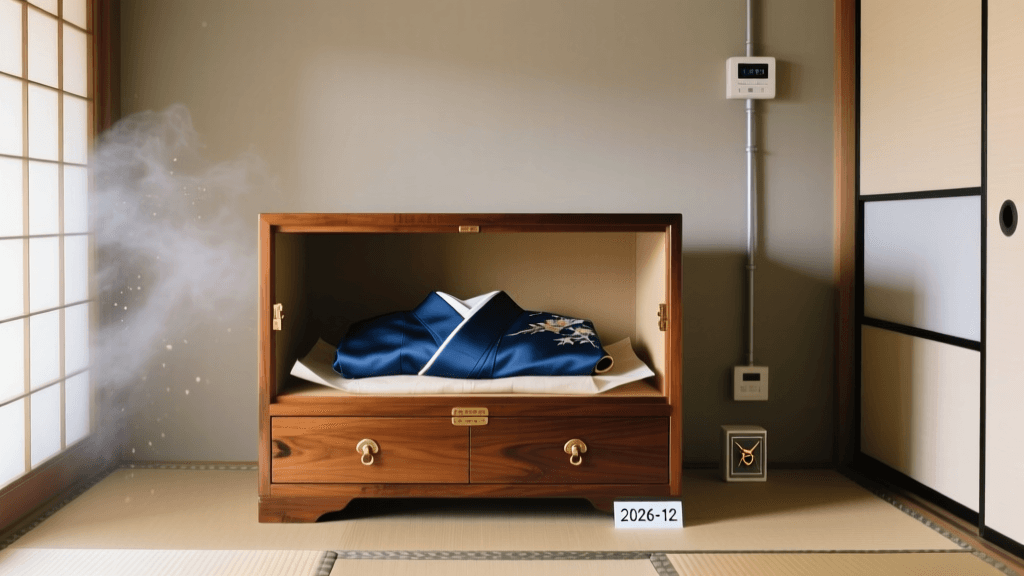
Preserving traditional Japanese garments requires a delicate balance of environmental control, material science, and historical respect. As we navigate through 2026, private collectors, archivists, and cultural institutions are increasingly adopting museum-grade strategies to protect silk, hemp, and ramie textiles from the ravages of time. The protein structure of silk makes it uniquely vulnerable to fluctuating humidity, ultraviolet light, and biological pests. Consequently, modern kimono storage preservation and collection management have evolved beyond simple cedar chests into highly calibrated, data-driven ecosystems.
Whether you are safeguarding a single family heirloom or managing a sprawling collection of Edo-period kosode and Meiji-era uchikake, understanding the intersection of traditional Japanese storage methods and 2026 conservation technology is essential. This comprehensive guide explores the most effective, actionable strategies for maintaining the structural and aesthetic integrity of your kimono collection.
The Gold Standard: Kiri (Paulownia) Tansu vs. Modern Alternatives
For centuries, the tansu (traditional Japanese chest) crafted from kiri (paulownia) wood has been the ultimate standard for kimono storage. Kiri wood possesses remarkable hygroscopic properties; it naturally absorbs excess moisture during humid seasons and releases it when the air is dry. This passive climate regulation helps maintain a stable microenvironment, which is critical for preventing silk fibers from becoming brittle or developing mold.
In 2026, authentic, domestically sourced Japanese kiri tansu remain a premium investment. A high-quality, solid paulownia chest with copper hardware and traditional joinery typically ranges from $2,800 to $5,500 USD, reflecting both the scarcity of mature paulownia trees and the specialized craftsmanship required. When purchasing a tansu, ensure the drawers slide smoothly but with a slight pneumatic resistance—this 'air cushion' effect is a hallmark of proper joinery that seals the drawer against dust and pests.
Modern Archival Alternatives
For collectors lacking the space or budget for a full tansu, modern archival enclosures offer exceptional protection. Acid-free, corrugated polypropylene (Coroplast) boxes are widely used by institutions like the Victoria and Albert Museum (V&A) for their inert, off-gassing-free properties. When using archival boxes, always line them with unbleached, washed cotton muslin or acid-free tissue to provide a soft, breathable barrier for the textiles.
Environmental Monitoring: 2026 Smart Climate Control
According to guidelines established by the Canadian Conservation Institute (CCI), the ideal storage environment for historic textiles is a stable temperature of 18°C to 20°C (64°F to 68°F) with a relative humidity (RH) of 50% to 55%. Fluctuations in RH are often more damaging than the absolute number, as repeated expansion and contraction of fibers leads to micro-tears and crease degradation.
In 2026, wireless environmental data loggers have become incredibly precise and affordable. Devices such as the latest SwitchBot Bluetooth Thermometer and Hygrometer, or specialized museum-grade loggers like the Eltek wireless sensors, allow collectors to track micro-climate changes inside tansu drawers and storage rooms via smartphone dashboards. Place one sensor inside the primary storage drawer and one in the ambient room to compare the buffering effect of your storage materials. If your room's RH frequently drops below 40% in winter or spikes above 65% in summer, integrating a smart humidifier/dehumidifier system tied to these sensors is a mandatory investment for serious collectors.
The Art of Wrapping: Tatougamishi and Folding Techniques
Direct contact with wood, even paulownia, can lead to acid migration over decades. Therefore, every kimono must be wrapped before being placed in a drawer. The traditional Japanese method utilizes tatougamishi (specialized archival wrapping paper). In 2026, museum-grade, unbuffered, acid-free tissue paper or custom-milled Japanese washi treated for pH neutrality is the standard. Avoid buffered (alkaline) papers, as the calcium carbonate used in buffering can damage silk protein fibers over time.
Step-by-Step Folding for Silk Kimonos
Improper folding creates permanent creases that eventually result in fiber splitting, particularly along the shoulders and hem. Follow the traditional hondatami (main folding) method to align with the garment's original seams:
- Preparation: Lay the kimono face down on a clean, padded surface. Ensure your hands are clean and free of lotions, or wear unbleached cotton gloves.
- Sleeve Alignment: Fold the left sleeve back over the body of the kimono, aligning the edge with the center back seam. Repeat with the right sleeve.
- Side Folds: Fold the left side of the body toward the center back seam, then fold the right side over it, creating a long, narrow rectangle.
- End Folds: Fold the bottom hem up toward the collar, stopping a few inches short to prevent sharp creases on the delicate collar silk. Fold the collar section down to meet the hem.
- Padding: Before the final fold, place rolled, acid-free tissue paper inside the folds to create soft, rounded curves rather than sharp, pressed edges.
Once folded, wrap the garment snugly in your tatougamishi and secure it with a flat, unbleached cotton tie or a silk ribbon. Never use rubber bands, synthetic twine, or adhesive tape.
Comparative Analysis: Kimono Storage Materials
Choosing the right storage enclosure depends on your budget, spatial constraints, and the specific vulnerabilities of your collection. Below is a 2026 comparison of the most common storage materials used by private collectors and archivists.
| Storage Material | Estimated Cost (2026) | Breathability | Pest Resistance | Best Use Case |
|---|---|---|---|---|
| Solid Kiri (Paulownia) Tansu | $2,800 - $5,500+ | Excellent (Hygroscopic) | High (Natural tannins) | High-value silk, long-term heirloom storage |
| Archival Coroplast Boxes | $80 - $150 per box | Moderate | Moderate (Sealed edges) | Space-constrained collections, institutional archives |
| Acid-Free Cardboard Enclosures | $35 - $60 per box | Good | Low (Susceptible to silverfish) | Short-term storage, transport, budget collections |
| Unbleached Cotton Muslin Bags | $15 - $25 each | Excellent | Low (Requires secondary enclosure) | Inner wrapping, dust protection inside drawers |
Integrated Pest Management (IPM) for Textile Collections
Textile pests, notably the webbing clothes moth (Tineola bisselliella) and the carpet beetle, pose a catastrophic threat to silk and wool garments. In 2026, the conservation community strictly advises against the use of traditional chemical mothballs (naphthalene or paradichlorobenzene), which are toxic to humans and can cause yellowing and degradation of silk fibers.
Instead, implement an Integrated Pest Management (IPM) strategy:
- Isolation and Quarantine: Any newly acquired kimono must be isolated in a sealed polyethylene bag and frozen at -20°C (-4°F) for 72 hours to eradicate any latent eggs or larvae before entering your main collection space.
- Natural Repellents: Use natural Japanese camphor (shounou) or dried neem leaves placed in small, breathable cotton sachets. Ensure these sachets never touch the silk directly, as the essential oils can cause staining.
- Pheromone Traps: Deploy non-toxic pheromone sticky traps in the corners of your storage room to monitor for adult male moths. An increase in trapped moths serves as an early warning system, allowing you to inspect the collection before a full infestation occurs.
Digital Collection Management in 2026
As collections grow, physical preservation must be paired with rigorous digital cataloging. Modern kimono collection management relies on cloud-based databases to track provenance, condition reports, and rotation schedules. In 2026, platforms like Airtable or specialized museum software like PastPerfect Mobile allow collectors to create customized relational databases.
Every garment should be assigned a unique accession number, physically attached via a loose, unbleached cotton thread loop at the inner collar. In your digital database, ensure you log the following metadata fields:
- Accession Number & Date of Acquisition
- Garment Type (e.g., Furisode, Houmongi, Haori)
- Era/Period (e.g., Taisho, Early Showa)
- Material & Technique (e.g., Rinzu silk, Yuzen dyeing, Gold foil application)
- Condition Report (Documenting existing stains, weak seams, or fading)
- Storage Location (e.g., Tansu 2, Drawer 3)
- Rotation Schedule (Set automated reminders to refold the garment every 12 to 18 months to prevent permanent crease setting).
For advanced collectors, passive RFID (Radio Frequency Identification) tags encased in archival plastic can be sewn into the cotton storage ties, allowing for instant inventory audits using a handheld scanner without ever needing to open the protective tatougamishi wrapping.
Conclusion
Kimono storage preservation and collection management in 2026 represent a harmonious blend of ancestral wisdom and modern conservation science. By investing in hygroscopic kiri tansu or inert archival enclosures, strictly monitoring your micro-climate, utilizing proper hondatami folding techniques, and maintaining a rigorous digital catalog, you ensure that these magnificent textiles survive for future generations. Preservation is not merely about halting decay; it is an active, ongoing dialogue with history, requiring vigilance, respect, and a commitment to excellence in every fold and fiber.