Murasaki Shikibu's Legacy: Mastering Heian Kimono Layering
Murasaki Shikibu: The Literary Giant and Fashion Arbiter
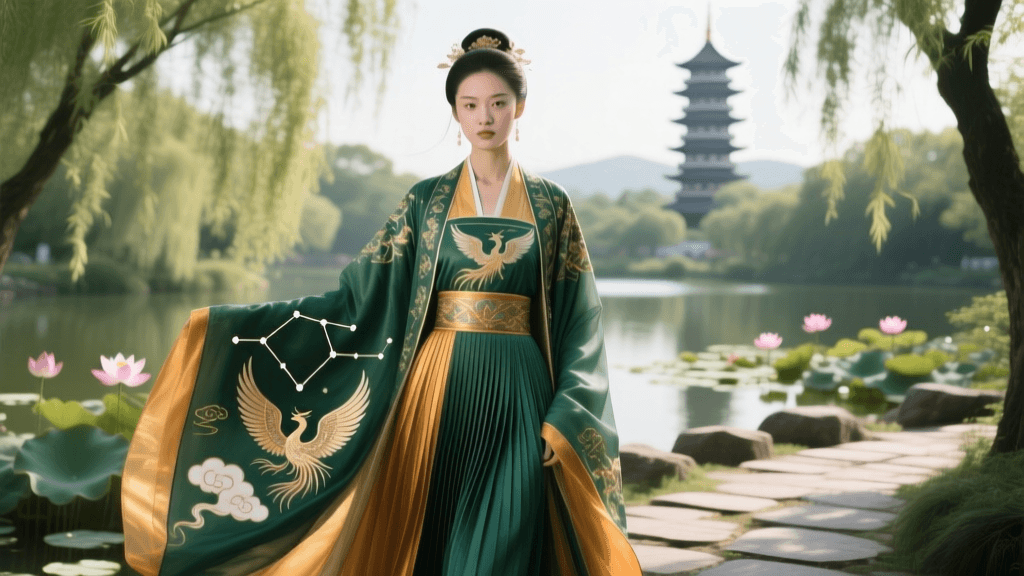
When we think of Murasaki Shikibu, the 11th-century author of The Tale of Genji, we primarily envision a literary pioneer. However, her meticulous documentation of Heian-period court attire cemented her as a foundational fashion icon whose aesthetic principles still govern traditional Japanese clothing today. In her masterpiece, Murasaki did not merely describe garments; she detailed the emotional and seasonal resonance of textiles, dyes, and, most importantly, the art of layering. Through her writings, she codified kasane no irome—the sophisticated system of layered color combinations that communicated a courtier’s refinement, poetic sensitivity, and awareness of the passing seasons.
According to the Metropolitan Museum of Art's Heian Period overview, the era was defined by an intense aristocratic focus on aesthetics, where the subtle peek of a contrasting under-layer at the sleeve or hem was considered the pinnacle of miyabi (courtly elegance). Murasaki Shikibu’s legacy is not just in literature, but in establishing a sartorial grammar that modern kimono wearers still study and revere.
The Historical Context: Heian Court Fashion and the Jūnihitoe
During the Heian period (794–1185), high-ranking court women wore the jūnihitoe, a breathtakingly heavy ensemble consisting of up to twelve or more layered silk robes. The true artistry lay not in the outermost robe, but in the precise arrangement of the layers beneath it. The colors were chosen based on strict seasonal rules and poetic associations. For example, a spring combination might feature a pale cherry-blossom pink outer layer over a vibrant willow-green under-layer, mimicking the visual effect of spring buds emerging against new leaves.
Because the robes were worn open at the front and featured exceptionally wide sleeves, the layered colors were visible at the collar, the cuffs, and the trailing hems. A courtier’s ability to select the perfect kasane (layering) was a direct reflection of her intellect and taste. Murasaki Shikibu frequently used these color combinations as literary devices in The Tale of Genji, using a character’s poorly chosen layers to signify a lack of breeding, or a perfectly matched set to denote romantic harmony.
Translating Heian Elegance to Modern Kitsuke
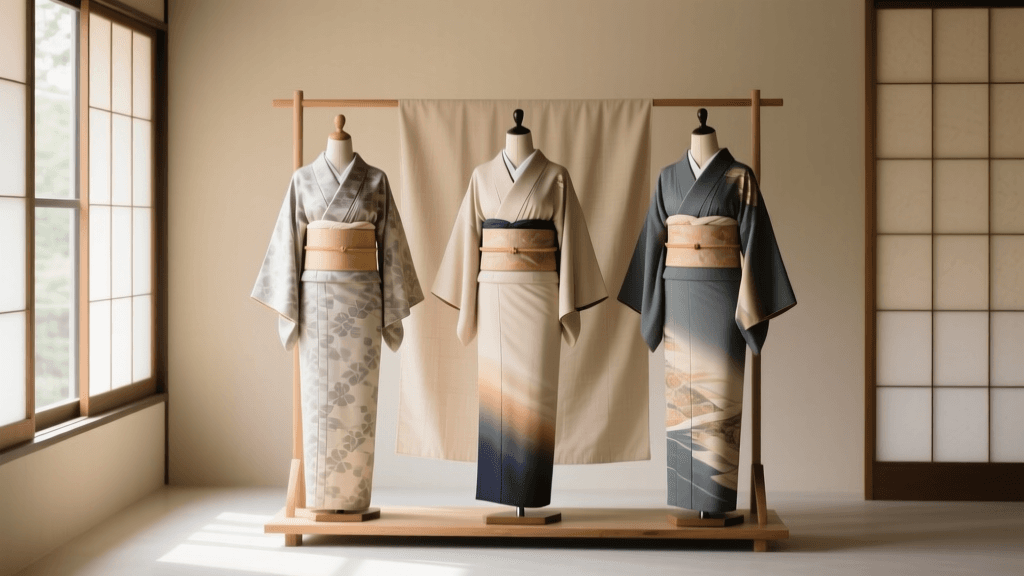
Today, the physical burden of the jūnihitoe is reserved for imperial coronations and specific shrine rituals. However, the aesthetic soul of Murasaki’s layering survives in modern kitsuke (the art of kimono dressing) through the use of the nagajuban (under-kimono) and the kasane-eri (layered collar). As highlighted by the Victoria and Albert Museum's Kimono: Kyoto to Catwalk exhibition, the evolution of the kimono from the Heian period to the Edo period saw a shift from multiple full robes to a single outer garment layered over a specialized undergarment, preserving the illusion of multiple layers at the collar.
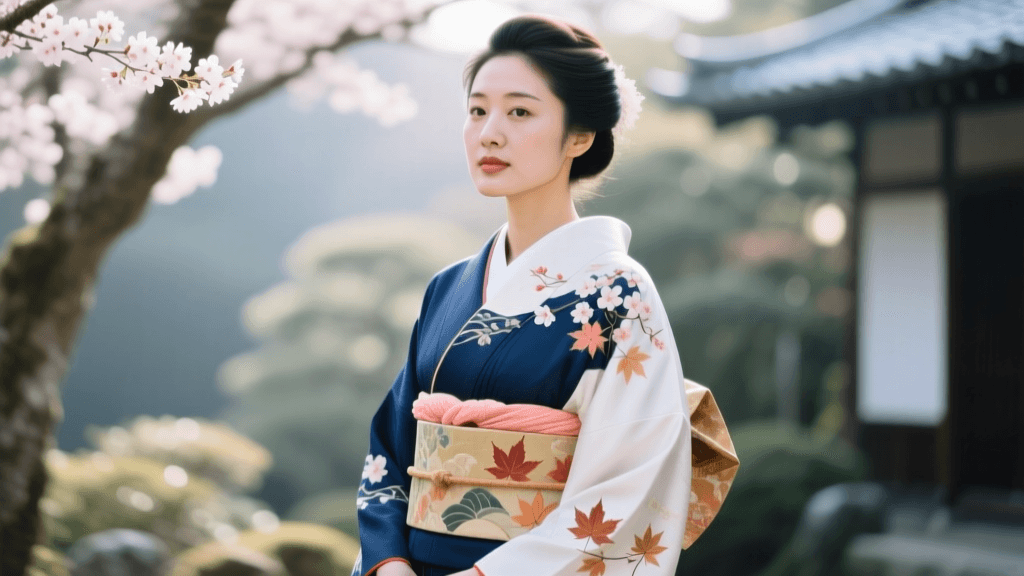
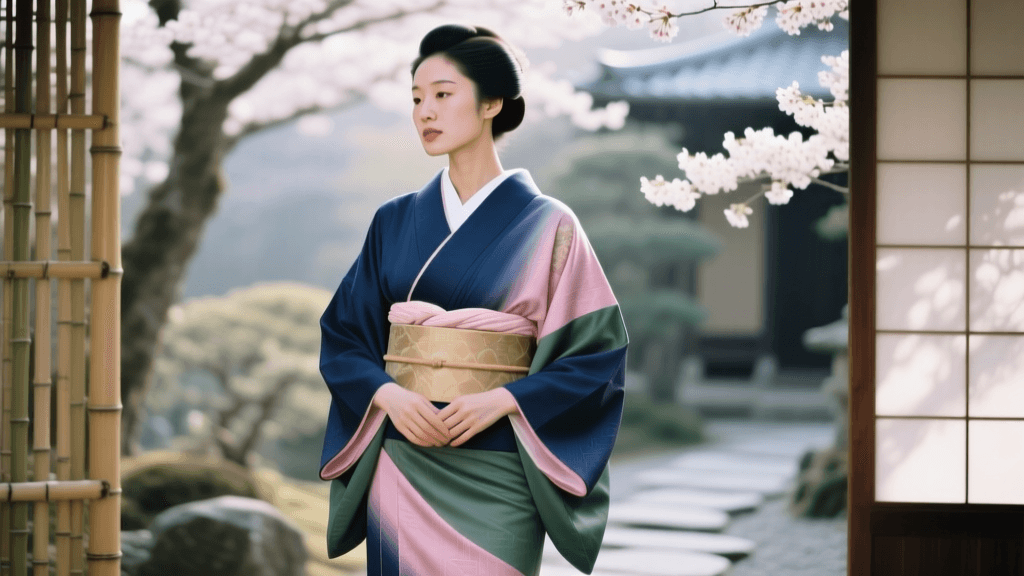
For the modern practitioner, mastering this illusion requires precise measurements and specific accessories. The standard outer collar (hiro-eri) is typically 11 to 12 centimeters wide and folded in half to create a 5.5 to 6-centimeter visible band. To achieve the Heian-inspired layered look, a kasane-eri (a separate strip of contrasting fabric) is basted or pinned to the nagajuban collar. The golden rule of modern layering is the offset: the inner kasane-eri must peek out from beneath the outer kimono collar by exactly 5 millimeters to 8 millimeters at the nape of the neck (eri-nuki), and gradually taper to 2 millimeters at the front lapels (okumi-sen).
Seasonal Kasane no Irome Guide for Modern Wearers
To honor Murasaki Shikibu’s seasonal sensitivity, modern kimono wearers utilize interchangeable kasane-eri collars and date-eri (decorative under-collars) to reflect the time of year. Below is a practical data table translating historical Heian color pairings into actionable modern accessories.
| Season | Historical Name (Kasane) | Outer Kimono Color (Modern) | Nagajuban / Kasane-eri Color | Timing & Botanical Cue |
|---|---|---|---|---|
| Early Spring | Sakura (Cherry Blossom) | Pale Pink or Ivory | Vibrant Crimson or Deep Magenta | February to Early April |
| Summer | Fuji (Wisteria) | Sheer Lavender (Ro-gasane) | Soft Silver-Grey or Pale Green | May to June (Pre-rainy season) |
| Autumn | Momiji (Maple Leaf) | Ochre, Rust, or Deep Gold | Bright Vermillion or Forest Green | October to November |
| Winter | Yuki no Shita (Under Snow) | Ice Blue or Pure White | Crimson Red (symbolizing plum blossoms under snow) | December to January |
Practical Guide: Sourcing, Costs, and Dressing
Building a wardrobe that allows for Heian-style layering requires strategic investments. Here is a breakdown of the essential products, their measurements, and current market costs for both beginners and advanced collectors.
- Nagajuban (Under-Kimono): A modern washable polyester nagajuban costs between $30 and $60 USD and is ideal for beginners. For authentic silk crepe (chirimen), expect to pay $150 to $300 USD for a new garment, or $50 to $120 USD for high-quality vintage pieces from specialized online kimono recyclers.
- Kasane-eri (Layered Collar): These are sold as standalone fabric strips (usually 100 cm long and 8 cm wide). A set of three seasonal silk collars costs around $45 to $80 USD. Synthetic alternatives are available for $15 to $25 USD.
- Eri-shin (Collar Stiffener): Essential for maintaining the crisp 5mm offset without the collar collapsing. A standard plastic eri-shin costs about $5 to $10 USD. For a more natural drape that mimics heavy Heian silks, invest in a padded cotton or bamboo-core eri-shin ($15 to $25 USD).
- Koshi-himo (Tying Cords): You will need at least three to four cotton or silk cords (approx. 130 cm long) to secure the layers. A pack of three costs roughly $12 to $20 USD.
Step-by-Step: Achieving the Perfect Layered Collar
- Prepare the Undergarment: Insert the eri-shin into the pocket of your nagajuban collar. If using a separate kasane-eri, align it beneath the main collar so that exactly 6 millimeters of the contrasting color is visible on the outside edge. Pin it temporarily at the center back.
- Dress the Nagajuban: Wrap the under-kimono around your body, ensuring the back seam is centered. Pull the collar firmly down the back of your neck to create the eri-nuki (the nape opening). The gap between your neck and the collar should comfortably fit a clenched fist (approx. 8 to 10 centimeters).
- Secure the Layers: Tie the first koshi-himo tightly just below the bust. This locks the collar offset in place. Check a mirror to ensure the 5mm to 8mm contrast line is perfectly even on both the left and right sides.
- Apply the Outer Kimono: Drape your outer kimono over the nagajuban. Match the center back seams. As you wrap the outer kimono, use your thumbs to gently pull the outer collar down and outward, allowing the pre-measured kasane-eri to peek through seamlessly.
- Final Adjustments: Tie the outer kimono with a second koshi-himo. Use an eri-clip (a small plastic collar clip, approx. $3 USD) hidden inside the lapels to bind the outer and inner collars together, preventing them from shifting during movement.
Preserving the Legacy in Contemporary Fashion
Murasaki Shikibu’s profound understanding of color theory and textile layering transcends her historical era. Institutions dedicated to Japanese heritage, such as the Kyoto National Museum, continue to preserve and exhibit Heian and Edo-period garments that showcase the evolution of these layering techniques. For the modern enthusiast, adopting kasane no irome is not merely an exercise in historical reenactment; it is a living practice. By carefully selecting the interplay of a 5-millimeter silk collar against a winter-white kimono, today’s wearers actively participate in a thousand-year-old dialogue about nature, seasonality, and the quiet elegance of hidden beauty.