Decoding Kimono Motifs: Color & Pattern Symbolism Guide
The Language of the Loom: Understanding Garment Symbolism
Traditional Japanese clothing is far more than a mere covering; it is a wearable canvas that communicates the wearer's age, marital status, the season, and the formality of the occasion. From the sweeping sleeves of a furisode to the structured elegance of a hakama, every thread, dye, and woven pattern carries profound cultural weight. Understanding the symbolism of colors and motifs is essential for anyone looking to appreciate, wear, or collect traditional Asian garments with authenticity and respect.
According to the Victoria and Albert Museum, the evolution of the kimono from the Heian period (794–1185) onward transformed it into a sophisticated medium for artistic expression. The concept of kisetsukan (seasonal feeling) dictates that a garment must not only reflect the current season but anticipate it, creating a harmonious dialogue between the wearer and the natural world.
The Philosophy of Color in Japanese Traditions
Color in Japanese textiles is deeply tied to historical rank, nature, and spiritual protection. During the Heian period, the aristocracy developed Kasane no Irome, a complex system of layered color combinations. While modern kimono are rarely worn in twelve layers like the historical jūnihitoe, the philosophy survives in the coordination of the kimono's outer fabric, the nagajuban (undergarment), and the collar.
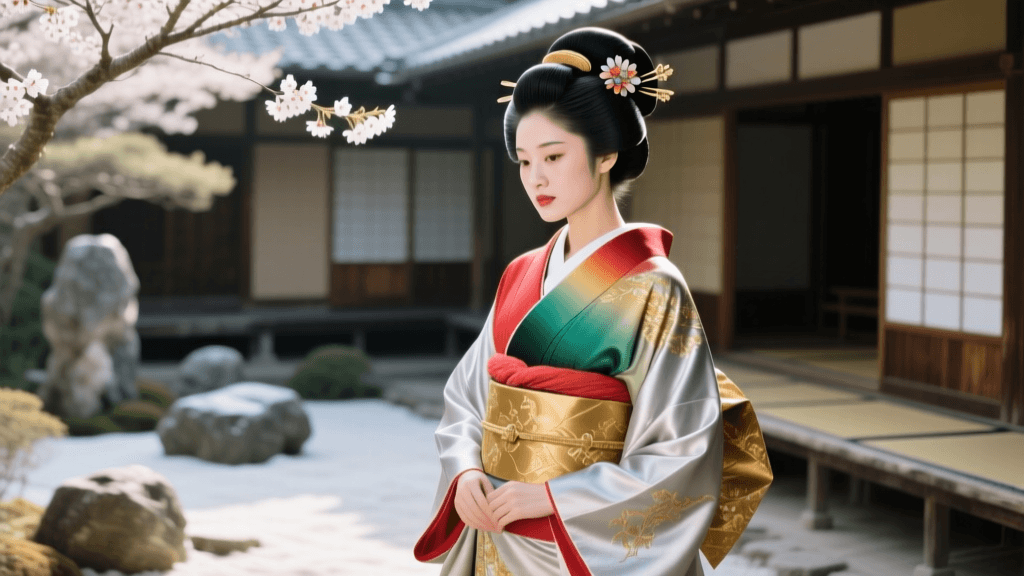
- Red (Shu-iro): Historically associated with protection against evil spirits and the divine. It is the quintessential color for a bride's uchikake and the furisode worn by unmarried young women.
- Gold and Silver: Reserved for highly auspicious occasions, particularly weddings and the New Year. These metallic threads, often woven in Nishijin-ori brocades, symbolize prosperity and celestial light.
- Indigo (Ai-iro): A staple of the Edo period commoner class due to sumptuary laws, indigo represents resilience, purity, and the beauty of understated elegance (iki).
Seasonal Motifs: A Calendar of Nature
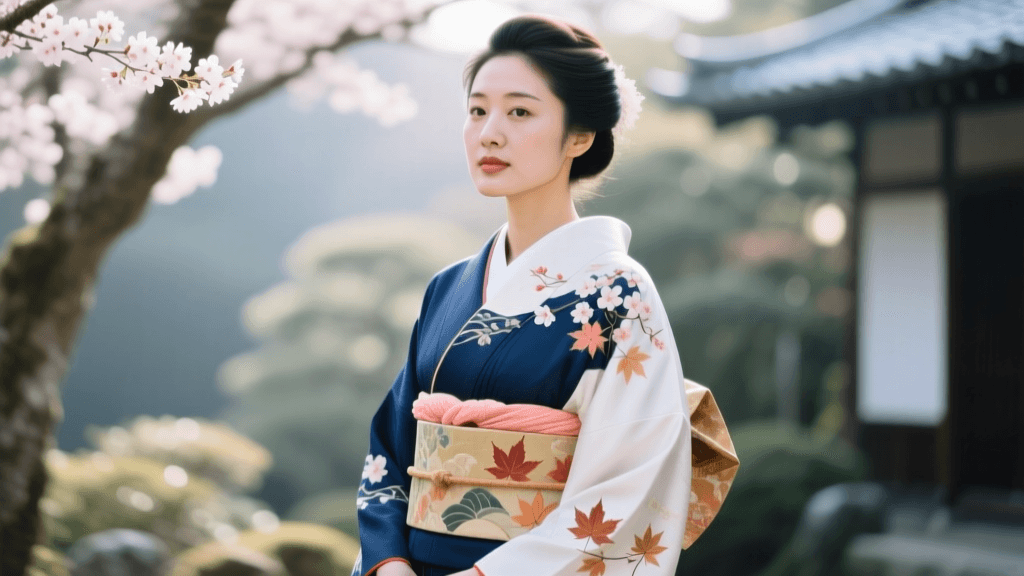
The most critical rule in kimono styling is timing. Motifs must be worn just before the season or event peaks in nature. Wearing cherry blossoms after they have fallen is considered a fashion faux pas, as it implies clinging to the past. The Museum of Fine Arts, Boston notes that this ephemeral appreciation of nature, known as mono no aware, is central to Japanese aesthetic sensibilities.
Seasonal Motif Guide & Timing Rules
| Season | Primary Motifs | Cultural Symbolism | Actionable Wearing Rule |
|---|---|---|---|
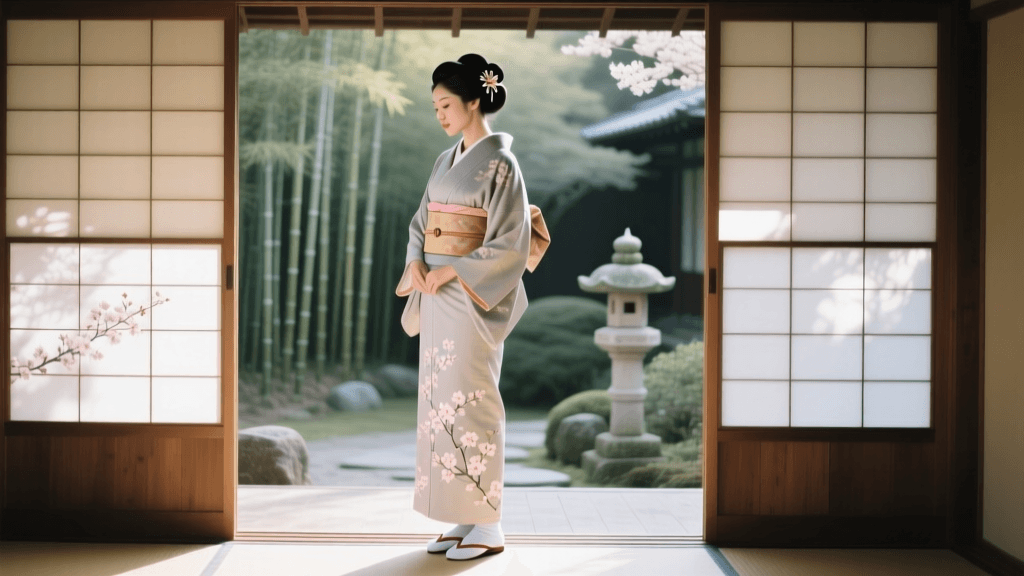
| Spring | Sakura (Cherry Blossom), Ume (Plum), Botan (Peony) | Renewal, perseverance, wealth, and honor | Wear plum in late winter (Feb); sakura in early spring (March/early April) before full bloom. |
| Summer | Fuji (Wisteria), Asagao (Morning Glory), Hotaru (Fireflies) | Coolness, fleeting beauty, and evening relief | Wear cooling motifs like water ripples or morning glories in June/July to visually lower the temperature. |
| Autumn | Momiji (Maple), Kiku (Chrysanthemum), Susuki (Pampas Grass) | Longevity, the harvest moon, and elegant decay | Chrysanthemums can be worn year-round as an imperial symbol, but maple leaves are strictly October/November. |
| Winter | Shochikubai (Pine, Bamboo, Plum), Yukiwa (Snow Rings) | Endurance, resilience, and auspicious beginnings | Snow rings are worn in December/January. Pine and bamboo are acceptable year-round for formal events. |
Ethnic Minority Traditions: Ryukyuan and Ainu Symbolism
While the Yamato Japanese kimono dominates global awareness, Japan's ethnic minorities possess equally rich textile traditions driven by distinct symbolic needs.
Ryukyuan Bingata
Originating in Okinawa, Bingata is a vibrant resist-dyeing technique born from the Ryukyu Kingdom's maritime trade with China and Southeast Asia. Unlike the subdued elegance of mainland Yuzen dyeing, Bingata utilizes striking yellows (derived from turmeric and reserved for royalty), vivid reds, and deep blues. Motifs frequently feature tropical flora, hibiscus, dragons, and clouds, symbolizing the island's subtropical environment and historical sovereignty.
Ainu Attus and Embroidery
The indigenous Ainu people of Hokkaido traditionally wove garments called Attus from the inner bark of the elm tree. The symbolism here is deeply spiritual and protective. Ainu embroidery features complex geometric patterns, such as the moreu (curved spiral) and aiushi (thorn-like brackets). These motifs are placed at the garment's openings—collar, cuffs, and hem—to act as spiritual barriers, preventing malevolent spirits from entering the wearer's body.
Auspicious Motifs for Milestones and Ceremonies
For weddings and the Seijin Shiki (Coming of Age Day), motifs shift from seasonal to eternally auspicious. The Metropolitan Museum of Art highlights how garments for these milestones serve as talismans for the wearer's future.
'The crane (tsuru) and the tortoise (kame) are frequently paired in Japanese wedding textiles, representing the proverbial thousand years of the crane and ten thousand years of the tortoise—a wish for a long, harmonious marriage.'
Other vital ceremonial motifs include the Gosho-guruma (imperial court carriages), which denote high status and are frequently painted in gold leaf across the shoulders and hem of a bride's shiromuku or a young woman's furisode.
Practical Guide: Sourcing, Renting, and Buying
Whether you are attending a tea ceremony, participating in a summer matsuri, or curating a collection, understanding the logistics of acquiring these garments is crucial.
Measurements and the Tanmono Bolt
Traditional kimonos are not cut from wide Western-style fabric bolts. They are constructed from a single tanmono, a narrow bolt of fabric typically measuring 36 to 40 centimeters in width and 11 to 12 meters in length. Because the fabric is cut in straight lines and folded rather than tailored to curves, a single kimono can be entirely disassembled, washed, and re-sewn. When purchasing vintage garments, check the yuki (sleeve-to-sleeve wingspan) and mitake (back length). A standard modern woman's kimono has a back length of roughly 155-160 cm.
Cost Breakdown: Rental vs. Purchase
- Casual Yukata (Cotton): Purchase new for 3,000 to 10,000 JPY ($20–$70 USD). Ideal for summer festivals. No strict motif rules, but seasonal florals are preferred.
- Silk Kimono Rental (Visitors): Expect to pay 5,000 to 15,000 JPY ($35–$100 USD) per day in cities like Kyoto. This includes dressing services and a basic obi.
- Furisode Purchase (Unmarried Women): A high-quality, hand-dyed Kaga Yuzen furisode is a major investment, ranging from 300,000 to over 1,000,000 JPY ($2,000–$7,000+ USD). These are often passed down as family heirlooms.
- Formal Obi (Nishijin-ori): A woven brocade maru obi or fukuro obi can cost between 80,000 and 300,000 JPY ($550–$2,000 USD) due to the inclusion of gold and silver threads.
Timing Your Acquisition
If you plan to rent a furisode for the January Coming of Age Day, you must book your fitting and select your motifs 3 to 6 months in advance (usually between July and September of the prior year). Popular colors like deep crimson or auspicious gold with crane motifs are claimed almost immediately. For weddings, custom uchikake orders require a minimum of 4 to 6 months for hand-dyeing and embroidery by artisans in Kyoto or Kanazawa.
Contemporary Relevance and Styling
Today, the strict rules of kimono styling are being gently bent by younger generations and global enthusiasts. Mixing a vintage, subdued Edo-period tsumugi (pongee silk) kimono with a boldly patterned, contemporary pop-art obi is a popular way to express individuality while respecting the garment's structural integrity. By understanding the foundational language of color and motif symbolism, wearers can make intentional choices that honor the deep artistry of Asian textile traditions while forging a modern sartorial identity.