Heian Period Fashion: Decoding the Junihitoe Layered Kimono
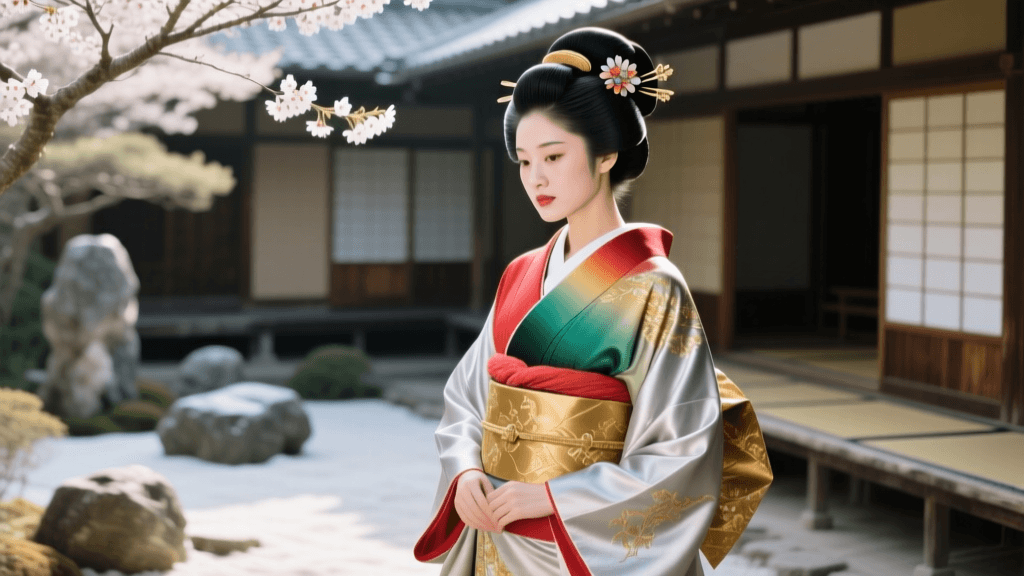
The Zenith of Japanese Court Dress: The Heian Period (794–1185)
The Heian period is widely regarded as the golden age of classical Japanese art, literature, and courtly refinement. Following the relocation of the imperial capital to Heian-kyō (modern-day Kyoto), the Japanese aristocracy began to distance themselves from the heavy influence of Tang Dynasty China. This cultural shift gave birth to kokufu bunka, an indigenous aesthetic that profoundly shaped Japanese fashion. As detailed in the Metropolitan Museum of Art's Heilbrunn Timeline, this era prioritized subtle elegance, poetic sensibility, and an acute awareness of the passing seasons—principles that were woven directly into the garments of the court.
For modern collectors, historians, and traditional arts practitioners, understanding Heian period fashion is not merely an academic exercise; it is a masterclass in textile engineering, color theory, and cultural semiotics. This guide explores the intricate layers of the junihitoe and sokutai, while providing actionable advice for sourcing, measuring, and investing in historical replicas today.
The Junihitoe: Anatomy of the Twelve-Layer Robe
Despite its literal translation as the "twelve-layer robe," the junihitoe actually consisted of anywhere from five to twenty distinct layers, depending on the wearer's rank, the season, and the formality of the occasion. Weighing up to 20 kilograms, this garment was less about practical mobility and more about projecting an aura of aristocratic immobility and immense wealth. The Victoria and Albert Museum notes that the evolution of these layers marked a definitive shift from Chinese-inspired tailoring to uniquely Japanese straight-line cutting methods.
Core Components of the Junihitoe
- Kosode: The foundational undergarment, a short-sleeved robe made of plain white or unbleached silk.
- Nagabakama: Long, pleated trousers tied at the waist, often extending well past the feet to create a trailing effect on the tatami mats.
- Hitoe: An unlined silk robe worn over the undergarments, serving as the base color layer.
- Uchigi: A series of layered robes (usually five) that provided the bulk of the outfit's volume and color contrast.
- Uwagi: The primary outer robe, typically made of finely woven silk with subtle patterns.
- Karaginu: A Chinese-style short jacket with upturned sleeves, woven with intricate brocade.
- Mo: An apron-like train tied at the back, often dyed or painted with auspicious motifs like pine, plum, or cherry blossoms.
Kasane no Irome: The Poetic Rules of Color Layering
The most intellectually demanding aspect of Heian fashion was Kasane no Irome, the strict system of color layering. Aristocratic women were judged not just on the quality of their silk, but on their poetic sensitivity to the seasons, expressed through the visible edges of their layered sleeves and hems. A mismatched color combination during a specific month could result in severe social embarrassment.
Below is a structured guide to historical seasonal color pairings, which modern textile artists and kimono stylists still reference when designing contemporary formal wear or theatrical costumes.
| Season | Theme Name | Outer Layer Color | Inner Layer Color | Cultural Significance |
|---|---|---|---|---|
| Early Spring | Cherry Blossom (Sakura) | White | Pink | Represents the delicate, fleeting nature of spring blooms. |
| Late Spring | Wisteria (Fuji) | Light Purple | Green | Evokes the hanging vines of wisteria against new leaves. |
| Summer | Yellow Rose (Yamabuki) | Yellow | White or Light Green | Celebrates the vibrant mid-summer flora near water sources. |
| Autumn | Maple Leaves (Momiji) | Deep Red | Yellow or Orange | Symbolizes the turning of leaves and the melancholy of autumn. |
| Winter | Pine on Snow (Matsu no Yuki) | Green | White | Represents endurance and longevity amidst the harsh winter. |
Sokutai: The Formal Court Attire for Men
While the junihitoe dominated women's fashion, male courtiers wore the sokutai for the most formal state ceremonies. According to archives preserved by the Kyoto National Museum, the sokutai was a highly structured ensemble designed to convey bureaucratic rank through color and cut. The outer robe's color was strictly dictated by the court cap rank system established by Prince Shōtoku, with deep purple reserved for the highest-ranking officials, and lighter greens or blacks for lower tiers.
The ensemble included the shitagasane (an inner robe with a long, trailing back hem), the hanpi (a sleeveless vest), and the uenohakama (stiff, wide-legged trousers). The outfit was completed with a shakaku (a wooden scepter used to hold court notes) and a kammuri (a stiff, lacquered silk hat with a distinctive upright tail called an ei).
Practical Guide: Sourcing, Cost, and Wearing Heian Replicas Today
For museums, theatrical productions, and serious collectors of Japanese textile history, acquiring a junihitoe or sokutai requires navigating a highly specialized market. Most authentic replicas are produced in Kyoto's Nishijin district, the historic center of Japanese brocade weaving.
Actionable Advice for Collectors and Theatrical Designers
- Sourcing: Seek out specialized shōzoku (traditional court garment) makers in Kyoto. Shops like Ito Shōzoku or specialized Nishijin weavers handle custom commissions.
- Costs: A complete, museum-grade junihitoe set woven with authentic silk and gold leaf threads typically ranges from $15,000 to $35,000 USD. Theatrical-grade replicas using synthetic blends and machine-weaving can be sourced for $3,000 to $6,000 USD.
- Timing: Custom commissions require significant lead time. Expect a wait of 10 to 18 months, as the Nishijin brocade for the karaginu and mo must be woven on specialized jacquard looms.
- Rentals: For film or short-term exhibitions, rental houses in Kyoto offer complete sets for approximately $500 to $1,200 USD per day, including dressing services by licensed kitsuke (kimono dressing) professionals.
Fitting and Measurements
Fitting Heian garments requires a departure from modern kimono logic. Unlike contemporary kimono, which are folded at the waist using an ohashori to adjust length, Heian robes are cut in straight, oversized lines and are meant to drape and pool on the floor.
- Width: Fabric is woven in standard tan-mono bolts, roughly 35 to 38 cm wide. The robes are constructed by joining these straight panels, meaning the garment's width is fixed, and volume is achieved through layering.
- Length: The nagabakama and hitoe hems are intentionally cut to exceed the wearer's height by 30 to 50 cm, allowing the silk to trail elegantly behind them.
- Dressing Time: Putting on a full junihitoe takes 45 to 90 minutes with the help of two assistants. The layers must be meticulously aligned at the sleeves and hemlines to ensure the Kasane no Irome color gradients are perfectly visible.
"The Heian courtier's garment was not merely clothing; it was a walking canvas of poetry, a heavy, silken manifestation of the wearer's understanding of time, nature, and their place within the imperial hierarchy."
Whether you are a costume historian analyzing the structural evolution of the kosode, or a collector seeking to preserve the intricate brocades of the Nishijin tradition, the fashion of the Heian period remains an unparalleled achievement in the global history of textile arts. By understanding the strict rules of Kasane no Irome and the architectural tailoring of the sokutai, we can better appreciate the profound cultural legacy woven into every thread of traditional Japanese dress.