Murasaki Shikibu's Fashion Legacy: Heian Color Layering
The Architect of Heian Aesthetics
When discussing the foundational pillars of traditional Japanese clothing, the conversation inevitably turns to the Heian period (794–1185), an era where aesthetic sensitivity was the ultimate measure of a person's character and social standing. At the very heart of this cultural renaissance was Murasaki Shikibu, the legendary author of The Tale of Genji. While she is globally celebrated as a literary pioneer, her meticulous documentation of court life provides the most comprehensive historical record of early Japanese fashion. According to Britannica's biography of Murasaki Shikibu, her position as a lady-in-waiting to Empress Shoshi granted her an intimate view of the imperial court's rigid, highly stylized sartorial codes.
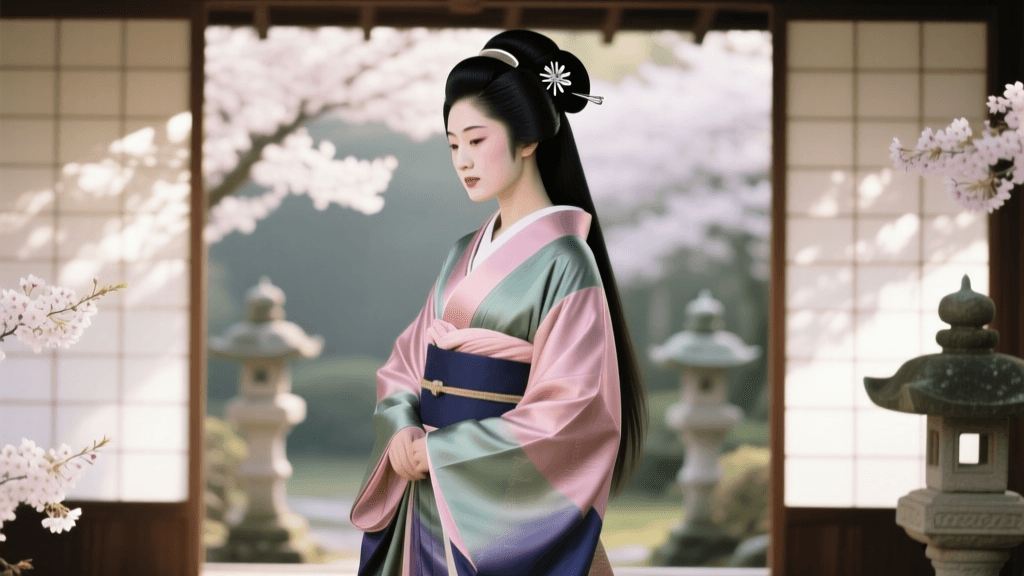
In the Heian court, women of high rank were largely secluded behind bamboo blinds (misu) and folding screens (byobu). Because their faces and bodies were hidden from public view, a woman's identity, taste, and emotional state were communicated almost entirely through her clothing. The edges of her sleeves, the hems of her skirts, and the subtle gradients of her collars became her primary voice. Murasaki Shikibu did not merely observe this fashion system; through her writings, she codified the aesthetic rules that would influence Japanese textile arts for the next millennium.
The Junihitoe: Engineering the Twelve-Layer Robe
The quintessential garment of the Heian aristocratic woman was the junihitoe, which translates literally to 'twelve-layer robe.' In practice, the number of layers varied depending on the season, the wearer's rank, and the specific court occasion, sometimes reaching up to twenty distinct layers. The foundation of this ensemble was the kosode (a garment with small sleeve openings), which, as noted by The Metropolitan Museum of Art, eventually evolved into the modern kimono. Over the kosode, court ladies wore multiple uchigi (unlined silk robes), followed by the uchiginu (a stiffened silk robe that provided structural support), the uwagi (an outer jacket), and finally the mo (an apron-like train worn at the back).
The sheer physical weight of the junihitoe was staggering. A full formal ensemble could weigh upwards of 20 kilograms (44 pounds), requiring immense physical endurance to wear. The layers were not meant to be concealed; rather, they were meticulously arranged so that the edges of each successive robe peeked out at the neckline, the cuffs, and the hem. This cascading effect created a visual rhythm of colors that was deeply tied to the natural world and the changing seasons.
Kasane no Irome: The Science of Color Layering
Murasaki Shikibu's most enduring fashion legacy is the concept of kasane no irome, the sophisticated art of color layering. In Heian Japan, wearing colors inappropriate for the current season or micro-season was considered a grave social faux pas, indicating a lack of refinement and education. Kasane no irome refers to the specific, codified combinations of outer fabric colors and inner lining colors that, when layered together, create a third, composite visual effect.
For example, a pale pink outer robe layered over a deep crimson lining did not just look pink; it evoked the specific image of cherry blossoms viewed against the dark bark of a tree or the deep shadows of a garden. These combinations were poetic, often named after flora, fauna, or seasonal phenomena. The subtle shifting of these layers as a woman moved or adjusted her sleeves was considered the height of elegance.
Table: Classic Kasane no Irome Combinations
| Combination Name | Outer Layer Color | Inner Lining Color | Season & Meaning |
|---|---|---|---|
| Sakura (Cherry Blossom) | Pale Pink / White | Deep Crimson | Early Spring (Evokes blossoms in shadow) |
| Yamabuki (Japanese Kerria) | Bright Yellow | Yellow-Green | Mid-Spring (Evokes the kerria rose flower) |
| Fuji (Wisteria) | Light Purple | Dark Purple / Indigo | Late Spring (Evokes hanging wisteria vines) |
| Yanagi (Willow) | White | Light Green | Summer (Evokes willow leaves in the breeze) |
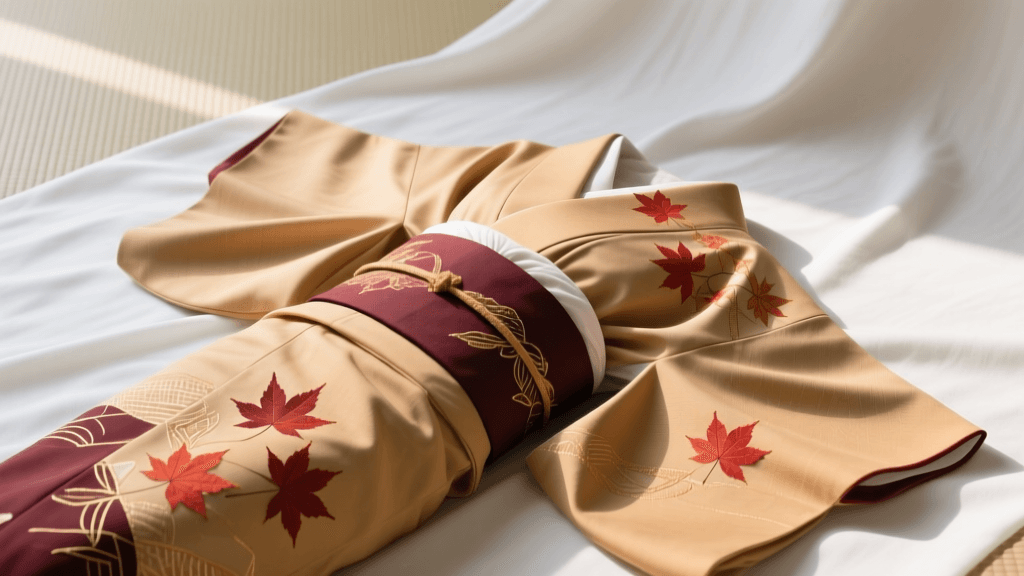
| Momiji (Maple) | Crimson / Orange | Yellow / Brown | Autumn (Evokes turning autumn leaves) |
| Kochi (Plum Blossom in Snow) | White | Bright Red | Winter (Evokes red plum blooming through snow) |
Translating Heian Fashion to Modern Kitsuke
While the 20-kilogram junihitoe is reserved today only for the highest-ranking members of the Imperial Family during enthronement ceremonies or royal weddings, the underlying philosophy of kasane no irome remains highly relevant in modern kitsuke (the art of kimono dressing). Modern kimono enthusiasts and artisans continue to draw upon Murasaki Shikibu's color theories to create visually striking, seasonally appropriate ensembles.
As detailed in Britannica's comprehensive guide to the Kimono, the evolution of Japanese dress moved from the layered Heian robes to the singular, wrapped kosode of the Edo period. However, the desire to showcase layered colors at the neckline and hem survived through specialized accessories and tailoring techniques. By understanding these modern equivalents, contemporary wearers can honor Heian aesthetics without the physical burden of twelve layers of silk.
Actionable Steps for Modern Layering
If you are looking to incorporate historical Heian color theory into your modern kimono wardrobe, follow these specific, actionable guidelines:
- Utilize a Kasane-Eri (Layered Collar): The standard modern kimono collar width is 10.5 cm to 11.5 cm. To mimic the Heian layering effect at the neckline, purchase a kasane-eri or date-eri. This is a separate strip of fabric that is pinned or sewn beneath the main collar. Choose a 1.5 cm to 2.5 cm wide silk kasane-eri in a contrasting seasonal color. For a winter 'Plum Blossom' aesthetic, use a bright red kasane-eri beneath a white or pale grey kimono collar. Authentic silk kasane-eri collars typically cost between $30 and $80 USD.
- Select the Right Haneri (Decorative Collar): The haneri is the decorative cloth sewn onto the juban (undergarment) collar. Modern embroidered haneri often feature seasonal motifs. To channel Murasaki Shikibu's subtle elegance, opt for a plain silk haneri that provides a solid block of contrasting color against your outer kimono, perfectly replicating the inner lining of a Heian uchigi.
- Invest in a Custom Hakkake (Inner Hem Lining): In modern formal kimono (homongi or tsukesage), the lower inner lining is called the hakkake. When you walk, the hem flutters, revealing this inner color. Work with a professional kimono tailor to install a vibrant hakkake that contrasts with the outer skirt. For an autumn 'Maple' ensemble, pair an orange outer kimono with a deep yellow or brown hakkake. Custom lining installation by a professional tailor generally costs between $100 and $150 USD, plus the cost of the silk fabric.
- Master the Sodeguchi (Sleeve Openings): The opening of the sleeve is another prime location to display layered colors. Ensure your juban sleeves are exactly 2 cm to 3 cm longer than your outer kimono sleeves at the wrist opening. This deliberate protrusion mimics the cascading sleeves of the junihitoe and allows the inner color to frame the hand elegantly.
The Enduring Influence on Japanese Textiles
Murasaki Shikibu's meticulous observations in The Tale of Genji did more than just record the fashion of her time; they established a permanent cultural framework for how Japanese society interacts with color, nature, and textiles. The strict adherence to seasonal transitions, the reverence for subtle gradients, and the belief that clothing is a profound expression of inner emotional life all trace their lineage back to the Heian court ladies.
Today, whether a modern artisan is dyeing a bolt of silk using the yuzen technique, or a kimono dresser is carefully adjusting a kasane-eri to reveal exactly 1.5 centimeters of crimson silk against a winter landscape, the ghost of Murasaki Shikibu's fashion legacy is present. By understanding the historical mechanics of the junihitoe and the poetic science of kasane no irome, contemporary enthusiasts can participate in a continuous, thousand-year-old dialogue between human artistry and the natural world.