Edo Period Kosode: The Ancestor of the Modern Kimono
The Heian to Edo Transition: How Underwear Became Outerwear
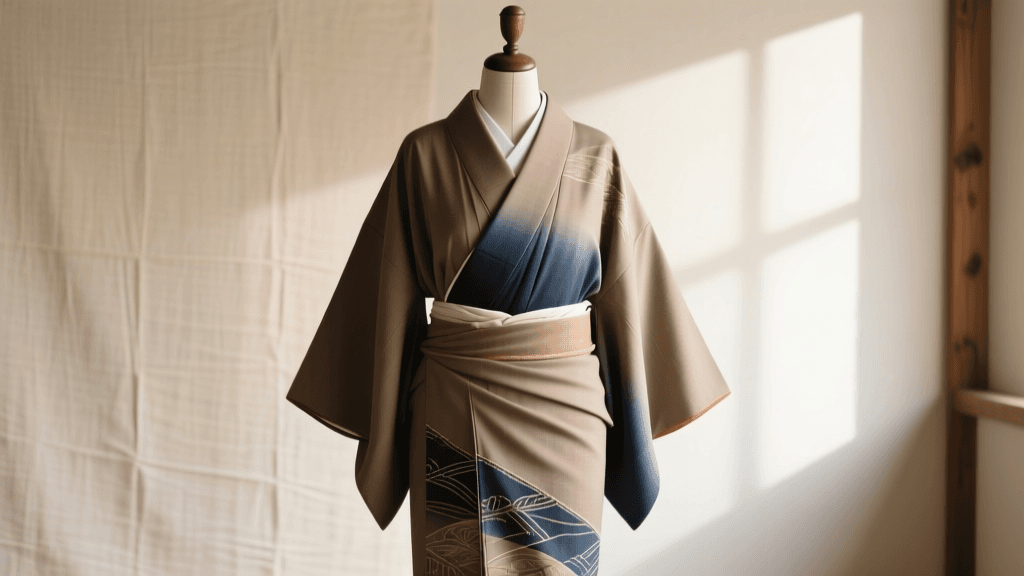
When we envision traditional Japanese clothing, the modern kimono immediately comes to mind. However, the garment we recognize today is a relatively recent evolution. The true ancestor of the modern kimono is the kosode, a T-shaped robe that originated as an undergarment during the Heian period (794–1185) before emerging as the primary outerwear of the Edo period (1603–1867). According to the Metropolitan Museum of Art, the kosode literally translates to 'small sleeve,' referring to the narrow sleeve openings compared to the sweeping, open sleeves of the aristocratic Heian junihitoe (twelve-layered robe).
As the samurai class rose to power and the merchant class (chonin) accumulated wealth during the Edo period, fashion shifted from the layered extravagance of the court to the singular, highly decorated canvas of the kosode. This era birthed the sophisticated dyeing and weaving techniques that define Japanese textiles today, transforming a humble undergarment into a masterpiece of wearable art.
Kosode vs. Modern Kimono: A Structural Comparison
While the terms 'kosode' and 'kimono' are often used interchangeably in Western contexts, historical purists and antique collectors recognize distinct structural differences. The modern kimono, standardized during the Meiji and Taisho periods, features wider sleeves, a broader obi, and different proportions tailored for modern aesthetics and commercial fabric widths.
| Feature | Edo Period Kosode | Modern Kimono (Post-Meiji) |
|---|---|---|
| Sleeve Width (Sode-guchi) | Narrow (20–28 cm) | Wide (32–40 cm) |
| Sleeve Depth (Sode-take) | Shorter, rounded corners | Deeper, varying by formality |
| Collar (Eri) | Wider, softer, worn open | Narrower, structured, pulled tight |
| Obi Width | Narrow (15–20 cm), tied at front/side | Wide (30+ cm), tied at back (Taiko) |
| Fabric Width (Tan-mono) | Approx. 34–36 cm | Standardized to 38 cm |
Edo Period Aesthetics: Iki, Shibui, and Sumptuary Laws
To truly appreciate the Edo kosode, one must understand the socio-political climate that shaped it. The Tokugawa shogunate enforced strict sumptuary laws (ken'yakurei) to prevent the merchant class from displaying overt wealth that rivaled the samurai. This led to the development of Iki (subtle, understated elegance) and Shibui (quiet, unobtrusive beauty).
Merchants circumvented these laws through hidden luxury. A kosode might appear as a subdued, striped cotton or dark silk on the outside, but feature a breathtaking, vibrant Yuzen dye or gold-leaf lining on the inside—a practice known as ura-masa (hidden luxury). The Victoria and Albert Museum's exhibition on the Kimono highlights how these restrictions inadvertently fueled immense innovation in textile arts, including the perfection of Katazome (stencil dyeing) and intricate Shibori (tie-dyeing) techniques.
Actionable Guide: Sourcing Authentic Vintage Kosode
For collectors, historical reenactors, or fashion enthusiasts looking to acquire an authentic Edo-style or Meiji-era kosode, navigating the Japanese vintage market requires specific knowledge of timing, locations, and pricing.
Where to Buy
- Oedo Antique Market (Tokyo): Held on the 1st and 3rd Sundays of the month at the Tokyo International Forum. This is the premier destination for high-end antique textiles, including late-Edo and Meiji kosode.
- To-ji Temple Flea Market (Kyoto): Known as Kobo-san, held on the 21st of every month. Excellent for sourcing older, rustic folk textiles and early Meiji kosode at negotiable prices.
- Specialized Vintage Shops: Stores like Chicago in Harajuku (Tokyo) or Tansu-ya (a nationwide chain) offer curated, cleaned, and repaired antique kosode ready for immediate wear.
Costs and Budgeting
- Late Edo / Early Meiji Kosode (Antique): 15,000 to 80,000 JPY ($100 to $550 USD). Prices spike if the piece features verified hand-painted Kaga Yuzen or extensive gold couching.
- Taisho / Early Showa Kosode (Vintage): 5,000 to 20,000 JPY ($35 to $140 USD). These are more abundant, structurally closer to modern kimonos, and often feature the highly desirable 'Taisho Roman' art-deco motifs.
- Modern Reproductions: 300,000+ JPY ($2,000+ USD). For those seeking historically accurate Edo-period court or high-merchant replicas without the fragility of antique silk, institutions like the Kyoto Costume Museum (Izutsu Yofuku) provide master-crafted reproductions.
Timing Your Purchase
The best time to hunt for antique kosode is during the seasonal transitions. In Japan, the switch from winter to summer wardrobes occurs in May, and summer to winter in October. Flea markets during these months often yield fresh estate clear-outs. Avoid the peak tourist seasons (cherry blossom and autumn foliage) as vendors tend to inflate prices for foreign buyers.
Measurements and Fitting: Adapting Historical Garments
Unlike Western clothing, historical Japanese garments were not tailored to the individual's exact body shape, but rather constructed from standard bolts of fabric (tan-mono). When purchasing a vintage kosode, you must check the Yuki (the measurement from the center of the back of the neck, over the shoulder, to the wrist).
How to Measure for a Vintage Kosode
- Determine your Yuki: Stand straight, extend one arm at a 45-degree angle, and measure from the prominent bone at the base of your neck, over the shoulder, to your wrist bone. A standard modern female Yuki is around 62–64 cm. Antique Edo/Meiji kosode often have a shorter Yuki (58–61 cm) due to the historically shorter stature of the population.
- Check the Sleeve Width (Sode-aba): Ensure the narrow sleeve opening of the kosode (often just 22 cm) is wide enough for your hand to pass through comfortably. If your hand circumference exceeds the sleeve opening, the garment cannot be worn without altering the historical integrity of the seams.
- Assess the Length (Mitake): A kosode should ideally reach your ankles. Because historical garments were often worn with a hip fold (ohashori), a vintage piece with a shorter length can still be worn by adjusting the fold or wearing it slightly higher, a common styling choice for modern casual wear.
Historical Obi Tying: Ditching the Modern Taiko Musubi
The wide, drum-like Taiko musubi obi knot seen on modern geisha and at contemporary weddings did not exist during the Edo period. The Taiko knot was invented in 1923. To style an Edo-period kosode authentically, you must use a narrow obi (15–20 cm wide) and historical tying methods.
Authentic Edo Obi Knots
- Bunko Musubi (Library Knot): A simple, elegant bow tied at the back or side. It was highly popular among unmarried women and young merchants during the mid-to-late Edo period. It requires a koshihimo (tying cord) and a datejime (under-sash) to secure the narrow obi.
- Katabasami (Shoulder Drape): A highly informal, utilitarian knot where the obi is simply folded and tucked into itself at the side or front. This was common for working-class women and samurai women inside the home.
- Fukura-suzume (Plump Sparrow): A more elaborate, voluminous bow tied at the back, popularized by kabuki actors and later adopted by young, fashionable women in the pleasure quarters of Yoshiwara.
Preservation and Care of Antique Silk
Owning an Edo or Meiji kosode comes with the responsibility of preservation. Antique silk is highly susceptible to light damage, moisture, and acid degradation. Never store a vintage kosode on a wooden hanger or in a plastic garment bag, which traps humidity and off-gasses harmful chemicals. Instead, fold the garment along its original seam lines using acid-free tatou-shi (traditional Japanese tissue paper) and store it in a breathable cotton cover or a specialized tansu (wooden chest) lined with paulownia wood, which naturally repels insects and regulates moisture.
By understanding the structural nuances, historical context, and proper sourcing techniques, enthusiasts can move beyond the modern commercial kimono and embrace the profound, subtle elegance of the Edo period kosode. Whether you are tying a historical Bunko musubi for a cultural festival or carefully preserving a 200-year-old Yuzen-dyed masterpiece, you are actively participating in the living lineage of Japanese sartorial history.