Mulberry vs Tussah Silk for Cheongsam Tailoring 2026
The 2026 Renaissance of Bespoke Cheongsam Tailoring
The cheongsam, also known as the qipao, remains one of the most iconic and elegant garments in Asian traditional fashion. As we move through 2026, there is a massive resurgence in bespoke tailoring, with modern wearers demanding garments that honor historical construction while offering contemporary comfort and sustainability. At the very heart of this bespoke revival is the choice of textile. While synthetic blends and mass-produced rayons flood the fast-fashion market, discerning clients and master tailors are returning to the gold standard of Asian textiles: pure silk. However, not all silk is created equal. When commissioning a custom cheongsam in 2026, the two most prominent and highly debated choices are Mulberry silk and Tussah silk. Understanding the structural, aesthetic, and practical differences between these two natural fibers is essential for achieving the perfect drape, silhouette, and longevity for your garment.
Mulberry Silk: The Gold Standard of Qipao Elegance
Mulberry silk is the most refined and widely recognized silk in the world, accounting for the vast majority of global silk production. It is produced by the Bombyx mori silkworm, which is cultivated in a highly controlled environment and fed an exclusive diet of fresh mulberry leaves. According to the Victoria and Albert Museum, the domestication of the Bombyx mori moth in ancient China laid the foundation for the global silk trade, and the meticulous sericulture practices developed centuries ago are still the benchmark for luxury textiles today.
Characteristics, Luster, and Drape
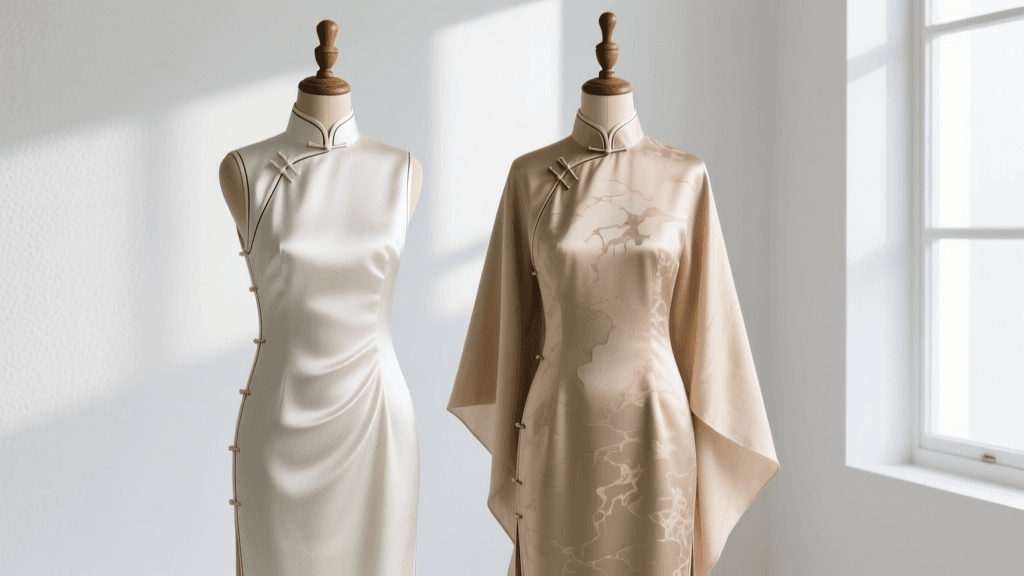
The defining characteristic of Mulberry silk is its incredibly uniform, fine filament. Because the worms are protected from predators and environmental stressors, they spin cocoons made of a single, continuous thread that can measure up to 900 meters in length. When woven into fabric for a cheongsam, this results in a textile with a remarkably smooth surface, a brilliant pearlescent luster, and a fluid, liquid-like drape. For the classic, form-fitting 1930s-inspired qipao silhouette that relies on bias-cutting to hug the body's natural curves, Mulberry silk is unparalleled. In 2026, advancements in eco-friendly dyeing techniques have allowed Mulberry silk to take on incredibly vibrant, colorfast hues without compromising the integrity of the delicate protein fibers.
Tussah Silk: Wild Texture and Structural Integrity
Tussah silk, often referred to as 'wild silk,' is produced by several species of wild silkworms, primarily from the Antheraea genus. Unlike their domesticated counterparts, these moths live outdoors in forested regions, feeding on a diverse diet of oak, juniper, and terminalia leaves. The Food and Agriculture Organization of the United Nations notes that wild sericulture not only produces unique textile fibers but also supports vital agroforestry ecosystems and rural livelihoods across Asia.
Texture, Breathability, and Aesthetic Appeal
Because Tussah silkworms spin their cocoons in the wild, the silk filaments are shorter, coarser, and more varied in thickness. Furthermore, the cocoons are often pierced by the emerging moth, meaning the fibers must be spun together rather than reeled in a single continuous thread. This gives Tussah silk its signature 'slubbed' texture—a beautiful, slightly irregular surface that catches the light in a more subdued, matte finish. Tussah silk also contains natural tannins from the wild leaves, giving undyed Tussah a warm, earthy beige or soft brown hue. For a cheongsam, Tussah silk offers a stiffer, more structured drape. It holds pleats exceptionally well and provides a more architectural silhouette, making it a favorite for modern, avant-garde qipao designs, A-line cuts, and garments intended for cooler autumn weather.
Direct Comparison: Mulberry vs. Tussah for Qipao Making
Choosing between these two textiles depends entirely on the desired silhouette, the season of wear, and the specific design elements of the cheongsam. Below is a comprehensive comparison chart for 2026 bespoke tailoring.
| Feature | Mulberry Silk (Cultivated) | Tussah Silk (Wild) |
|---|---|---|
| Fiber Structure | Long, continuous, uniform filament | Shorter, spun, irregular staple fibers |
| Surface Texture | Ultra-smooth, glass-like finish | Textured, slubbed, slightly coarse |
| Luster | High, pearlescent shine | Low, subdued matte finish |
| Drape & Body | Fluid, heavy, clings to curves | Structured, crisp, holds volume |
| Best Cheongsam Style | Classic 1930s bias-cut, sheath | Modern A-line, pleated, architectural |
| Thermal Properties | Cool to the touch, highly breathable | Insulating, warmer, porous |
| 2026 Avg. Cost (per yard) | $45 - $90 USD (depending on momme) | $30 - $65 USD |
Understanding Momme Weight for Cheongsam Construction
When sourcing silk for a custom cheongsam in 2026, the species of silkworm is only half the equation; the fabric weight is equally critical. Silk weight is measured in 'momme' (mm), where one momme equals 4.340 grams per square meter. According to Encyclopedia Britannica, the momme system remains the universal standard for evaluating the density, durability, and opacity of silk textiles.
The Ideal Momme for Qipao Tailoring
- 12mm to 16mm (Lightweight): Too sheer and fragile for a standalone, unlined cheongsam. Often used for silk scarves or delicate linings. If used for a qipao, it requires a full underlining, which alters the drape.
- 19mm (Medium Weight): The absolute sweet spot for a classic Mulberry silk cheongsam. It offers enough opacity to be worn without a heavy slip, possesses a luxurious fluid drape, and is durable enough to withstand the tension of a form-fitting silhouette and intricate pankou (frog) button knots.
- 22mm to 30mm (Heavyweight): Often referred to as silk charmeuse or heavy crepe. This weight is magnificent for evening wear and winter cheongsams. It provides a substantial, opulent feel and resists wrinkling beautifully, though it requires a highly skilled tailor to manage the bulk at the seams and the iconic mandarin collar.
For Tussah silk, a weight of 16mm to 19mm is generally preferred. Because Tussah fibers are naturally more voluminous and textured, a heavier momme can make the garment feel overly stiff and cumbersome, whereas a mid-weight Tussah provides the perfect balance of structure and wearability.
Tailoring Considerations and Interfacing in 2026
The construction of a traditional cheongsam is a masterclass in engineering. The iconic mandarin collar, the curved overlapping front flap (the 'pipa'襟), and the high side slits require precise stabilization. When working with Mulberry silk, tailors in 2026 are increasingly moving away from synthetic fusible interfacings, which can bubble and degrade over time. Instead, master tailors use silk organza as a sew-in interfacing. Silk organza provides the necessary crispness for the collar and the button plackets without adding synthetic stiffness or compromising the natural breathability of the Mulberry silk.
When tailoring with Tussah silk, the fabric's natural body often requires less interfacing. However, because Tussah silk has a tendency to fray more easily than Mulberry silk due to its spun nature, seam finishes are critical. French seams or bound seams using silk bias tape are mandatory for high-end Tussah qipaos to ensure the interior of the garment is as beautiful and durable as the exterior.
Sustainability and Sourcing in the Modern Market
The 2026 textile market places a heavy emphasis on traceability and environmental stewardship. Mulberry silk production, while highly efficient, has faced scrutiny regarding water usage and the ethical treatment of the silkworms (as the traditional process involves boiling the cocoon with the pupa inside). In response, 'Peace Silk' or Ahimsa silk—where the moth is allowed to emerge naturally before the cocoon is harvested—has gained traction. However, Peace Silk behaves more like Tussah silk, as the broken filaments must be spun, resulting in a matte, textured finish rather than the classic Mulberry shine.
Tussah silk is inherently more sustainable and cruelty-free by nature of its wild harvesting. The moths emerge naturally, and the collection of the empty cocoons provides a vital secondary income for forest-dwelling communities without requiring the clearing of land for mulberry plantations. For the eco-conscious consumer commissioning a cheongsam in 2026, a naturally dyed Tussah silk offers a compelling narrative of environmental harmony, while ethically sourced, traceable Mulberry silk remains the undisputed champion of red-carpet elegance.
Conclusion: Making the Final Selection
Ultimately, the choice between Mulberry and Tussah silk for your 2026 custom cheongsam comes down to the story you want your garment to tell. If you desire a garment that embodies liquid luxury, reflects light beautifully, and clings elegantly to the body in the classic Shanghai style, invest in a 19mm or 22mm Mulberry silk charmeuse. If you prefer a garment with an organic, artisanal texture, architectural volume, and a deep connection to wild, sustainable agroforestry, Tussah silk will provide a uniquely modern yet deeply traditional qipao. Whichever textile you choose, partnering with a master tailor who respects the unique properties of these ancient fibers will ensure your cheongsam remains a timeless masterpiece for decades to come.