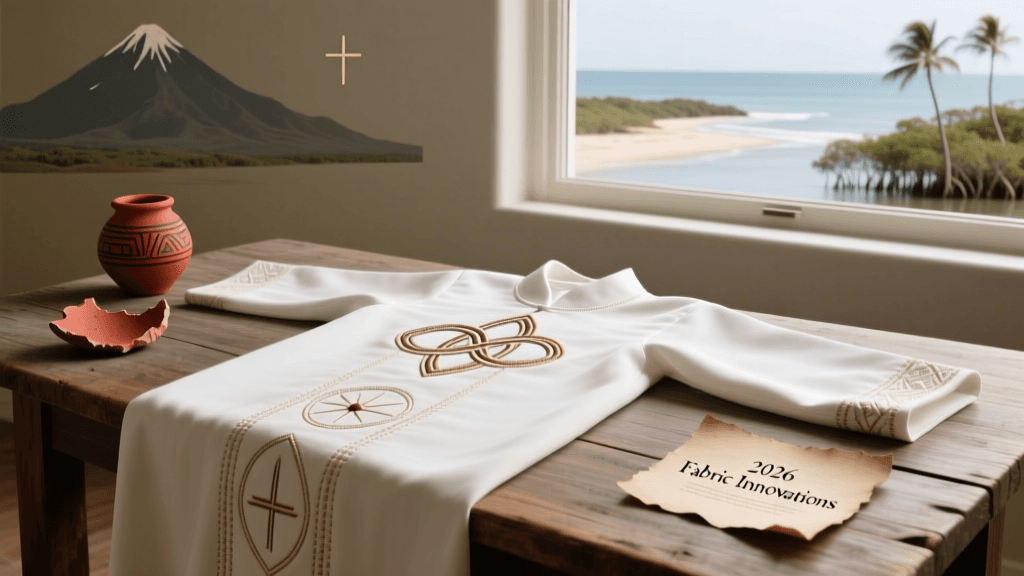
LDS Temple Garments in 2026: Sacred Meaning & Styles

The Sacred Tapestry: Understanding LDS Temple Garments in 2026
Across the vast and diverse cultural landscape of the Americas, clothing often serves as a powerful marker of identity, heritage, and spiritual devotion. While much of the focus on traditional American and Indigenous garments centers on external regalia, powwow dress, or woven textiles, one of the most profoundly significant religious garments in the Americas is entirely hidden from public view. The temple garment, worn by adult members of The Church of Jesus Christ of Latter-day Saints (often referred to as the LDS or Mormon Church), represents a deeply personal intersection of faith, covenant, and daily living. As of 2026, the temple garment continues to evolve in its textile technology and style options, even as its sacred meaning remains anchored in 19th-century American frontier history.
For cultural historians, sociologists, and those studying religious dress in the Americas, understanding the temple garment requires moving beyond secular curiosity and engaging with the profound theological weight these vestments carry for millions of believers across North, Central, and South America.
Historical Roots in the American Frontier
The origins of the temple garment trace back to Nauvoo, Illinois, in 1842. During this formative period of the Latter-day Saint movement, founder Joseph Smith introduced the temple endowment—a sacred ceremony involving covenants (promises) between the individual and God. As part of this ceremony, participants were clothed in sacred vestments, including the temple garment. According to the official Gospel Topics essays published by the Church, the garment was patterned after ancient priestly vestments described in biblical texts, adapted for 19th-century American wearers.
Originally, the garment was a one-piece union suit that extended to the wrists and ankles, reflecting the standard undergarments of the 1800s. Over the decades, as secular fashion and textile manufacturing evolved, the Church authorized modifications for practicality. By the mid-20th century, the garment transitioned into the two-piece set (a top and bottom) that is standard today. This evolution demonstrates a core principle of LDS religious dress: the sacred symbols and the covenant they represent are immutable, but the textile form adapts to the practical needs of the modern wearer.
Decoding the Sacred Symbols
The temple garment is not merely a piece of modest underclothing; it is a wearable sanctuary. Woven or embroidered into the fabric are specific marks that serve as continuous, tactile reminders of the covenants made during the temple endowment. According to historical archives and the Encyclopedia of Mormonism, these symbols include:
- The Square: Represents honor, integrity, and loyalty. It reminds the wearer to keep their actions and thoughts aligned with moral rectitude.
- The Compass: Symbolizes an undeviating course leading to eternal life. It serves as a reminder to keep one's life focused on spiritual goals and to avoid the distractions of the secular world.
- The Navel Mark: Often interpreted as a symbol of never-ending sustenance and the continuous need for spiritual nourishment.
- The Knee Mark: A reminder of the scriptural injunction that 'every knee shall bow' to God, symbolizing reverence, humility, and the willingness to pray.
For the wearer, these marks transform a simple cotton or modal garment into a spiritual armor. In a world that is increasingly secularized, the garment provides a private, physical boundary that reinforces the wearer's religious identity and commitments.
Intersections with Indigenous and Latin American Cultures
While the temple garment originated in the American Midwest, its usage in 2026 spans the globe, creating fascinating intersections with Indigenous and Latin American cultural dress. The Church has seen massive growth in regions like Mexico, Guatemala, Brazil, and among Native American populations in the United States and Canada.
For Indigenous converts in regions like the Navajo Nation, or among the Maya in Guatemala, the wearing of the temple garment often harmonizes beautifully with existing cultural paradigms of modesty and sacred bodily respect. In many Indigenous cultures across the Americas, the body is viewed as sacred, and modesty in dress is a traditional virtue that predates European contact. When Indigenous members attend the temple, they make covenants that are subsequently honored by wearing the garment beneath their traditional daily attire.
In 2026, it is common to see the temple garment worn beneath traditional woven huipiles in Mesoamerica, or beneath Native American ribbon shirts and jingle dress regalia during community gatherings. The garment serves as a private, spiritual layer that complements public cultural attire. It allows Indigenous members to fully participate in and celebrate their ancestral heritage and textile traditions while maintaining their sacred LDS temple covenants. This dual-layering of identity—Indigenous cultural pride on the outside, LDS spiritual covenant on the inside—represents a unique facet of religious dress in the modern Americas.
2026 Textile Innovations and Style Expansions
The Church's Distribution Services department has continually refined garment options to accommodate diverse climates, body types, and modesty needs. The year 2026 marks a period of significant maturation in women's garment styles, following a multi-year initiative to provide more options that align with modern women's professional and casual wardrobes. Furthermore, advancements in textile engineering have introduced fabrics specifically designed for the tropical climates of Central and South America, as well as for active lifestyles.
Members in 2026 can choose from a variety of fabrics, including traditional cotton, modal blends for softness, and high-tech moisture-wicking meshes. The expansion of women's necklines and sleeve lengths allows for greater versatility when wearing contemporary clothing, ensuring that the sacred garment remains hidden while the wearer participates fully in modern society.
2026 Garment Styles & Fabric Technologies Comparison
| Fabric / Style Type | Best Use Case (2026) | Key Features |
|---|---|---|
| Modest Mesh | Tropical climates (e.g., Brazil, Guatemala), summer athletics | Highly breathable, lightweight, quick-drying synthetic blend. |
| Cotton / Modal Blend | Everyday wear, office environments, sensitive skin | Ultra-soft, durable, retains shape after repeated washing. |
| Women's Camisole Styles | Wearing under sheer, wide-neck, or sleeveless professional tops | Expanded 2026 catalog includes cap-sleeve, v-neck, and scoop-neck options. |
| Men's Athletic Line | Gym workouts, manual labor, outdoor sports | Moisture-wicking, anti-odor properties, stretch-fit waistbands. |
| Maternity Garments | Pregnancy and postpartum recovery | Stretch-panels, accommodating cuts that maintain modest coverage. |
Navigating Terminology and Cultural Respect
For those outside the faith, particularly in secular media and pop culture, the temple garment has frequently been the subject of misunderstanding or caricature. The colloquial and often derogatory term 'magic underwear' has been historically used to mock the sacred nature of the vestment. However, as cultural literacy regarding religious minorities in the Americas improves in 2026, there is a stronger push for respectful terminology.
The Church Newsroom explicitly requests that journalists, researchers, and the public use the terms 'temple garment' or 'sacred garment.' Comparing the garment to 'magic' fundamentally misunderstands its purpose; it possesses no inherent magical properties. Rather, its power is purely symbolic and psychological, acting as a reminder of personal promises made to God. Respecting this terminology is a crucial step in fostering interfaith dialogue and understanding the diverse religious tapestry of the Americas.
Sourcing and Caring for Garments in 2026
Unlike secular clothing, temple garments are not available in commercial retail stores. They are exclusively distributed through Church-owned Distribution centers and the official online portal, requiring the purchaser to have an active temple recommend (a verification of their standing in the Church). In 2026, the online ordering system is highly sophisticated, allowing members across the Americas to order customized packs that are shipped discreetly to their homes.
Caring for modern garment fabrics requires specific attention to preserve both the physical integrity of the textile and the respect afforded to the sacred symbols. Members are instructed to treat the garments with reverence. This includes washing them separately from heavily soiled outerwear, using gentle detergents to protect the modal and mesh fibers, and air-drying or using low-heat settings to prevent the degradation of elastane blends. When a garment becomes worn beyond repair, it is not thrown into the regular trash; rather, the sacred marks are carefully cut out and destroyed, and the remaining fabric is discarded respectfully, ensuring the symbols are never exposed to public view.
Conclusion
The LDS temple garment stands as a unique artifact of American religious history that has grown into a global phenomenon. In 2026, it represents a fascinating blend of 19th-century frontier theology and 21st-century textile innovation. For the millions of members who wear it—including those who beautifully integrate it beneath the vibrant, traditional Indigenous garments of the Americas—it is a quiet, constant companion. It is a wearable sanctuary that bridges the gap between the sacred promises made in the temple and the everyday realities of modern life.