Modern Yukata and Jinbei: Guide to Casual Japanese Summer Wear
The Evolution of Everyday Summer Wear
When discussing traditional Japanese clothing, the elaborate silk kimono often dominates the global imagination. However, the true heartbeat of Japan's sartorial heritage lies in its everyday, casual garments. As the Metropolitan Museum of Art notes in its comprehensive timeline of Japanese dress, the transition from formal court wear to practical, everyday garments was a pivotal moment in textile history. Today, the yukata and the jinbei represent the living, breathing evolution of Japanese casual wear, offering a perfect blend of historical continuity and modern comfort.
While the formal kimono requires specialized dressing assistance, intricate undergarments, and expensive silk textiles, the yukata and jinbei are designed for accessibility. They are the garments of summer festivals (matsuri), fireworks displays (hanabi), casual evening strolls, and even relaxed lounging at home. For modern enthusiasts and cultural travelers, understanding how to select, wear, and care for these garments is essential for an authentic experience.
Yukata vs. Jinbei: Which Should You Choose?
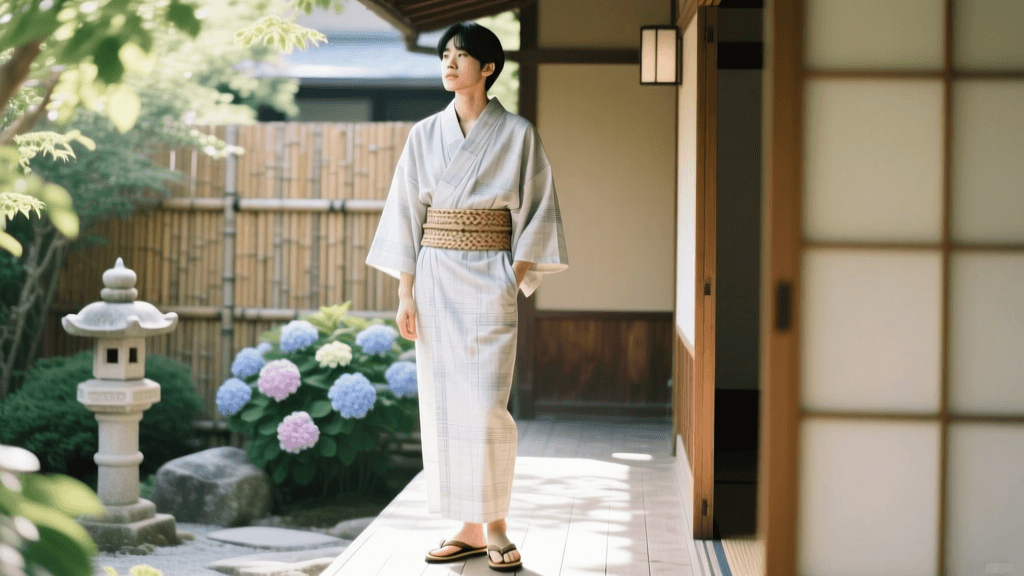
Though both are categorized as casual summer wear, the yukata and jinbei serve slightly different practical purposes. According to cultural guides at Japan Experience, the yukata is a lightweight, unlined cotton kimono worn as a single-piece wrap robe, suitable for public outings, festivals, and casual dining. The jinbei, conversely, is a two-piece garment consisting of a short-sleeved wrap jacket and drawstring shorts, traditionally worn by men and children for lounging or local neighborhood errands, though modern designs have made them increasingly popular among women.
| Feature | Yukata | Jinbei |
|---|---|---|
| Structure | One-piece wrap robe | Two-piece (jacket and shorts) |
| Primary Material | Cotton, linen, or polyester blends | Waffle-weave cotton, seersucker, or hemp |
| Formality Level | Casual public wear, festivals, ryokan | Loungewear, local errands, very casual |
| Gender Usage | Worn universally by all genders | Historically male, now widely unisex |
| Average Cost (USD) | $30 - $150 (Mass to Artisan) | $20 - $80 |
| Ease of Dressing | Moderate (requires obi tying) | Very Easy (drawstring and simple wrap) |
Understanding Sizing and Fit
Unlike Western clothing, which relies on bust, waist, and hip measurements, traditional Japanese garments are sized primarily by height and sleeve span. The two most critical measurements you need to know are mitake (back length) and yuki (sleeve span, measured from the center of the back of the neck, across the shoulder, and down to the wrist).
Women's Sizing Guide
For women, a standard 'Free Size' or 'M' yukata typically fits heights between 155cm and 165cm (5'1" to 5'5"). The standard yuki is around 64cm to 66cm, and the mitake is roughly 130cm to 135cm. When trying on a yukata, the hem should ideally fall at the ankle bone, allowing for a slight fold at the waist (the ohashori) which is a hallmark of proper women's kimono dressing. If you are taller than 168cm, you must specifically seek out 'Tall' or 'L/LL' sizes, as standard sizes will result in an awkwardly high hemline.
Men's Sizing Guide
Men's yukata do not feature the waist fold (ohashori). Therefore, the mitake must be much more precise, ideally falling exactly at the ankle. A standard men's 'M' size features a yuki of 80cm to 82cm and a mitake of 140cm to 142cm, fitting men around 170cm to 175cm (5'7" to 5'9"). The sleeves on a men's yukata should end at the wrist bone, whereas women's sleeves traditionally extend slightly past the wrist.
Choosing the Right Fabric for Humid Summers
Japan's summers are notoriously hot and humid. The choice of fabric will dictate your comfort level throughout the day.
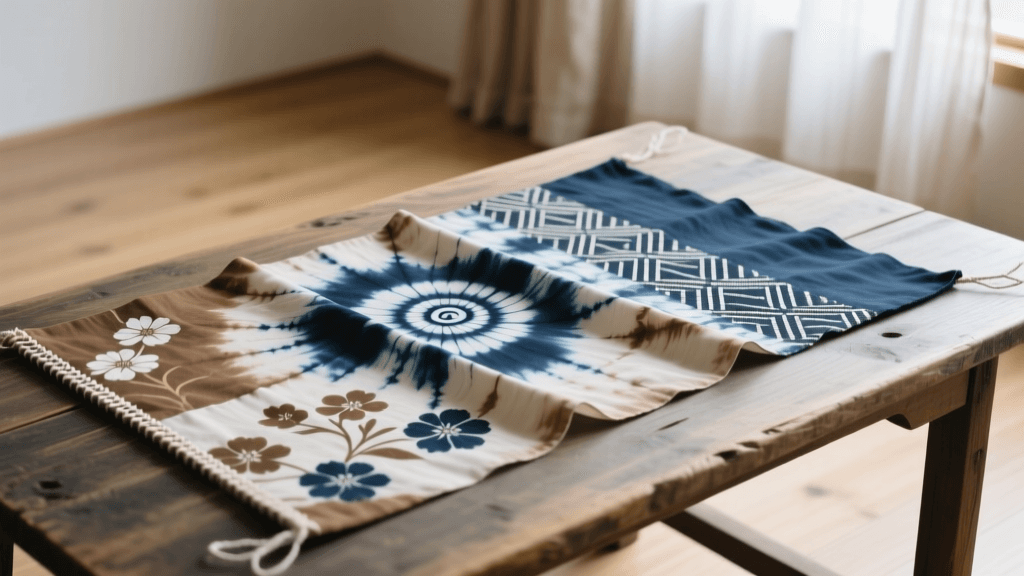
- 100% Cotton (Momen): The traditional and most breathable choice. High-quality cotton, such as the famous tie-dyed Arimatsu-Narumi shibori recognized by Japan Traditional Crafts, features intricate crinkled textures that prevent the fabric from clinging to sweaty skin. However, pure cotton wrinkles easily and requires ironing after washing.
- Linen (Asa): Exceptionally cool and crisp, linen is ideal for high-end yukata or premium jinbei. It dries quickly and has a beautiful natural luster, but it is prone to severe wrinkling and can be more expensive.
- Polyester Blends: Modern mass-market yukata often use polyester or poly-cotton blends. While less breathable than natural fibers, they are incredibly vibrant, resist wrinkling, are machine washable, and are highly affordable. For a single-day festival rental or purchase, polyester is a practical, low-maintenance choice.
Step-by-Step Guide to Tying a Casual Obi
The obi (sash) is what secures the yukata and elevates it from a simple bathrobe to a stylish street garment. For casual summer wear, women typically use a hanhaba obi (half-width sash), while men use a narrow, stiff cotton or leather belt.
For Women: The Bunko Musubi (Butterfly Bow)
The bunko musubi is the most common, youthful, and versatile bow for casual cotton yukata.
1. Wrap the hanhaba obi around your waist twice, ensuring the bottom edge sits securely on your hip bones.
2. Leave a 'tail' of about 40cm in the front, and let the longer end hang in the back.
3. Fold the long back end into an accordion-style pleat to create the 'wings' of the butterfly.
4. Tie the short front tail tightly around the center of the pleated wings in a secure square knot.
5. Tuck the remaining short tail into the top of the obi wrap to hide it.
6. Rotate the entire bow to the back. (Note: Always tie the bow in the front for visibility and ease, then spin it to the back to avoid damaging the knot or injuring your spine).
For Men: The Kai-no-Kuchi (Clamshell Knot)
Men's obi are tied much lower, resting on the hip bones rather than the natural waist. The kai-no-kuchi is flat, unobtrusive, and masculine.
1. Wrap the obi around the hips twice.
2. Cross the ends in the front, bringing the bottom end up and over the top end.
3. Pull the top end through the loop created, pulling it tight horizontally.
4. Tuck the loose ends neatly into the sides of the wrapped belt. Rotate to the back or leave slightly off-center to the front.
Footwear and Accessories for Everyday Wear
A yukata is incomplete without the proper accessories. The standard footwear is the geta, a traditional wooden sandal with elevated 'teeth' that keep the hem of your garment clean from wet streets. For casual wear, choose a lower-profile, two-tooth wooden geta with soft, padded cotton hanao (thongs) to prevent blisters. Wear them exclusively with tabi-style socks or, more commonly in the deep summer, barefoot with painted toenails.
For carrying personal items, the kinchaku (a small, drawstring cloth bag) is the traditional equivalent of a purse. Match the kinchaku fabric to your obi for a cohesive look. Finally, carry an uchiwa (rigid round fan) or a sensu (folding fan). Not only do these provide a practical defense against the oppressive August heat, but slipping a folded sensu into the front of your obi collar is a recognized mark of sartorial elegance.
Care and Maintenance
Proper care ensures your casual wear lasts for many summers. Cotton and linen yukata should be hand-washed or machine-washed on a delicate cycle using cold water and a mild, neutral detergent. Never use bleach, as it will strip the vibrant indigo or synthetic dyes. After washing, reshape the garment while damp and hang it to dry in a shaded, well-ventilated area; direct sunlight will cause the colors to fade rapidly.
When storing your yukata for the winter, avoid wire hangers, which will distort the shoulder seams. Instead, fold the garment along its natural seam lines into a neat rectangle and store it flat in a tatoushi (a traditional breathable paper cover) or a cotton storage box. Never store natural fibers in plastic bags, as trapped moisture will lead to mold growth.
Where to Buy and Expected Costs
If you are looking to purchase authentic casual wear, you have several avenues depending on your budget.
Entry-Level ($20 - $50 USD): For mass-produced polyester or basic cotton sets (which often include the yukata, obi, and geta), large retail chains like UNIQLO, AEON, or specialty kimono chain stores like Fujiya offer excellent, budget-friendly options during the early summer months (May-June). Online marketplaces like Amazon Japan and Rakuten also feature vast selections with international shipping.
Mid-Range to Artisan ($100 - $400+ USD): For genuine, artisan-crafted cotton yukata, visit specialized kimono districts such as Tokyo's Asakusa or Kyoto's Gion. Look for garments featuring traditional chusen dyeing techniques, where the dye penetrates entirely through the fabric, meaning the pattern is equally vibrant on both the inside and outside. High-end department stores like Takashimaya or Mitsukoshi carry premium linen yukata and hand-woven jinbei that serve as exquisite, breathable investments for lifelong wear.
Embracing the yukata and jinbei is more than just putting on a costume; it is a participatory act in Japan's living cultural landscape. By understanding the nuances of fit, fabric, and styling, you can comfortably integrate these beautiful garments into your everyday summer wardrobe, honoring centuries of tradition while staying perfectly cool.