The Modern Yukata: A Guide to Japan's Casual Summer Kimono
The Evolution of the Yukata: From Bathhouse to Boulevard
When discussing everyday and casual traditional wear in Japan, the yukata stands out as the most accessible, vibrant, and widely worn garment in the modern era. Originally known as the yu-katabira during the Heian period (794–1185), this lightweight robe was strictly utilized as a bathrobe for the aristocracy. Crafted from simple hemp or linen, its primary function was to absorb moisture and protect the skin from steam in traditional bathhouses. Over centuries, as cotton cultivation became widespread during the Edo period (1603–1867), the yukata transitioned into everyday sleepwear and eventually the quintessential outdoor summer garment we recognize today.
According to the Victoria and Albert Museum, the democratization of cotton and the relaxation of strict sumptuary laws allowed commoners to embrace indigo-dyed cotton yukata as a canvas for subtle rebellion and personal expression. Today, the yukata has transcended its historical boundaries. It is no longer just a relic of summer festivals; it is a living, breathing piece of casual streetwear, adapted by modern youth who pair it with contemporary accessories, leather sandals, and even western-style hats.
Yukata vs. Traditional Kimono: A Practical Comparison
For newcomers to Japanese traditional clothing, distinguishing between a formal kimono and a casual yukata can be challenging. However, understanding these differences is crucial for purchasing the right garment and wearing it appropriately. The primary distinctions lie in the fabric, the required undergarments, and the overall cost.
| Feature | Yukata (Casual) | Traditional Kimono (Formal) |
|---|---|---|
| Fabric | Cotton, linen, or polyester | Silk, wool, or high-end blends |
| Undergarments | Slip (hadajuban) optional; often worn directly on skin | Requires full nagajuban (under-kimono) |
| Collar | Single layer, soft, and relaxed | Stiff, layered, and precise |
| Footwear | Bare feet with wooden geta sandals | Tabi socks required with zori sandals |
| Average Cost | 3,000 - 15,000 JPY ($20 - $100 USD) | 30,000 - 500,000+ JPY ($200 - $3,500+ USD) |
| Maintenance | Machine washable (with care) | Dry clean only; requires professional folding |
Essential Components and Sourcing Costs
Building a complete yukata outfit requires more than just the robe itself. To achieve an authentic yet comfortable casual look, you will need to source several specific accessories. Here is a practical breakdown of what you need, including standard measurements and estimated costs for everyday wear.
- The Yukata Robe: The main garment. Look for 100% cotton or a cotton-polyester blend for breathability and easy washing. Cost: 5,000 - 10,000 JPY.
- Hanhaba Obi (Half-Width Belt): Unlike the wide, stiff maru-obi used for formal kimono, the hanhaba obi is approximately 15 cm wide and 300 cm long. It is soft, easy to tie, and perfect for casual bows like the bunko (book knot). Cost: 2,000 - 5,000 JPY.
- Koshi-himo (Waist Ties): You will need at least two thin cotton or silk ties to secure the robe at the waist and chest before adding the decorative obi. Cost: 500 JPY each.
- Date-jime (Wide Securing Belt): A decorative but functional woven belt used to hold the koshi-himo in place and provide a stable base for the obi. Cost: 1,500 JPY.
- Geta (Wooden Sandals): Traditional elevated wooden clogs. For everyday casual wear, opt for a lower-profile komageta with a soft fabric thong (hanao) to prevent blisters. Cost: 3,000 - 6,000 JPY.
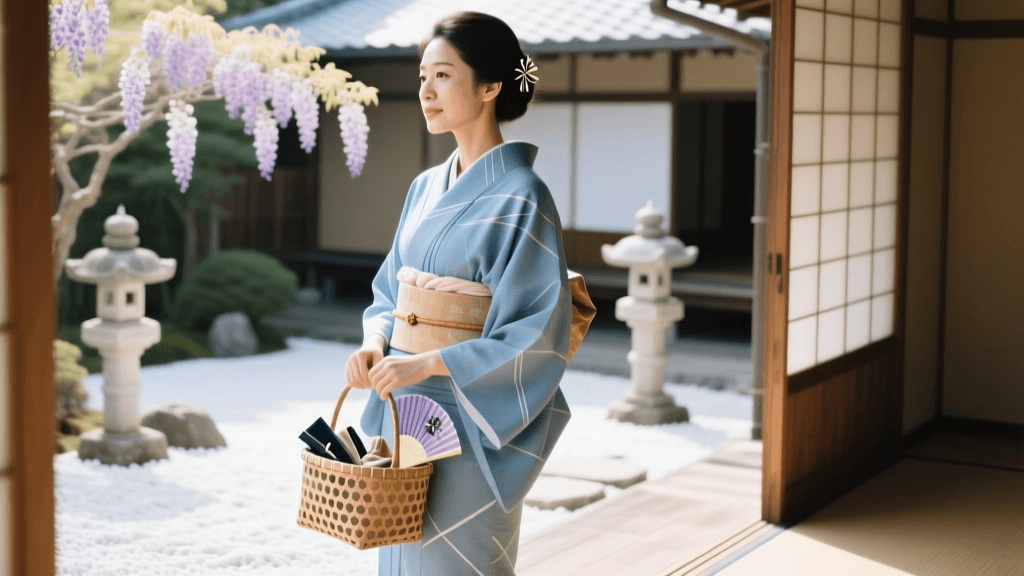
- Kinchaku (Drawstring Bag): A small cotton or rattan bag used to carry essentials like a smartphone, wallet, and handkerchief, as yukata lack functional pockets. Cost: 1,500 - 3,000 JPY.
Measurements and Sizing: Getting the Right Fit
Unlike Western clothing, traditional Japanese garments are not sized by chest or waist measurements. Instead, they are sized by length and bolt width. Standard yukata fabric bolts (tanmono) are typically 38-40 cm wide. When sewn, the finished garment width across the back and front panels totals roughly 130-140 cm in circumference, which comfortably wraps around most body types.
Length is the critical measurement. A standard off-the-rack yukata is usually 140 cm long, designed to fit individuals between 150 cm and 165 cm in height. The beauty of the yukata lies in the ohashori—the horizontal fold at the waist that allows you to adjust the hemline to your exact ankle height. If you are taller than 170 cm, you will need to seek out custom-made or specialized tall-size yukata, which are increasingly available from modern online retailers.
Step-by-Step Dressing Guide: The Art of the Wrap
Dressing in a yukata is a mindful practice that takes about 10 to 15 minutes once you are familiar with the steps. The most critical rule of Japanese traditional dress is the direction of the wrap. As noted by the Japan Guide, you must always wrap the left side of the robe over the right side. Wrapping right-over-left is strictly reserved for dressing the deceased for funerals, making this a vital cultural detail to remember.
- Slip it on: Put the yukata on like a coat. Hold the front edges and align the center back seam perfectly with your spine.
- The Wrap: Bring the right side of the robe across your body to your left hip. Then, bring the left side over the right, overlapping it by about 15 cm.
- First Tie: Take a koshi-himo and tie it snugly around your natural waist (or slightly below the bust for women, and at the hip bones for men).
- Adjust the Ohashori: Pull the excess fabric down over the tie to create a neat, even horizontal fold (ohashori) that sits just above the hip.
- Secure the Collar: Adjust the front collar so it rests comfortably against the nape of your neck, leaving a small gap (about the width of two fingers) at the back.
- Tie the Obi: Wrap the hanhaba obi around your waist twice, tie a secure knot at the front, and then carefully rotate the entire obi to the back. For women, the bunko (bow) knot is standard; for men, a simple flat knot at the back or front is preferred.
Festivals, Etiquette, and Contemporary Styling
The yukata is the undisputed uniform of Japanese summer festivals (matsuri). Events like Kyoto's Gion Matsuri or Tokyo's Sumidagawa Fireworks Festival see millions of locals and tourists donning these garments. The Kyoto City Official Travel Guide frequently highlights that wearing a yukata enhances the immersive experience of walking through historic districts, and many local shops offer rental packages for visitors who do not own their own garments.
However, contemporary styling has pushed the yukata beyond traditional festival wear. Modern fashion enthusiasts in Harajuku and Shimokitazawa are redefining casual traditional wear by pairing dark, muted-tone yukata with leather oxfords, straw boater hats, and minimalist silver jewelry. For men, the jinbei (a two-piece cotton shorts and top set) has also emerged as an ultra-casual alternative for lounging at home or stepping out to a local convenience store, though the full yukata remains the standard for outdoor socializing.
Care and Maintenance for Everyday Wear
One of the greatest advantages of the modern yukata is its ease of maintenance. While vintage silk kimono require expensive professional cleaning and meticulous folding, modern cotton and polyester yukata are designed for everyday life. To wash a cotton yukata at home, fold it neatly along its seam lines and place it inside a large mesh laundry bag. Use a mild, neutral detergent and wash on a delicate, cold-water cycle. Never use bleach, as it will strip the vibrant indigo or synthetic dyes.
After washing, reshape the garment while it is damp and hang it in the shade to dry. Direct sunlight can fade the colors rapidly. Once dry, you can iron it on a medium setting, ensuring you iron along the vertical seams to maintain the garment's structural integrity. With proper care, a high-quality cotton yukata will remain a staple of your casual summer wardrobe for decades, bridging the gap between ancient Japanese tradition and modern everyday comfort.