The Modern Yukata: A Guide to Japan's Casual Kimono
When discussing traditional Japanese clothing, the formal silk kimono often monopolizes the global imagination. However, the true heartbeat of Japan's everyday and casual traditional wear lies in the yukata and the haori. These garments bridge the gap between historical craftsmanship and modern, practical streetwear. For those looking to integrate Asian traditions into a contemporary wardrobe, understanding the nuances of casual Japanese garments is essential. This guide provides actionable advice on sizing, styling, and acquiring authentic casual wear for everyday life.
The Evolution of the Yukata
The yukata, literally translating to 'bathing cloth,' originated in the Heian period (794 to 1185) as a linen robe worn by court nobles to and from steam baths. However, it was during the Edo period (1603 to 1867) that the yukata evolved into the cotton garment we recognize today. As public bathhouses became central to urban life, the lightweight, breathable cotton yukata became the standard post-bath loungewear. According to The Metropolitan Museum of Art, the proliferation of cotton cultivation in Japan during the 17th century allowed commoners to adopt this comfortable, easy-to-wash garment, effectively democratizing traditional fashion.
Today, the yukata is the undisputed king of summer casual wear in Japan. It is worn at fireworks festivals, bon odori dances, and as relaxed loungewear in ryokan (traditional inns). Yet, its potential as everyday global casual wear remains vastly underutilized by international enthusiasts.
Yukata vs. Formal Kimono: Understanding the Differences
To wear traditional Japanese clothing correctly, one must understand the structural and functional differences between casual and formal wear. The Victoria and Albert Museum notes that the formality of a garment is dictated by its fabric, pattern, and the number of layers required.
| Feature | Yukata (Casual) | Formal Kimono |
|---|---|---|
| Fabric | Lightweight cotton or cotton-blend | Silk, crepe, or heavy synthetic |
| Layers | Worn directly over undergarments | Requires juban (under-kimono) |
| Collar | Soft, unlined, narrow | Stiff, lined, often with a separate han-eri |
| Footwear | Bare feet with geta (wooden clogs) | Tabi socks with zori (formal sandals) |
| Average Cost | $40 to $120 USD | $250 to $2,000+ USD |
How to Choose and Size Your Yukata
Unlike Western clothing, which relies on standardized S, M, and L sizing, traditional Japanese garments are tailored based on specific body measurements. When shopping for a yukata, you will encounter two primary measurements: Take (length) and Yuki (sleeve span).
- Take (Length): The ideal length for a women's yukata is roughly your height minus 20 to 25 centimeters. For example, if you are 165 cm tall, look for a take of about 140 cm. The hem should rest right at your ankle bone. Men typically wear their yukata slightly shorter, at the shin or just above the ankle.
- Yuki (Sleeve Span): This is measured from the center of the back of the neck, across the shoulder, and down to the wrist. A standard yuki measurement is around 64 to 68 cm. If the sleeves are too long, they can be folded inward at the shoulder seam.
- Width: Ensure the hip measurement of the garment is at least 20 cm wider than your actual hips to allow for the 'okumi' (the front overlap panel). Without sufficient overlap, the yukata will pull open when walking.
Essential Accessories and Cost Breakdown
To wear a yukata properly, the robe alone is not enough. You must secure it with specific ties and belts. Here is a practical checklist of required accessories, along with expected costs for entry-level, authentic items:
- Hanhaba Obi ($15 to $35): The 'half-width' belt is the standard for casual yukata. It is easy to tie and does not require stiff padding.
- Koshihimo ($10 for a pack of 3): These are thin, soft cotton strings used to tie the yukata securely around the waist before the obi is applied.
- Korin Belt ($12 to $20): A modern hack for beginners. This elastic belt with clips replaces one of the koshihimo and helps keep the collar perfectly crossed and secured.
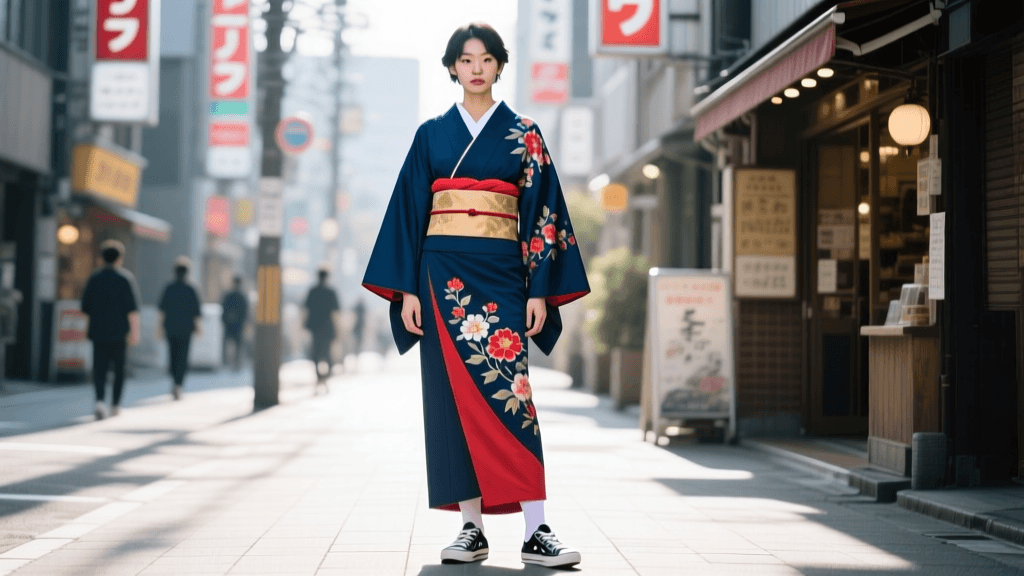
- Geta ($20 to $45): Traditional wooden clogs. For everyday casual wear, you can substitute these with modern leather sandals or even minimalist sneakers for a fusion streetwear look.
Step-by-Step: Tying the Casual Bunko Knot
The Bunko (butterfly) knot is the most common and practical obi knot for everyday yukata wear. It is secure, relatively flat, and easy to tie on your own.
- Wrap the hanhaba obi around your waist twice, ensuring the fabric is smooth and the tension is firm.
- Cross the ends in the front and pull them tightly to secure the waist.
- Bring the ends to the back. Fold the longer end into an accordion shape to create the 'wings' of the bow.
- Wrap the shorter end around the center of the accordion folds to create the 'knot'.
- Tuck the remaining short end under the wrapped belt to hide it, then rotate the entire obi to the back of your body.
The Haori: Japan's Traditional Casual Jacket
When the weather cools, or when you want to incorporate traditional elements into a Western wardrobe, the haori is the ultimate transitional piece. Originally worn by samurai as a protective outer layer, the haori evolved into a casual jacket worn by both men and women over kimono and yukata.
From an everyday styling perspective, the haori is incredibly versatile. Because it is open at the front and secured only by a small braided tie (haori himo), it functions similarly to a modern duster coat or an open cardigan.
'The beauty of the haori lies in its unstructured drape. Unlike tailored Western blazers, the haori relies on the natural fall of the fabric, making it a universally flattering layer that accommodates all body types and modern silhouettes.' - Japan Guide Cultural Archives
Styling Advice: Pair a vintage, patterned haori with a plain white t-shirt, straight-leg denim jeans, and leather boots. The contrast between the fluid, traditional silk or cotton of the haori and the structured, utilitarian nature of denim creates a striking, contemporary aesthetic. When buying a haori for casual Western wear, look for a 'nagaju-ban' (longer length) that hits around the mid-thigh for a more dramatic, coat-like silhouette.
Embracing Tradition in Modern Life
Integrating garments like the yukata and haori into your daily rotation is an exercise in mindful dressing. It requires an appreciation for the geometry of flat-pattern cutting, where the fabric is rarely snipped or wasted, and a respect for the artisans who dye and weave these textiles. By mastering the practical aspects of sizing, tying, and styling, you transform these historical garments from museum artifacts into living, breathing components of your everyday casual wardrobe.