Kyoto Textile Workshops: Nishijin Weaving & Yuzen Dyeing Guide
Introduction to Kyoto's Living Textile Heritage
For centuries, Kyoto has stood as the undisputed epicenter of Japanese traditional arts, culture, and craftsmanship. While the city's temples and shrines draw millions of visitors annually, its living heritage thrives in the narrow alleyways and historic machiya townhouses where master artisans continue to practice techniques passed down through generations. For enthusiasts of Asian traditional garments, participating in a Kyoto textile workshop offers an unparalleled opportunity to understand the meticulous labor behind the kimono. This guide delves into two of Japan's most prestigious textile crafts: Nishijin-ori (brocade weaving) and Kyo-Yuzen (resist dyeing), providing actionable advice, cost breakdowns, and insider tips for your next artisanal journey.
Nishijin-ori: The Art of Brocade Weaving
Nishijin-ori is not a single specific fabric, but rather a collective term for the intricate, multi-colored brocade textiles produced in the Nishijin district of Kyoto. According to the Nishijin Textile Industry Association, the history of this weaving tradition dates back over 1,200 years, reaching its zenith during the Heian period when the imperial court demanded lavish garments. The hallmark of Nishijin-ori is its use of pre-dyed threads, often incorporating precious metals like gold and silver leaf, to create heavily textured, three-dimensional patterns.
The Weaving Process
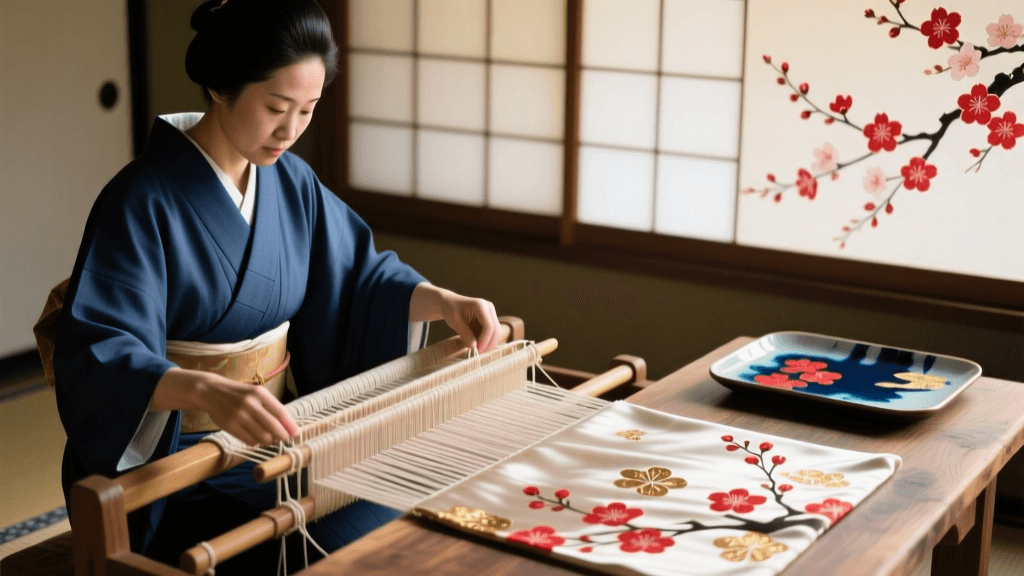
Creating a single Nishijin textile involves more than twenty distinct, highly specialized steps, usually divided among different artisan workshops. The process begins with the zuan (design drafting), followed by thread preparation, dyeing, and the meticulous setup of the loom. Modern studios may use computerized jacquard looms for mass production, but traditional sorabata (draw looms) are still used for bespoke, museum-quality obi sashes, requiring a weaver and a harness-puller working in tandem. The weaving itself requires immense physical coordination, producing the rhythmic clacking sound that once echoed through the streets of Kyoto.
Workshop Experience: What to Expect
Visitors can experience a simplified version of this craft at venues like the Nishijin Textile Center or smaller private studios such as Orinasu Kan. Most beginner workshops utilize smaller, table-top looms or pre-set floor looms.
- Duration: 45 to 60 minutes.
- Cost: 2,000 to 3,500 JPY (approx. $13 - $23 USD).
- Take-Home Product: Participants typically weave a table runner, coaster, or small decorative wall hanging measuring approximately 15cm x 20cm.
- Customization: You can select your weft thread colors from a palette of over 50 silk options, though the warp threads are pre-set by the artisans to ensure structural integrity.
Kyo-Yuzen: Master the Art of Silk Dyeing
If Nishijin-ori is defined by its structural complexity, Kyo-Yuzen is celebrated for its painterly freedom. Originating in the late 17th century, this technique is credited to Miyazaki Yuzensai, a fan painter who revolutionized silk decoration. As highlighted by the Kyoto City Tourism Association, Yuzen dyeing allows for the creation of highly detailed, multi-colored pictorial designs on silk, free from the geometric constraints of weaving.
The Resist-Dyeing Technique
The magic of Kyo-Yuzen lies in the itome-nori, a fine resist paste made from glutinous rice. Artisans apply this paste along the outlines of a design using specialized brass-tipped cones called tsutsu to extrude the paste with pinpoint accuracy. When liquid dyes are subsequently painted onto the silk, the rice paste prevents the colors from bleeding into one another. Following the dye application, artisans may employ surikomi (stenciled rubbing) or kaki-e (freehand brush painting) to add intricate shading and depth. After the dyeing and steaming processes are complete, the fabric is washed in cold water, melting away the paste and revealing crisp, white outlines.
Workshop Experience: What to Expect
Yuzen workshops, such as those offered at the historic Marumasu Nishimuraya or the Kyoto Samurai Machiya, are incredibly popular. Because the process involves wet dyes and delicate silk, these sessions require a bit more focus and time.
- Duration: 90 to 120 minutes.
- Cost: 3,500 to 8,000 JPY (approx. $23 - $53 USD), depending on the base item.
- Take-Home Product: Silk handkerchiefs, furoshiki (wrapping cloths), tote bags, or silk scarves.
- Customization: Studios provide stencils of traditional motifs (cranes, cherry blossoms, waves) or allow freehand painting. You will use specialized brushes to apply the dye within the pre-outlined resist boundaries.
Workshop Comparison Chart
To help you decide which textile experience best fits your travel itinerary and interests, consult the comparison chart below:
| Feature | Nishijin-ori Weaving | Kyo-Yuzen Dyeing |
|---|---|---|
| Primary Material | Silk, Gold/Silver Leaf Threads | Silk, Hemp, Cotton |
| Core Technique | Jacquard Loom Weaving | Resist-Dyeing & Painting |
| Typical Duration | 45 - 60 Minutes | 90 - 120 Minutes |
| Average Cost | 2,000 - 3,500 JPY | 3,500 - 8,000 JPY |
| Skill Level Required | Low (Rhythmic physical motion) | Medium (Steady hand for painting) |
| Best For | Lovers of texture, structure, and loom mechanics | Lovers of color, painting, and fine art |
Practical Tips for Artisan Workshop Visitors
Booking and Reservations
Walk-ins are rarely accepted at authentic artisan studios due to the small size of the workshops and the need to prepare specific materials. It is highly recommended to book at least two to three weeks in advance. While major platforms like Klook or Viator offer bundled experiences, booking directly through the studio's official website or via the Japan National Tourism Organization (JNTO) directory often provides more flexible time slots and direct communication with the artisans.
Navigating the Language Barrier
Do not let a lack of Japanese fluency deter you. Most established workshops in Kyoto are accustomed to international visitors. Instruction is heavily visual, relying on step-by-step demonstrations, numbered pamphlets, and color-coded tools. However, learning a few key phrases enhances the experience. Saying Yoroshiku onegaishimasu (Please treat me well / I look forward to working with you) at the start of the session, and Arigatou gozaimashita (Thank you very much) at the end, shows deep respect for the master's time and craft.
Shipping Your Creations Overseas
Textile crafts, particularly Yuzen dyeing, require steaming and washing to set the colors permanently. This means your item may not be ready to take home on the same day. Most workshops offer international shipping via Japan Post's EMS (Express Mail Service). Expect to pay an additional 2,000 to 3,500 JPY for shipping and handling, with delivery typically taking 7 to 14 days. Always ensure you provide your exact address in English and your local postal code before leaving the studio.
Preserving the Future of Japanese Craftsmanship
Participating in these workshops is more than just a tourist activity; it is a vital contribution to the survival of Japan's intangible cultural heritage. The aging population and the high cost of raw silk have placed immense pressure on traditional textile artisans. By paying for workshops, purchasing finished goods, and sharing your experiences globally, you help sustain the economic ecosystem that allows these master weavers and dyers to pass their knowledge to the next generation. When you wrap yourself in a hand-dyed Yuzen scarf or display a Nishijin woven runner, you are not just holding a piece of fabric—you are holding a piece of Kyoto's enduring soul.