Scottish Kilt Revival: 2026 Sustainable Tartan Styling Guide
The 2026 Highland Dress Renaissance
The traditional Scottish kilt, once relegated strictly to Highland games, formal ceilidhs, and wedding ceremonies, is experiencing a monumental renaissance in 2026. As global fashion pivots toward heritage garments that offer both longevity and cultural storytelling, European folk dress has moved from museum archives to the forefront of sustainable streetwear. The modern kilt movement is defined by a rejection of fast fashion, favoring instead the meticulous craftsmanship, heavy woolens, and deep historical roots of Celtic and Nordic textile traditions. Today, wearers are reimagining the fèileadh beag (the little kilt) not as a costume, but as a versatile, gender-fluid staple that bridges the gap between ancient European folk dress and contemporary urban styling.
Sourcing Authentic and Sustainable Tartans
The foundation of any authentic kilt is its tartan, and the 2026 market is heavily focused on ecological responsibility and traceability. Modern consumers are moving away from synthetic acrylic blends, demanding instead 100% traceable Shetland, Cheviot, or Hebridean wools dyed with low-impact, plant-based, or advanced bio-synthetic pigments. According to the Scottish Tartans Authority, the registration of new, eco-conscious district and fashion tartans has surged, reflecting a broader desire for sustainable heritage textiles. When commissioning a kilt in 2026, look for mills that offer transparent supply chains, ensuring the fleece is sourced from regenerative farming practices. A bespoke 8-yard kilt woven from 16oz sustainable heavy wool typically ranges from £550 to £900 this year, an investment that guarantees a garment capable of lasting multiple generations.
Mastering the Modern Kilt Fit and Measurements
Proper fit is paramount in European folk dress, and the kilt is no exception. Unlike standard trousers, a kilt requires precise anatomical measurements to ensure the pleats hang correctly and the garment remains secure without the need for a belt. The waist measurement should be taken at the natural waist (near the navel), not the hips. The length is traditionally measured from the natural waist to the middle of the knee. In 2026, contemporary stylists often recommend a slightly higher hemline for casual streetwear, ending just above the knee cap to allow for greater mobility and a modernized silhouette. The apron overlap must always fasten on the right side, with the fringed edge falling over the left hip, while the pleats are concentrated at the back to provide structural volume and ease of movement.
Contemporary Styling Scenarios for 2026
Casual Streetwear and Weekend Wear
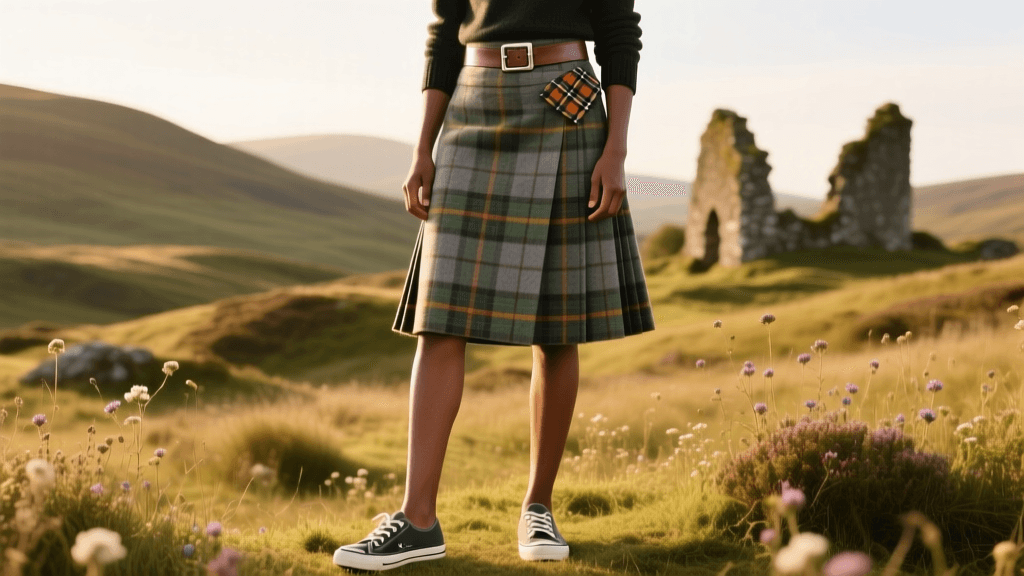
For everyday wear, the modern kilt is stripped of its ceremonial heaviness. Pair a lighter 5-yard wool or heavy cotton-canvas utility kilt with a relaxed-fit, heavyweight organic cotton t-shirt or a chunky, oversized knit sweater. Footwear has shifted away from traditional ghillie brogues toward robust, weather-resistant options like chunky-soled combat boots or minimalist leather sneakers. This styling approach grounds the garment, making it practical for navigating urban environments while maintaining a distinct connection to Celtic heritage.
Smart-Casual and Creative Office Environments
In creative industries, the kilt serves as a powerful statement piece that commands respect while adhering to smart-casual dress codes. Style a muted, low-contrast tartan (such as a modern grey and charcoal sett) with a crisp, tailored linen button-down shirt and a structured, unlined blazer. The key to office-appropriate Highland dress in 2026 is tonal harmony; allowing the textures of the wool and linen to speak for themselves rather than relying on the bright reds and greens of traditional clan tartans.
Avant-Garde and Gender-Fluid Silhouettes
The kilt's inherent lack of bifurcation makes it a cornerstone of the 2026 gender-fluid fashion movement. Avant-garde styling involves layering the kilt over wide-leg trousers or pairing it with asymmetrical, deconstructed outerwear. Designers are increasingly experimenting with non-traditional materials, including upcycled denim, technical nylon, and vegan leather, pushing the boundaries of what constitutes European folk dress in the modern era.
Rethinking Traditional Accessories
Accessories can either anchor a kilt in the past or propel it into the future. The sporran, traditionally a leather or fur pouch worn at the front of the kilt, has been reimagined for 2026. Minimalist, architectural sporrans crafted from vegan apple leather or recycled metals are highly sought after, offering secure storage for modern smartphones and digital wallets without the bulk of ceremonial horsehair designs. Similarly, the sgian-dubh (the traditional sock knife) is often replaced in contemporary settings by a simple, polished wooden or brass kilt pin, securing the outer apron while adding a subtle metallic accent. Hosiery has also evolved; while diced or tartan flashes remain popular for formal events, modern wearers frequently opt for bare legs or opaque, solid-color merino wool socks that complement the dominant thread of the tartan sett.
Comparison Chart: Traditional vs. Contemporary Kilt Styling
| Element | Traditional Ceremonial (Pre-2020s) | Contemporary Revival (2026) |
|---|---|---|
| Fabric Weight | 16oz - 18oz Heavy Wool | 10oz - 13oz Mid-weight Wool, Canvas, or Tech-blends |
| Tartan Palette | Bright, high-contrast Clan colors | Muted, tonal, or monochromatic district setts |
| Footwear | Ghillie brogues with diced hose | Chunky boots, minimalist sneakers, or bare legs |
| Sporran | Animal fur, heavy leather, metal cantles | Vegan leather, minimalist geometric designs |
| Top Half | Prince Charlie jacket, ruffled jabot | Oversized knits, tailored linen shirts, tech-wear jackets |
Garment Care and Maintenance
Investing in a high-quality wool kilt requires dedicated maintenance to preserve its structure and water-resistant properties. Dry cleaning should be kept to an absolute minimum, as harsh chemicals strip the natural lanolin from the wool, leaving it brittle. Instead, spot clean stains with a damp cloth and a mild, pH-neutral wool detergent. After wearing, always hang the kilt on a specialized wide hanger that supports the entire waistband to prevent the pleats from stretching or losing their sharp creases. In 2026, many artisan weavers offer re-pressing services, utilizing steam and heavy wooden clamps to restore the knife-edge pleats that are the hallmark of authentic Highland dress.
The Global Impact of European Folk Dress
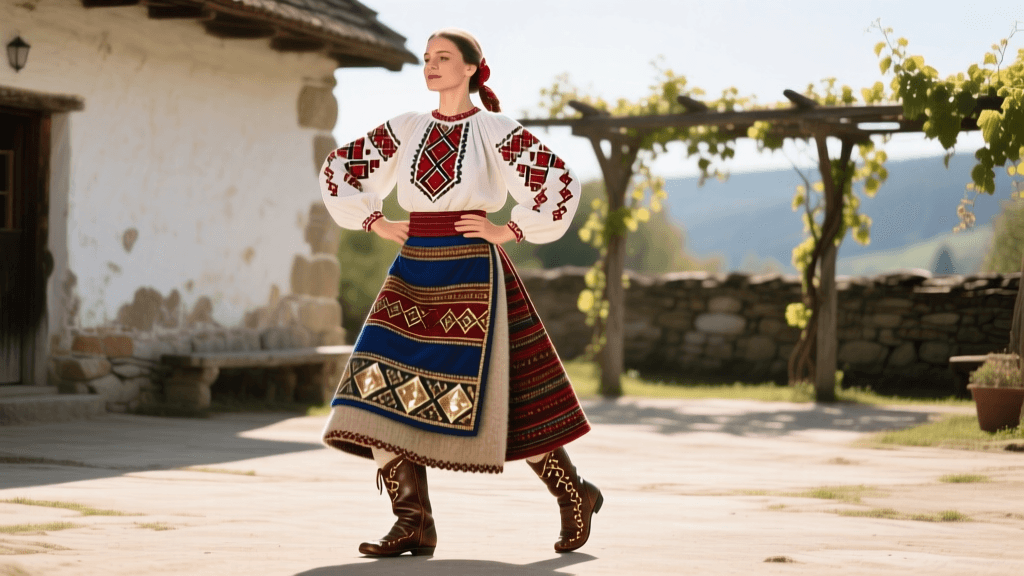
The revival of the Scottish kilt is part of a much larger global appreciation for European folk dress, from the intricate embroidery of the Romanian ie to the robust woolens of the Scandinavian bunad. The Victoria and Albert Museum's fashion archives highlight how regional European garments continually inform global haute couture, proving that traditional construction methods hold invaluable lessons for sustainable fashion. Furthermore, cultural heritage platforms like VisitScotland note that modern kilts are increasingly worn at contemporary music festivals, art galleries, and international fashion weeks, completely divorced from their purely ceremonial origins. By embracing the kilt as a living, breathing garment, the 2026 revival ensures that this iconic piece of European textile history remains relevant, sustainable, and fiercely stylish for decades to come.