Everyday vs Ceremonial Hanbok: 2026 Complete Guide
The Duality of Korean Traditional Dress in 2026
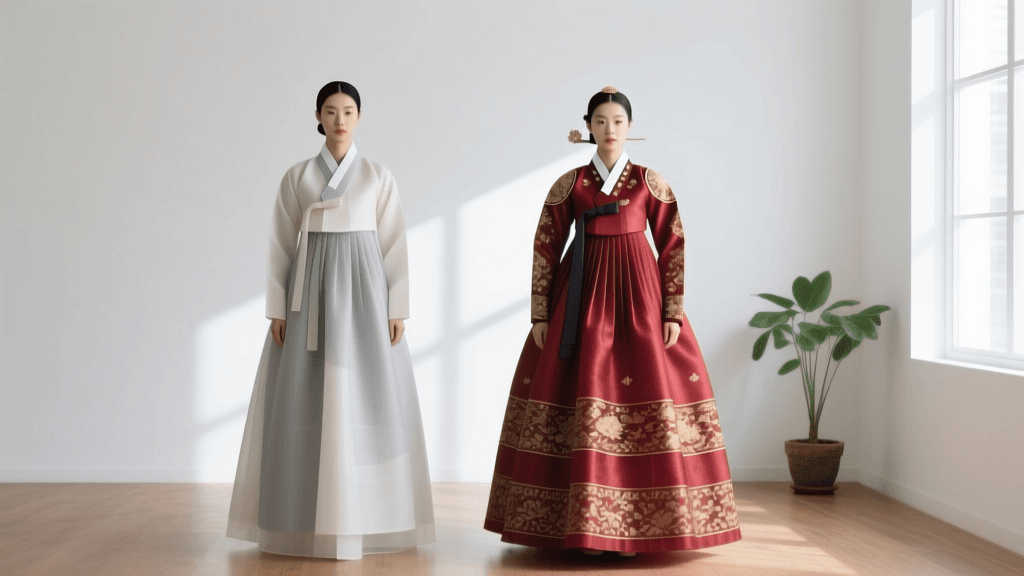
The landscape of Korean traditional dress has undergone a remarkable transformation over the last decade. As we navigate 2026, the hanbok is no longer confined to the pages of history books or the occasional holiday gathering. Instead, it exists in two distinct but equally vibrant spheres: the practical, modernized Saenghwal Hanbok (everyday hanbok) and the meticulously preserved Myeongjeol or Hollyebok (ceremonial and holiday hanbok). Understanding the nuances between these two categories is essential for anyone looking to invest in, wear, or study Korean sartorial heritage today.
According to the Cultural Heritage Administration of Korea, the preservation of traditional garment-making techniques has seen a massive resurgence in the 2020s, paralleling a booming commercial market for modernized streetwear adaptations. While everyday hanbok prioritizes comfort, machine washability, and contemporary silhouettes, ceremonial hanbok remains a steadfast guardian of Joseon-era proportions, luxurious natural textiles, and intricate hand-embroidery. This comprehensive guide breaks down the critical differences between everyday and ceremonial hanbok in 2026, helping you choose the right garment for your lifestyle, budget, and occasion.
Fabric and Material Innovations
The most immediate distinction between everyday and ceremonial hanbok lies in the textiles. In 2026, the everyday hanbok market has fully embraced sustainable, high-performance fabrics. Designers frequently utilize bio-washed cotton, Tencel blends, and recycled PET silk substitutes. These materials are chosen for their breathability, drape, and, most importantly, their ability to withstand machine washing. A modern jeogori (jacket) made from a cotton-linen blend can easily be tossed into a gentle wash cycle, making it a viable option for weekly cafe visits, office wear, or casual travel.
Conversely, ceremonial hanbok demands authenticity and luxury. The gold standard for high-end ceremonial wear remains Myeongju (traditionally woven silk) and Mosi (fine ramie). As noted by Encyclopedia Britannica, the historical significance of these natural fibers is deeply tied to Korea's agrarian heritage and social stratification. In 2026, ethically sourced, naturally dyed silks—using traditional persimmon tannin (gammul) and indigo (jjok)—are highly sought after for weddings and major ancestral rites (jesa). These fabrics require specialized care, possess a distinct, luminous sheen, and carry a weight and stiffness that create the iconic, voluminous bell-shape of the traditional chima (skirt).
Comparison Chart: Everyday vs. Ceremonial Hanbok (2026)
| Feature | Everyday (Saenghwal Hanbok) | Ceremonial (Myeongjeol / Hollyebok) |
|---|---|---|
| Primary Textiles | Cotton, linen, Tencel, recycled poly-blends | Myeongju (silk), Mosi (ramie), Sambe (hemp) |
| Collar (Dongjeong) | Often integrated, soft, or detachable via snaps | Stiff, white, removable V-shaped paper/fabric insert |
| Fastening (Goreum) | Short ties, hidden side-zippers, elastic bands | Long, wide, hand-tied silk ribbons (Goreum) |
| Skirt (Chima) Volume | A-line, moderate volume, single layer | Extreme volume, requires multiple petticoats (Sokchima) |
| Wash & Care | Machine washable (gentle), low-heat iron | Dry-clean only, specialized silk steaming |
| 2026 Avg. Price (USD) | $85 – $280 per set | $1,200 – $5,500+ per set |
| Best Occasions | Casual outings, daily wear, modern festivals | Weddings, Chuseok, Seollal, Doljanchi, Jesa |
Construction and Silhouette Differences
The architecture of the hanbok is a masterclass in geometry, but everyday and ceremonial interpretations approach this geometry differently. The traditional silhouette relies on the contrast between the slim, fitted jeogori and the expansive, flowing chima or wide-legged baji (trousers). Ceremonial hanbok strictly adheres to historical proportions. The jacket is cropped just below the bust, and the skirt is tied high, utilizing a complex system of inner garments (sokjeoksam and sokchima) to achieve a gravity-defying, dome-like structure. The goreum (front ties) on a ceremonial piece are long, wide, and tied in a specific, asymmetrical knot that denotes formality and respect.
Everyday hanbok, however, takes creative liberties to suit modern ergonomics. In 2026, it is common to see the jeogori elongated to tuck into high-waisted modern trousers, or conversely, cropped even shorter to mimic contemporary bolero jackets. The traditional ties are often replaced by discreet side-zippers, magnetic clasps, or shortened, purely decorative ribbons. Skirts feature hidden pockets—a massive demand from modern consumers—and elasticized waistbands that sit comfortably at the natural waist rather than the ribcage. This structural flexibility is what has allowed the everyday hanbok to transition seamlessly into global streetwear.
Pricing, Tech, and the 2026 Market
Investing in hanbok requires a clear understanding of your needs. A high-quality everyday hanbok set from a reputable boutique in Seoul's Bukchon or Jeonju Hanok Village will typically cost between $85 and $280 in 2026. These garments are mass-produced or semi-custom, utilizing digital pattern-making to keep costs accessible while maintaining a tailored look.
Ceremonial hanbok is a luxury investment. A bespoke wedding hanbok (Hollyebok), featuring hand-embroidered gold leaf (geumbak) motifs and premium silk, easily ranges from $2,500 to over $5,500. To bridge the gap between high costs and the desire for authenticity, the 2026 market has seen a massive boom in AI-driven virtual fitting rooms and high-end rental services. As reported by Korea.net, the fusion of technology and tradition has allowed consumers to use 3D body scanning via smartphone apps to rent perfectly fitted ceremonial hanbok for major holidays like Chuseok, with the garments delivered via eco-friendly drone logistics in major metropolitan areas. This tech-forward approach ensures that the majesty of ceremonial wear remains accessible without the prohibitive upfront costs of bespoke tailoring.
Styling and Accessorizing
Styling is where the divergence between the two categories becomes most visually apparent. Ceremonial hanbok requires a holistic approach to traditional accessories. For formal events, women often wear a jokduri (a traditional ceremonial crown) or an elaborate binyeo (ornamental hairpin) crafted from jade, amber, or carved wood. The outfit is grounded by hwa (traditional silk shoes) and adorned with a heavy, multi-tiered norigae (tassel pendant) tied to the skirt's waistband, serving as both a good-luck charm and a status symbol.
Everyday hanbok styling in 2026 is defined by eclectic fusion. It is entirely common to see a modern linen jeogori paired with tailored denim, chunky sneakers, or combat boots. Accessories are minimalist: a subtle, single-string norigae made of modern materials like brass or leather, and a simple leather crossbody bag. Outerwear has also evolved; the traditional magoja (a jacket worn over the hanbok) is now frequently produced in quilted, water-resistant nylons, serving as a stylish, culturally resonant alternative to the modern puffer jacket during the crisp autumn months.
Care, Storage, and Longevity
Maintaining these garments requires vastly different routines. Everyday hanbok is designed for the realities of modern life. Most cotton and Tencel blends can be washed in a mesh laundry bag on a delicate cycle with pH-neutral detergent. They should be air-dried in the shade to prevent the natural or eco-friendly dyes from fading, and touched up with a standard steam iron.
Ceremonial silk and ramie demand rigorous preservation. Moisture is the enemy of traditional Myeongju. In 2026, collectors and families store ceremonial hanbok in breathable, unbleached cotton garment bags (bojagi style) alongside natural cedar blocks and silica desiccants to ward off humidity and insects. They must never be washed at home; instead, they require specialized dry cleaning using eco-friendly liquid silicone solvents that protect the delicate silk fibers and preserve the structural integrity of the geumbak gold leaf. When tying the goreum, one must be careful not to crease the silk sharply, as deep creases in aged silk can lead to fiber snapping over time.
Conclusion: Choosing Your Path
The choice between everyday and ceremonial hanbok in 2026 is not a matter of one being superior to the other; rather, it is about honoring the specific context of your life. If you seek a garment that integrates the beauty of Korean heritage into your daily routine, offering comfort and modern practicality, the Saenghwal Hanbok is your ideal companion. However, for life's most profound milestones—weddings, ancestral honors, and major lunar holidays—the ceremonial hanbok remains an unparalleled symbol of respect, artistry, and cultural continuity. By understanding the fabrics, construction, and care requirements of both, you can build a wardrobe that respectfully bridges Korea's illustrious past with its dynamic, fashion-forward present.