Hanfu Destination Tourism: The Xian Photography Guide
The intersection of traditional Chinese clothing and modern travel has birthed a massive cultural phenomenon. Across China’s ancient capitals, the sight of flowing silk, intricate embroidery, and sweeping sleeves is no longer confined to museum exhibits or film sets. Today, Hanfu destination tourism is a multi-million-dollar industry driven by a passionate community and amplified by social media platforms like Douyin and Xiaohongshu. For travelers and content creators alike, cities like Xi’an and Luoyang have become the ultimate playgrounds for historical immersion and viral photography.
However, capturing the perfect Hanfu travel vlog or photoshoot requires more than just putting on a historical garment. It demands an understanding of fabric drape, architectural harmony, lighting, and cultural accuracy. This comprehensive guide will walk you through everything you need to know to style, shoot, and share breathtaking Hanfu content in Xi’an, the eternal city of the Tang Dynasty.
The Rise of Hanfu Destination Tourism
Over the past decade, the Hanfu revival movement has transitioned from a niche subculture to a mainstream lifestyle choice among Chinese youth. According to the Metropolitan Museum of Art's Heilbrunn Timeline of Art History, the evolution of Chinese dress is deeply intertwined with the nation's dynastic shifts, philosophical movements, and Silk Road trade routes. Modern enthusiasts are not merely wearing costumes; they are engaging in a tactile reclamation of this rich heritage.
Destination tourism has capitalized on this revival. Travelers now plan entire itineraries around specific historical aesthetics, booking specialized Zaofa (hair and makeup) studios and hiring photographers who specialize in ancient-style portraiture. The economic impact is profound, with historical scenic areas reporting massive spikes in ticket sales and local revenue directly correlated to the Hanfu tourism boom.
Why Xi'an is the Ultimate Hanfu Backdrop
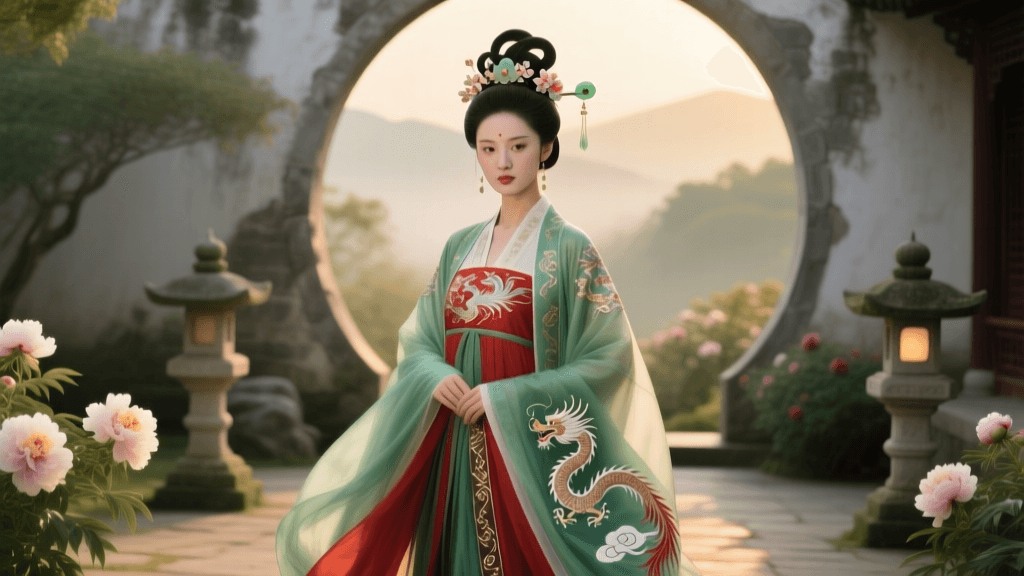
Xi’an, historically known as Chang’an, was the cosmopolitan heart of the Tang Dynasty (618–907 AD). It was a global metropolis where merchants from Persia, India, and Byzantium traded alongside Chinese scholars. This era is celebrated for its bold, opulent, and inclusive fashion—characterized by the Qixiong Ruqun (chest-high skirt) and vibrant, contrasting colors.
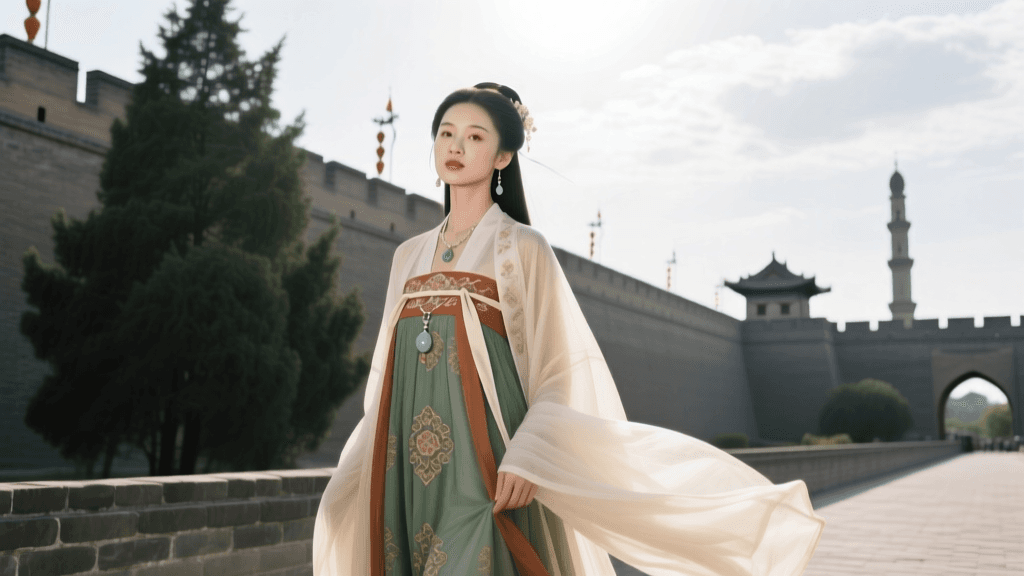
The city’s architectural preservation provides an unparalleled canvas for photographers. Sites recognized by UNESCO World Heritage for their profound historical layers, such as the Giant Wild Goose Pagoda and the ancient City Wall, offer authentic textures of gray brick, weathered wood, and sweeping eaves that digital backdrops simply cannot replicate. Furthermore, modern immersive zones like Datang Everbright City are specifically designed with Tang Dynasty aesthetics in mind, featuring thousands of lanterns, traditional music, and interactive street performances that make for dynamic video content.
Styling for the Camera: Fabrics, Colors, and Silhouettes
When styling Hanfu for social media, the camera sensor and the environment must dictate your wardrobe choices. Heavy brocades behave differently on film than lightweight chiffons. Below is a strategic guide to matching your Hanfu style with Xi’an’s premier locations.
| Hanfu Style | Best Xi'an Location | Ideal Fabric & Color Palette | Best Time to Shoot |
|---|---|---|---|
| Qixiong Ruqun (Tang Dynasty) | Datang Everbright City | Light Silk/Chiffon; Crimson, Gold, Peacock Blue | Blue Hour (Post-Sunset Lanterns) |
| Yuanlingpao (Round-Collar Robe) | Xi'an Ancient City Wall | Wool Blends/Heavy Cotton; Earth Tones, Maroon | Golden Hour (Late Afternoon) |
| Aoqun & Mamianqun (Ming Dynasty) | Confucian Temple & Forest of Stone Steles | Brocade/Jacquard; Jade Green, Navy, Silver Embroidery | Overcast Days or Soft Morning Light |
| Wei-Jin Style (Cross-Collar, Wide Sleeves) | Xingqing Palace Ruins Park (Bamboo Groves) | Raw Linen/Gauze; White, Pale Celadon, Ink Black | Early Morning (Mist/Fog) |
The 'Viral' Color Palette Strategy
Social media algorithms on platforms like Xiaohongshu heavily favor high-contrast, visually striking imagery. If you are shooting against the imposing, monochromatic gray bricks of the Xi'an City Wall, wearing a pastel pink Hanfu will result in a washed-out image. Instead, opt for high-saturation colors like vermilion red, imperial yellow, or deep emerald green. The contrast between the warm garment and the cool, historic stone creates a cinematic depth that stops users from scrolling.
Practical Logistics: Renting vs. Packing
One of the most common dilemmas for Hanfu tourists is whether to rent locally or pack their own collection. Both approaches have distinct advantages and costs.
The Local Rental Experience
Xi’an is saturated with Hanfu rental and styling studios, particularly near the Bell Tower and Datang Everbright City. Typical Costs:
- Basic Outfit Rental: 100 – 250 RMB ($15 – $35 USD) for 12-24 hours.
- Premium Styling Package: 300 – 600 RMB ($40 – $85 USD). This includes a high-quality, heavily embroidered garment, professional historical makeup, intricate hairpin styling (Zaofa), and sometimes a 1-hour guided photoshoot.
Pro Tip: Always inspect the collars and cuffs of rental garments for wear and tear before leaving the shop. Bring your own slip garments and undershirts for hygiene.
Packing Your Own Collection
For serious enthusiasts and influencers, bringing your own Hanfu ensures perfect fit, hygiene, and access to premium brands like Shisanyu or Zhongling. However, traveling with traditional garments requires tactical packing.
Essential Hanfu Travel Kit:
1. Portable Garment Steamer: Silk and chiffon wrinkle easily in suitcases. A handheld steamer is non-negotiable for crisp, camera-ready pleats.
2. U-Shaped Hairpins & False Hairpieces: Traditional updos require structural support that modern bobby pins cannot provide.
3. Double-Sided Fashion Tape: Essential for securing the overlapping collars (Jiaoling Youren) and preventing wardrobe malfunctions in windy conditions.
4. Anti-Static Spray: Xi'an can be dry, especially in autumn and winter. Static cling will ruin the drape of a Mamianqun (pleated skirt) on camera.
Social Media Strategy: Shooting for Douyin and Xiaohongshu
Creating content that resonates with the Hanfu community requires an understanding of current visual trends. The days of simply standing and smiling are over; modern Hanfu content is about storytelling, motion, and atmosphere.
Mastering Motion and Props
Hanfu is designed to be worn in motion. The sweeping sleeves (Guangxiu) and flowing skirts are meant to catch the wind. When shooting video for Douyin or TikTok, incorporate slow-motion pans of you walking down the corridors of the Huaqing Palace. Use historically accurate props to give your hands something to do: a round silk fan (Tuanshan), an oil-paper umbrella (Youzhisan), or a traditional bamboo flute. These props add layers of narrative to your frame.
Editing for the 'Cinematic Tang' Aesthetic
Post-production is where the magic happens. Top Hanfu creators use apps like Xingtu (WakeUp) or Meitu to apply specific color grades. The 'Tang Dynasty Cinematic' filter trend involves warming the shadows, adding a subtle film grain, and pushing the greens and reds to mimic the oxidized pigments found in ancient murals. When editing night shots from Datang Everbright City, selectively lower the highlights to prevent the neon lanterns from blowing out the exposure on your face.
Respecting the Culture While Creating Content
As Hanfu tourism explodes, so does the responsibility to represent the culture accurately. The Hanfu community is highly educated and quick to point out historical inaccuracies or cultural misappropriation. It is crucial to understand the difference between Hanfu (Han ethnic traditional clothing) and the attire of other dynasties or cultures.
For instance, mixing a Ming Dynasty horse-face skirt with a Qing Dynasty Manchu headpiece is considered a major faux pas. Similarly, confusing Hanfu with the Japanese Kimono or Korean Hanbok in your captions can lead to severe backlash. Institutions like the Victoria and Albert Museum emphasize the importance of understanding textile history and regional distinctions when engaging with Asian dress. Take the time to research the specific dynasty your outfit represents. Use accurate terminology in your Xiaohongshu captions—tagging the specific garment pieces (e.g., Banbi, Pibo, Qixiong) not only shows respect but also boosts your SEO within the community's search algorithms.
Conclusion: Your Journey into the Past
Hanfu destination tourism in Xi’an is more than a photo opportunity; it is a living, breathing dialogue between the past and the present. By carefully selecting your garments, respecting the historical context, and mastering the technical aspects of travel photography, you can create social media content that is not only visually stunning but culturally profound. Whether you are twirling under the lanterns of Datang Everbright City or standing stoic against the ancient City Wall, you are participating in a beautiful revival of Asian traditions. Pack your steamer, book your stylist, and step into history.