Kimono Extreme Weather Guide 2026: Rain, Snow & Heat
Kimono Climate Resilience in 2026
As global climate patterns shift, Japan's summers have grown increasingly sweltering, while winter storms and unpredictable monsoon seasons pose new challenges for traditional garments. According to the Japan Meteorological Agency, extreme weather events and prolonged heatwaves are redefining how locals and enthusiasts approach traditional dress. Wearing a kimono in 2026 requires more than just an appreciation for aesthetics; it demands a strategic understanding of textile science, historical layering techniques, and modern weather-adaptive accessories.
Whether you are navigating the humid streets of Kyoto during the tsuyu (monsoon) season, attending a snow festival in Hokkaido, or enduring a late-August heatwave in Tokyo, this comprehensive guide details the essential adaptations for preserving both your comfort and your silk investments.
Beating the Heat: Summer Kimono and Yukata Adaptations
The Science of Ro, Sha, and Modern Cooling Tech
When temperatures exceed 30°C (86°F), the transition to summer garments is non-negotiable. The Metropolitan Museum of Art notes that historical summer kimonos relied heavily on ro (leno weave) and sha (silk gauze) to allow maximum airflow. In 2026, these traditional weaves are being paired with cutting-edge undergarments to combat record-breaking urban heat islands.
Modern hadajuban (under-slips) now frequently feature Phase Change Material (PCM) technology, originally developed for aerospace, which absorbs and releases heat to maintain a micro-climate against the skin. When selecting a summer kimono, look for:
- Ro Weave: Features distinct horizontal ribs, offering structure while remaining highly breathable. Ideal for formal summer tea ceremonies.
- Sha Weave: A lighter, more sheer gauze with a looser grid pattern, perfect for informal outings and evening fireworks festivals.
- Shijira Cotton: A traditional seersucker-like cotton from Awa, Tokushima, which naturally lifts away from the skin to promote sweat evaporation.
Essential Heatwave Accessories
To complement breathable fabrics, 2026's kimono wardrobes heavily utilize hiyoke (cooling slips) made from bamboo-derived rayon. Additionally, the sensu (folding fan) remains a vital tool. Modern artisans are crafting sensu with treated washi paper that resists humidity warping, ensuring your accessory remains crisp even in 90% humidity. Cooling neck wraps hidden beneath the eri (collar) are also a popular contemporary hack for outdoor summer matsuri.
Navigating the Rain: Tsuyu and Typhoon Season
Protecting Silk from Water Damage
Silk chirimen (crepe) is notoriously vulnerable to water. A single drop can cause the twisted threads to shrink and pucker, leaving permanent water spots. During the rainy season, preventative measures are critical. In 2026, specialized nano-silica water-repellent sprays formulated specifically for protein fibers allow enthusiasts to add a hydrophobic layer to vintage silks without altering the fabric's drape or hand-feel.
Rain Gear: Amegoi and Modern Wagasa
When the skies open up, the amegoi (traditional raincoat) is your first line of defense. Historically made from oiled paper or treated silk, modern 2026 iterations utilize lightweight, breathable Gore-Tex laminates tailored in the traditional poncho silhouette, allowing the wide sleeves of the kimono to remain completely covered.
| Item | Material | Best Use Case | Est. Price (JPY) |
|---|---|---|---|
| Traditional Shigure-gasa | Oiled Washi Paper & Bamboo | Light drizzle, photography | ¥15,000 - ¥30,000 |
| Modern Fiberglass Wagasa | Recycled PET & Carbon Fiber | Heavy rain, windy conditions | ¥8,000 - ¥12,000 |
| Gore-Tex Amegoi | PTFE Laminate | Commuting, full-day wear | ¥25,000 - ¥45,000 |
| Silicone Tabi Covers | Stretch Silicone | Puddle protection for footwear | ¥2,500 - ¥4,000 |
Conquering the Snow: Winter Layering and Insulation
The Art of Juban and Hanten Layering
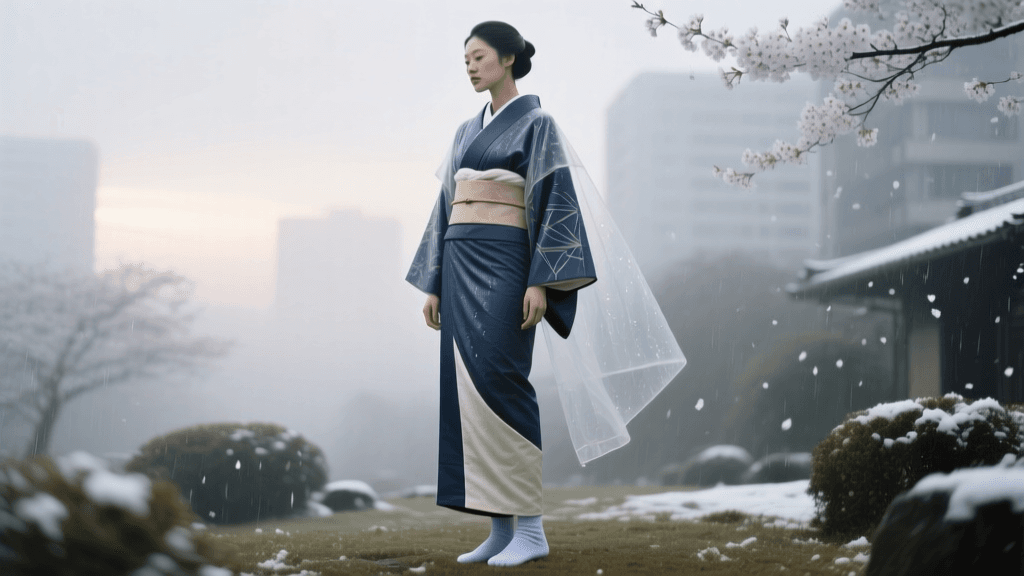
Winter kimono dressing is an exercise in thermal engineering. The base layer, or nagajuban, is where modern innovation shines. Fleece-lined and battery-heated juban have become standard in 2026 for those attending outdoor winter illuminations. Over the kimono, a hanten (padded half-coat) or a heavy haori lined with down-alternative insulation traps body heat while maintaining the elegant, straight-lined silhouette of the garment.
Footwear: Snow-Ready Zori and Waterproof Tabi
Standard straw or cork-soled zori are treacherous on ice and snow. For snowy conditions, practitioners swap to yuki-zori (snow sandals) which feature thick, treaded rubber soles and elevated platforms to keep the kimono hem out of the slush. Paired with fleece-lined, waterproof tabi boots, these ensure that the extremities remain warm and dry, preventing the dangerous rapid heat loss associated with wet cotton socks.
The Michiyuki Overcoat
The michiyuki is a three-quarter length overcoat characterized by its square neckline and hidden snap closures. In heavy snow, a wool-blend or treated tweed michiyuki acts as a windbreaker, protecting the delicate silk of the main kimono from abrasive snowflakes and freezing winds. The hem of the kimono should be tucked slightly higher than usual to prevent it from dragging in the snow and absorbing melting ice.
Maintaining Your Weather-Adaptive Gear
Proper maintenance of your weather-specific kimono accessories is crucial for longevity. After navigating the rainy season, your amegoi and silicone tabi covers must be thoroughly air-dried in a shaded, well-ventilated area to prevent mold growth—a persistent issue in Japan's humid summers. For winter gear, the michiyuki and padded hanten should be professionally dry-cleaned or spot-treated with enzyme cleaners before being stored in breathable tatoushi (paper garment covers) with natural camphor blocks to deter insects. Never store moisture-wicking bamboo hadajuban in plastic bins, as trapped residual sweat can degrade the fibers over time.
2026 Temperature-to-Garment Matrix
To simplify your dressing routine, refer to this quick-reference matrix for selecting the appropriate kimono weight and layering strategy based on the daily forecast.
| Temperature Range | Primary Garment | Essential Layering & Accessories |
|---|---|---|
| Above 28°C (82°F) | Yukata or Sha Kimono | Bamboo hadajuban, sensu, cooling neck wraps |
| 15°C to 27°C (59°F - 80°F) | Hitoe (Unlined Silk/Cotton) | Standard cotton juban, light haori |
| 5°C to 14°C (41°F - 57°F) | Awase (Lined Silk) | Wool undergarments, standard haori, scarves |
| Below 4°C (39°F) | Heavy Awase or Tsumugi | Heated juban, hanten, michiyuki, fleece tabi |
Conclusion
The survival and continued daily use of the kimono in 2026 is a testament to its incredible adaptability. By respecting the historical wisdom of natural weaves like ro and sha, while embracing modern material sciences for rain and snow protection, wearers can confidently step outside in any weather. Whether shielding a vintage chirimen silk from a sudden typhoon downpour or enjoying a snowy evening in Sapporo, the right adaptations ensure that the beauty of the Asian traditional garment endures through every season.