Styling Modern Qipao Tops and Mandarin Jackets in 2026
The Renaissance of the Mandarin Collar in 2026
As we navigate the fashion landscape of 2026, the rigid boundaries between Eastern heritage garments and Western contemporary wardrobes have completely dissolved. The modern fashion enthusiast no longer views traditional Asian garments as mere ceremonial costumes reserved for Lunar New Year or weddings. Instead, pieces like the modernized qipao top and the structured mandarin collar jacket (often referred to interchangeably as the Nehru jacket or Tangzhuang in its traditional forms) have become foundational pillars of the global capsule wardrobe. This shift is largely driven by a demand for sartorial storytelling, where garments carry cultural weight while meeting the rigorous demands of modern urban life.
The evolution of the qipao, in particular, is a testament to this fusion. Historically a symbol of modernity and women's liberation in 1920s Shanghai, the qipao has continually adapted to the times. As noted by BBC Culture, the garment has always possessed a deeply political and evolving identity, shifting from a loose, modest covering to a form-fitting silhouette, and now, in 2026, to a versatile, modular top that champions both comfort and heritage. Today, we explore exactly how to integrate these masterpieces of Asian tailoring into your daily rotation, from the corporate boardroom to the neon-lit streets of the city center.
Sourcing Authentic Yet Modern Pieces
The key to successfully mixing traditional Asian pieces with modern wardrobes lies in the fabric and the cut. In 2026, the most sought-after qipao tops and mandarin jackets are crafted from climate-responsive tech-silks and Tencel-silk crepe de chine blends. These materials offer the lustrous drape and rich history of traditional sericulture—a practice recognized for its profound cultural importance by UNESCO's Intangible Cultural Heritage list—but with the added benefit of machine washability and temperature regulation.
When shopping for a modern qipao top, look for a relaxed, drop-shoulder silhouette rather than the restrictive, skin-tight cuts of the mid-20th century. The collar should stand at a comfortable 2.5 to 3 inches, reinforced with a soft, flexible interfacing that prevents it from digging into the jawline. For mandarin collar jackets, the 2026 trend favors slightly oversized, boxy cuts with hidden magnetic closures that mimic the aesthetic of traditional hand-knotted frog buttons (pankou) without the tedious fastening process.
Office-Ready: Pairing Qipao Tops with Tailored Trousers
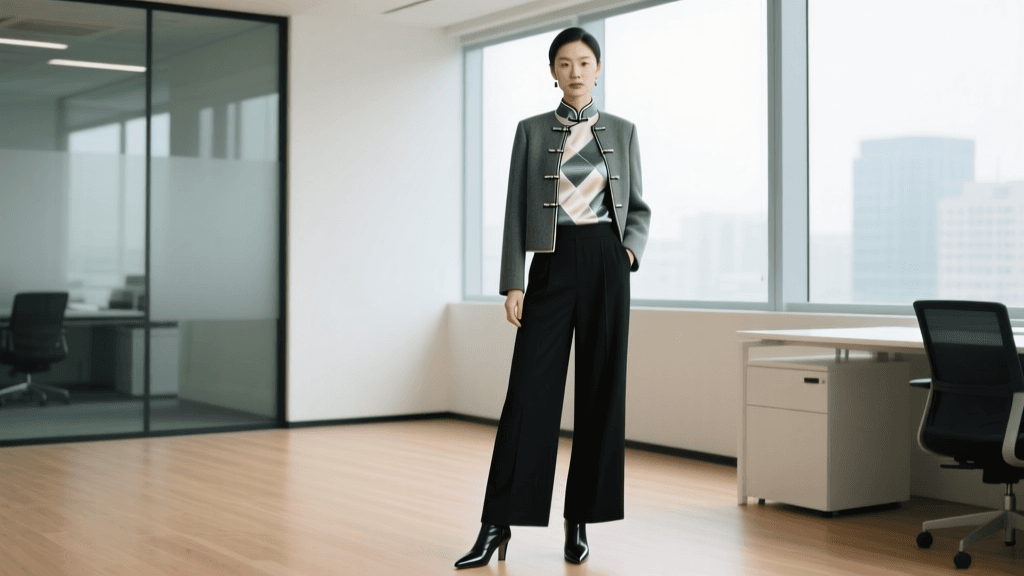
Integrating a qipao top into a corporate environment requires a careful balance of proportions. Because the qipao top inherently draws the eye upward with its intricate collar and diagonal chest closures, the bottom half of your outfit should provide a grounded, structured foundation.
The Boardroom Formula
- The Top: A cropped, long-sleeved qipao top in a muted, solid tone (such as slate grey, deep jade, or oxblood) made from a matte silk-cupro blend. The hem should hit exactly at your natural waistline.
- The Bottom: High-waisted, wide-leg wool trousers with a sharp front crease. The trousers should pool slightly over your footwear to elongate the leg line, compensating for the cropped nature of the top.
- The Footwear: Pointed-toe leather loafers or sleek, minimalist ankle boots with a modest 2-inch block heel.
- The Accessory: Avoid heavy necklaces that compete with the mandarin collar. Instead, opt for sculptural, geometric drop earrings in brushed brass or matte gold.
Stylist's Rule of Thumb: When wearing a mandarin collar in a professional setting, ensure there is at least one inch of space between the collar band and your neck. A collar that is too tight reads as restrictive and uncomfortable, whereas a slightly relaxed collar projects effortless confidence and modern ease.
Streetwear Edge: Layering Mandarin Jackets
Streetwear in 2026 is heavily influenced by utilitarian layering and cross-cultural silhouettes. The mandarin collar jacket, historically a formal piece of menswear and traditional Chinese loungewear, has been reclaimed as the ultimate transitional outerwear piece. Its clean, collarless neckline makes it the perfect layering tool, as it eliminates the bulky fabric overlap that occurs when layering traditional lapelled blazers over hoodies or turtlenecks.
The Creative Studio Formula
- The Base Layer: A lightweight, ribbed merino wool turtleneck in a contrasting neutral tone (e.g., a black turtleneck under a camel-colored mandarin jacket).
- The Outerwear: A mid-weight mandarin collar jacket crafted from a textured cotton-linen canvas or a modern, water-resistant tech-twill. Look for details like deep, hidden side-seam pockets and subtle, tonal embroidery along the cuffs.
- The Bottom: Straight-leg, raw-hem selvedge denim. The ruggedness of the denim provides a striking textural contrast to the refined, smooth finish of the mandarin jacket.
- The Footwear: Chunky, architectural sneakers or heavy-tread Chelsea boots to anchor the outfit with a contemporary, utilitarian edge.
This combination works exceptionally well for creative professionals, gallery openings, or evening social events where you want to project an image of refined, worldly sophistication without appearing overly formal.
Comparison: Traditional vs. 2026 Modern Adaptations
Understanding the structural differences between heritage garments and their modern counterparts is crucial for styling them correctly. Below is a breakdown of how the qipao and mandarin jacket have evolved to meet the demands of the modern wardrobe.
| Feature | Traditional Heritage Garment | 2026 Modern Adaptation |
|---|---|---|
| Fabric | Heavy silk brocade, raw silk, stiff satin | Tencel-silk blends, washable peace silk, tech-twill |
| Fit & Silhouette | Form-fitting, restrictive, high armholes | Relaxed, drop-shoulder, modular, boxy outerwear |
| Closures | Hand-knotted silk frog buttons (pankou) | Magnetic hidden snaps, 3D-printed decorative knots |
| Collar Height | 3 to 4 inches, heavily stiffened | 2 to 2.5 inches, soft flexible interfacing |
| Care & Maintenance | Strictly dry clean only, prone to water spotting | Machine washable (delicate cycle), steam refresh |
The Art of Accessorizing the Fusion Look
When mixing traditional Asian pieces with Western garments, accessories should act as a bridge between the two worlds. In 2026, the trend is moving away from literal, costume-like accessories (such as matching silk fans or overly ornate hair sticks) and toward subtle, artisanal nods to craftsmanship.
Consider swapping a standard leather belt for one featuring a subtle, laser-etched motif inspired by traditional cloud collars (yunjian). Alternatively, carry a structured, minimalist handbag that utilizes bamboo or carved wood handles, echoing the natural materials historically used in Asian weaving and basketry. The Metropolitan Museum of Art extensively documents the historical significance of silk and natural fiber weaving in Asian textiles, reminding us that honoring the material's origin is just as important as the garment's cut. By focusing on texture and material rather than overt symbolism, you create an outfit that feels deeply personal and authentically modern.
Care and Maintenance for Blended Fabrics
One of the greatest barriers to integrating traditional Asian garments into daily life has historically been the high cost and inconvenience of maintenance. Traditional silk brocades and delicate embroideries require specialized dry cleaning, making them impractical for regular wear. However, the 2026 iterations of these garments are designed with longevity and ease in mind.
Washing and Drying
For modern Tencel-silk and cupro-blend qipao tops, always use a pH-neutral, enzyme-free detergent designed for delicates. Wash on a cold, gentle cycle inside a mesh laundry bag to protect the structural integrity of the collar and the delicate frog button loops. Never wring or twist the fabric; instead, gently press out excess water and lay the garment flat on a clean, dry towel to air dry away from direct sunlight, which can degrade the silk proteins over time.
Steaming and Storage
Avoid using a traditional iron, as direct heat can flatten the natural luster of the silk and leave shiny marks on the fabric. Instead, invest in a high-quality handheld garment steamer. A quick pass of steam not only removes wrinkles but also refreshes the fibers, eliminating odors between washes. When storing your mandarin jackets for the season, use wide, padded wooden hangers to maintain the shape of the shoulders, and store them in breathable cotton garment bags to prevent moisture buildup and protect against dust.
Conclusion: Embracing a Borderless Wardrobe
The integration of modern qipao tops and mandarin collar jackets into contemporary wardrobes is more than just a fleeting fashion trend; it is a celebration of cultural fluidity and artisanal craftsmanship. By understanding the proportions, selecting the right modernized fabrics, and pairing these heritage pieces with structured, contemporary basics, you can create a 2026 wardrobe that is deeply rooted in history yet entirely relevant to the modern world. Whether you are commanding a boardroom or navigating the vibrant energy of the city streets, the fusion of East and West offers an unparalleled avenue for self-expression, proving that true style transcends both time and geography.