Kunqu & Peking Opera Hanfu Costumes: 2026 Stage Guide
The Intersection of Historical Hanfu and Theatrical Xifu
The global resurgence of traditional Chinese performing arts has reached new heights in 2026, bringing the exquisite garments of Kunqu and Peking Opera to international stages. For enthusiasts, performers, and costume designers, understanding the nuances of stage Hanfu—often referred to in theatrical contexts as Xifu (opera costumes)—is essential. While the modern Hanfu movement largely focuses on historical accuracy from the Tang, Song, and Ming dynasties, traditional Chinese opera relies on a highly stylized, exaggerated evolution of Ming-era Hanfu designed specifically for the stage. According to the UNESCO Intangible Cultural Heritage registry, Kunqu Opera is one of the oldest and most refined forms of Chinese opera, and its visual language is inextricably linked to its flowing, elegant garments.
In 2026, the demand for authentic, stage-ready Hanfu has surged, driven by a new generation of performers who demand both historical reverence and modern theatrical functionality. This guide explores the anatomy of Kunqu and Peking Opera costumes, the mechanics of water sleeves, and how to source and maintain these masterpieces today.
Distinguishing Kunqu Elegance from Peking Opera Spectacle
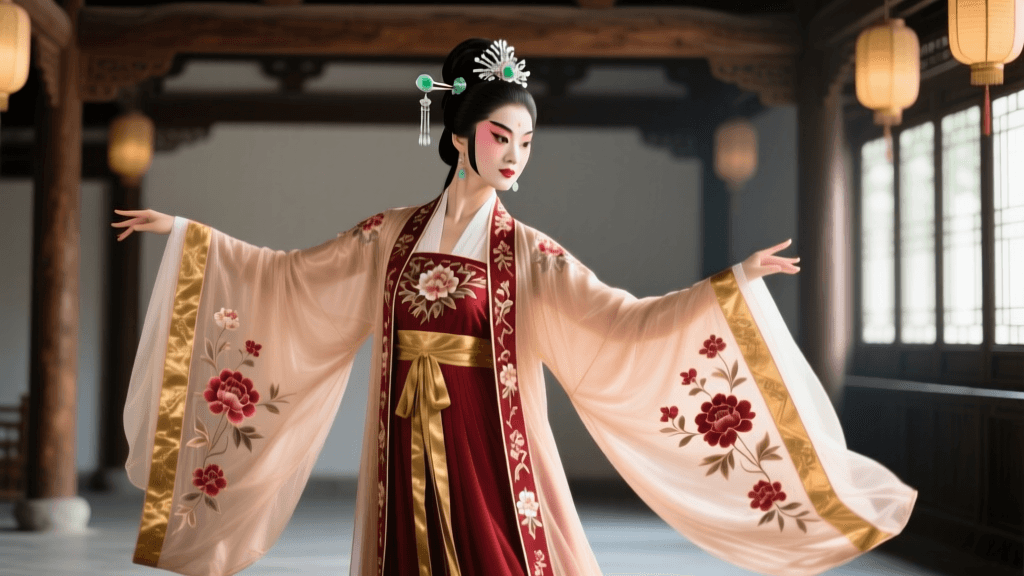
While both art forms share a foundational wardrobe system based on Ming dynasty Hanfu, their stylistic executions differ dramatically. Kunqu, known for its poetic lyricism and graceful choreography, utilizes softer lines, muted pastel palettes, and intricate, delicate embroidery. The garments must flow like water, complementing the subtle, refined movements of the performers. Peking Opera (Jingju), recognized globally for its martial arts, acrobatics, and bold character archetypes, demands high-contrast colors, rigid structural elements, and heavy, reflective embroidery that catches the bright stage lights. As noted by Encyclopedia Britannica, the visual coding of Peking Opera costumes instantly communicates a character's social status, personality, and moral alignment to the audience before a single word is sung.
The Four Pillars of the Opera Wardrobe
To accurately commission or wear stage Hanfu in 2026, one must understand the four primary categories of theatrical garments, which dictate the silhouette and movement of the performer.
1. Mang (Python Robe)
Reserved for emperors, high-ranking officials, and nobility, the Mang is the most formal stage garment. It features a round collar, side slits for mobility, and is heavily embroidered with python motifs (which have four claws, distinguishing them from the five-clawed imperial dragons). In 2026, master artisans in Suzhou are utilizing a blend of traditional gold-couching techniques and lightweight metallic threads to reduce the garment's weight by 15% without sacrificing its regal luster.
2. Pei (Cloak)
The Pei is a versatile, front-opening robe with a center slit, worn by scholars, middle-class characters, and women in informal settings. For Kunqu performers, the Pei is often crafted from lightweight silk crepe, allowing the subtle, swaying movements of the 'scholar' or 'lady' archetypes to look effortless.
3. Kao (Armor)
Used exclusively by military generals and warriors, the Kao is a highly structured, multi-layered armor suit. It features four triangular flags attached to the back, representing the general's command over troops. Modern 2026 stage adaptations of the Kao incorporate flexible carbon-fiber boning in the shoulder pads, allowing Peking Opera martial artists to execute high-flying acrobatics without the armor restricting their range of motion.
4. Xue (Scholar's Robe)
A simpler, cross-collared robe with wide sleeves, the Xue is the staple for literati and young students. It is heavily featured in Kunqu romantic plays, where the flowing sleeves are used to express shyness, sorrow, or joy.
The Art of Shuixiu (Water Sleeves)
No discussion of stage Hanfu is complete without addressing Shuixiu, or water sleeves. These are the long, white silk extensions attached to the cuffs of the garment. While historical Hanfu featured wide sleeves, the extreme length of water sleeves is a purely theatrical invention designed to amplify the actor's emotional expressions.
In Kunqu, water sleeve movements are fluid, circular, and continuous, mimicking the ripples of a pond. In Peking Opera, the movements can be sharp, forceful, and percussive. For performers training in 2026, it is recommended to practice with weighted training sleeves (typically 1.5 to 2 feet in length) before transitioning to the full 3-foot performance silk. Mastering the 'flick', 'fold', and 'tremble' techniques requires immense wrist strength and a deep understanding of the silk's bias drape.
Fabric Innovations and Stage Lighting in 2026
The transition to advanced LED and UV stage lighting in modern theaters has forced a reevaluation of traditional silk fabrics. Pure mulberry silk, while historically accurate, can sometimes appear flat under intense, cool-toned LED arrays. Consequently, 2026 stage Hanfu frequently incorporates high-luster synthetic blends or silk-satin weaves that reflect light dynamically.
| Fabric Type | Weight & Drape | Stage Suitability | 2026 Avg Cost (per yard) |
|---|---|---|---|
| Heavy Silk Brocade | Heavy, Structured | Excellent for Mang and formal Pei | $95 - $140 |
| Silk Crepe de Chine | Light, Fluid | Ideal for Kunqu Xue and female Pei | $45 - $70 |
| High-Luster Satin Blend | Medium, Reflective | Best for Peking Opera under LED lights | $30 - $55 |
| Hand-Embroidered Organza | Sheer, Ethereal | Used for fairy/spirit roles in Kunqu | $120 - $200 |
Sourcing and Commissioning Stage Hanfu
Acquiring authentic stage Hanfu requires navigating a specialized network of theatrical tailors, primarily located in Beijing, Suzhou, and Hangzhou. According to the UNESCO Peking Opera Registry, the preservation of these costume-making techniques is vital to the survival of the art form. In 2026, commissioning a custom, hand-embroidered Mang robe from a master atelier in Suzhou typically costs between $2,500 and $4,500, with a lead time of four to six months. For students and amateur troupes, machine-embroidered replicas using high-quality synthetic threads are available in the $400 to $800 range, offering durability for rigorous rehearsal schedules.
When commissioning, it is crucial to provide the tailor with your exact 'wingspan' measurement (fingertip to fingertip with arms outstretched) to ensure the water sleeves and side panels are proportioned correctly for your specific height and arm length.
Maintenance and Care for Theatrical Garments
Theatrical Hanfu is an investment that must withstand sweat, heavy makeup, and intense physical exertion. Proper maintenance in 2026 involves a mix of traditional airing techniques and modern conservation methods.
- Spot Cleaning: Never submerge a fully embroidered Mang or Kao in water. Use a specialized, pH-neutral enzymatic cleaner on a microfiber cloth to gently dab away sweat and makeup from the inner collars and cuffs.
- Airing and Deodorizing: After every performance, garments must be hung on wide, padded wooden hangers in a well-ventilated, climate-controlled room. Avoid direct sunlight, which will fade the vibrant silk dyes and degrade metallic threads.
- Water Sleeve Care: The white silk water sleeves must be detached (if designed with hidden snaps) or carefully isolated and hand-washed in cold water with a silk-specific detergent. They should be ironed on a low-heat setting with a pressing cloth to maintain their crisp, bright white appearance.
- Storage: Store folded garments in acid-free tissue paper and breathable cotton bags. Include natural cedar blocks to repel moths and absorb ambient moisture, avoiding chemical mothballs which can tarnish gold embroidery.
Conclusion
The garments of Kunqu and Peking Opera are not mere costumes; they are wearable sculptures that carry centuries of cultural coding, artistic innovation, and theatrical magic. As we move through 2026, the fusion of traditional Ming-dynasty Hanfu silhouettes with modern textile technology ensures that these performing arts will continue to captivate global audiences. Whether you are a seasoned performer commissioning a new Kao or a cultural historian studying the drape of a Kunqu Pei, respecting the craftsmanship and technical requirements of stage Hanfu is paramount to keeping this magnificent tradition alive.