Chinese Cloud Shoes & Boots 2026: Traditional Footwear Guide
The 2026 Xin Zhongshi Revival: Grounding the Look
The Xin Zhongshi (New Chinese Style) movement has unequivocally dominated global and domestic runways in 2026. While flowing Mamianqun (horse-face skirts) and structured Song dynasty-inspired jackets often steal the spotlight, the true anchor of any traditional ensemble lies at the ground level. Traditional Chinese footwear, particularly the iconic Yun Tou Xie (cloud-headed shoes) and historic Xue (boots), has experienced a massive renaissance. Today’s consumers are no longer treating these items as mere costumes or theatrical props; they are integrating them into daily, contemporary wardrobes. According to cultural historians and curators at the Metropolitan Museum of Art's Asian Art Department, the evolution of Chinese dress has always been deeply tied to the intricate craftsmanship of its accessories, with footwear serving as a primary indicator of social status, regional identity, and philosophical alignment.
Yun Tou Xie: The Art of the Cloud-Headed Shoe
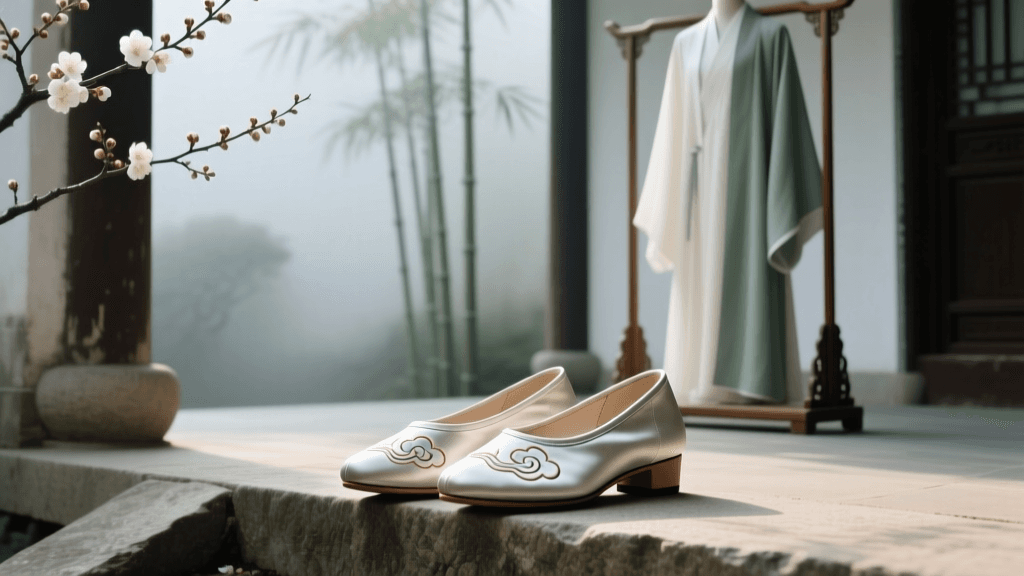
The Yun Tou Xie, easily recognized by its distinctive upturned toe, is a masterpiece of symbolic design and structural engineering. The 'cloud head' (yun tou) motif is deeply rooted in Chinese cosmology, representing good fortune, high aspirations, and a connection to the celestial realm. Historically worn by scholars, officials, and nobility during the Ming and Qing dynasties, the upturned toe also served a highly practical purpose: it prevented the wearer from tripping over the long, flowing hems of traditional robes.
Anatomy and 2026 Innovations
A traditional cloud shoe is defined by its qian ceng di, or 'thousand-layer sole.' Artisans stitch together dozens of layers of cotton cloth, compressing them tightly to create a durable, shock-absorbing base. In 2026, master cobblers in Suzhou and Hangzhou have begun integrating modern ergonomic technology into this ancient framework. While the exterior still features the meticulous, hand-stitched cotton layers, the inner core now frequently houses memory foam and arch-support shanks, catering to the demands of modern urban walking. Furthermore, the silk uppers are often adorned with Su embroidery—a technique celebrated on the UNESCO Intangible Cultural Heritage lists—depicting cranes, peonies, or auspicious clouds.
The market for authentic Yun Tou Xie has matured significantly. In 2026, a pair of hand-embroidered, authentic silk cloud shoes from a recognized heritage workshop typically costs between $220 and $450 USD. Mass-produced, machine-embroidered alternatives are available for $40 to $80 USD, though purists and serious Xin Zhongshi enthusiasts heavily favor the artisanal pieces for their superior breathability and structural longevity.
Xue: The Evolution of Traditional Chinese Boots
While cloud shoes are synonymous with Han Chinese scholarly and courtly traditions, the Xue (boot) tells a different story—one of equestrian prowess, nomadic influence, and martial practicality. The widespread adoption of boots in China is often traced back to the Warring States period, when King Wuling of Zhao famously mandated the adoption of 'Hu clothing' (nomadic attire), including fitted trousers and leather riding boots, to improve his cavalry's mobility.
By the Qing dynasty, boots had become a staple of the Manchu wardrobe, worn by both men and women of the banner classes. These boots were characterized by their sturdy construction, often featuring thick soles and uppers made from silk, velvet, or leather.
Modern Boots in the Xin Zhongshi Era
The 2026 iteration of the traditional Xue bridges the gap between historical accuracy and modern streetwear sensibilities. Contemporary designers are utilizing sustainable, plant-based vegan leathers and waterproofed silk blends to make these boots viable for harsh winter weather. Unlike the rigid, flat-soled boots of the past, modern traditional boots feature subtle wedge heels and flexible TPR (thermoplastic rubber) outsoles that provide excellent traction on wet pavement. Priced between $150 and $300 USD, these boots are highly sought after for their ability to add a structured, grounding silhouette to flowing, unstructured garments.
2026 Buyer’s Comparison: Cloud Shoes vs. Boots
To help you navigate the current market, we have compiled a comprehensive comparison of these two foundational footwear styles based on 2026 market data, styling applications, and material compositions.
| Feature | Yun Tou Xie (Cloud Shoes) | Xue (Traditional Boots) |
|---|---|---|
| Primary Era of Origin | Ming / Qing Dynasties | Warring States / Qing Dynasties |
| Best Suited For | Formal events, tea ceremonies, elegant daily wear | Winter wear, streetwear fusion, equestrian-inspired looks |
| Standard 2026 Materials | Silk, brocade, cotton-layered soles | Vegan leather, velvet, waterproofed canvas |
| Average Price Range | $220 - $450 USD (Artisanal) | $150 - $300 USD (Modern Fusion) |
| Weather Resistance | Low (Requires dry conditions) | High (Treated for rain and snow) |
Styling Traditional Footwear for Modern Wardrobes
The beauty of the Xin Zhongshi movement lies in its flexibility. You do not need to wear a full historical reproduction to appreciate traditional footwear. In 2026, the most celebrated fashion influencers and curators at institutions like the Victoria and Albert Museum's Asian collections advocate for thoughtful juxtaposition—pairing heritage items with contemporary basics.
Pairing with the Mamianqun (Horse-Face Skirt)
The Mamianqun remains the undisputed queen of the modern Hanfu revival. When wearing a pleated horse-face skirt, the hemline typically falls just above the ankle. This is the perfect canvas for the Yun Tou Xie. The upturned toe of the cloud shoe peeks out from beneath the pleats, drawing the eye downward and elongating the leg. For a cohesive 2026 look, match the metallic threads in your skirt's woven waistband to the subtle embroidery on the shoe's vamp. Avoid overly bulky socks; opt for sheer silk or fine cotton ankle socks that sit below the shoe's collar.
Streetwear and Contemporary Fusion
Traditional boots (Xue) are remarkably versatile when paired with modern streetwear. Try styling a pair of sleek, black velvet Xue with wide-leg, tailored trousers or cropped denim. The structured silhouette of the boot provides a sharp contrast to relaxed, oversized tops, such as a modern interpretation of the Song dynasty Beizi (a long, open-front jacket). For a bold, avant-garde statement, some 2026 designers are pairing embroidered silk cloud shoes with monochromatic, minimalist linen suits, allowing the intricate footwear to serve as the sole focal point of the outfit.
Care, Maintenance, and Storage
Investing in traditional Chinese footwear requires a commitment to proper maintenance, particularly because of the natural materials used in their construction. The silk uppers and cotton soles are highly susceptible to moisture, dust, and UV degradation.
Protecting the Thousand-Layer Sole
The qian ceng di is a marvel of craftsmanship, but it is essentially compressed fabric. If you are wearing your cloud shoes outdoors in 2026, it is highly recommended to have a cobbler apply a thin, transparent TPR half-sole to the bottom. This preserves the historical aesthetic from the sides while protecting the cotton layers from damp pavement and asphalt wear. Never machine wash traditional shoes. Instead, use a soft-bristled brush to remove dry dirt from the silk, and spot-clean stains with a barely damp microfiber cloth and a pH-neutral silk detergent.
Storage Best Practices
When the season changes, proper storage is critical to prevent the silk from dry-rotting or the cotton soles from harboring mold. Stuff the toes and shafts of the shoes with acid-free tissue paper to maintain their structural integrity. Place them in breathable cotton dust bags—never plastic, which traps moisture. Include a few silica gel packets in your storage box to regulate humidity, ensuring that your traditional footwear remains pristine and ready for the next year's cultural festivals and fashion events.