Top Chinese Fashion Creators Reviving Eco-Dyeing in 2026
The Digital Renaissance of Heritage Textiles in Chinese Fashion Media
In 2026, the intersection of traditional Chinese garments and modern digital media has reached a pivotal moment. Chinese fashion journalism is no longer confined to the glossy pages of legacy magazines; it has exploded across platforms like Xiaohongshu (RED), Bilibili, and Douyin, where a new generation of content creators and independent journalists are meticulously documenting the revival of ancient, eco-friendly dyeing methods. As global consumers increasingly demand transparency and sustainability in their wardrobes, these digital pioneers are translating centuries-old techniques into highly sought-after modern luxury.
The 'Guochao' (national trend) movement has evolved from simple aesthetic appreciation to deep, investigative fashion journalism. Creators are now embedding themselves in rural artisan villages, utilizing macro-photography, ASMR audio, and long-form documentary vlogs to showcase the grueling, beautiful realities of natural dyeing. According to sustainability reports tracked by Vogue Business, the Asian market is currently leading the global charge in integrating heritage craft with modern circular fashion principles, driven largely by this hyper-engaged digital creator economy.
Xiangyunsha: The 'Soft Gold' of the Creator Economy
At the forefront of this digital revival is Xiangyunsha, also known as Gambiered Canton Gauze. Originating from the Guangdong province, this textile is famously dyed using the juice of the薯莨 (Dioscorea cirrhosa) plant and coated with the iron-rich mud of the Pearl River Delta. The result is a stunning, dual-toned silk that is naturally water-resistant, antibacterial, and incredibly breathable.
On Bilibili, independent fashion journalists have produced multi-part documentary series breaking down the 30-step, 15-day process required to create authentic Xiangyunsha. These creators highlight the extreme climate adaptations required for the dyeing process, which can only be executed during specific high-humidity, high-sunlight windows in the late summer. In 2026, top-tier Xiaohongshu influencers have shifted their focus from merely styling Xiangyunsha garments to educating their followers on how to verify the textile's authenticity. They teach their audiences to look for the signature 'crackle' sound the silk makes when handled and the subtle, earthy scent of river mud that lingers even after years of wear.
By framing Xiangyunsha not just as a historical artifact but as the ultimate sustainable luxury fabric for 2026's extreme summer heatwaves, these bloggers have driven a massive surge in demand. Independent journalists frequently interview the remaining master dyers in Shunde, advocating for fair-trade compensation and highlighting the urgent need to protect the river mud ecosystems essential to the craft.
Guizhou Indigo and the Slow Fashion Movement
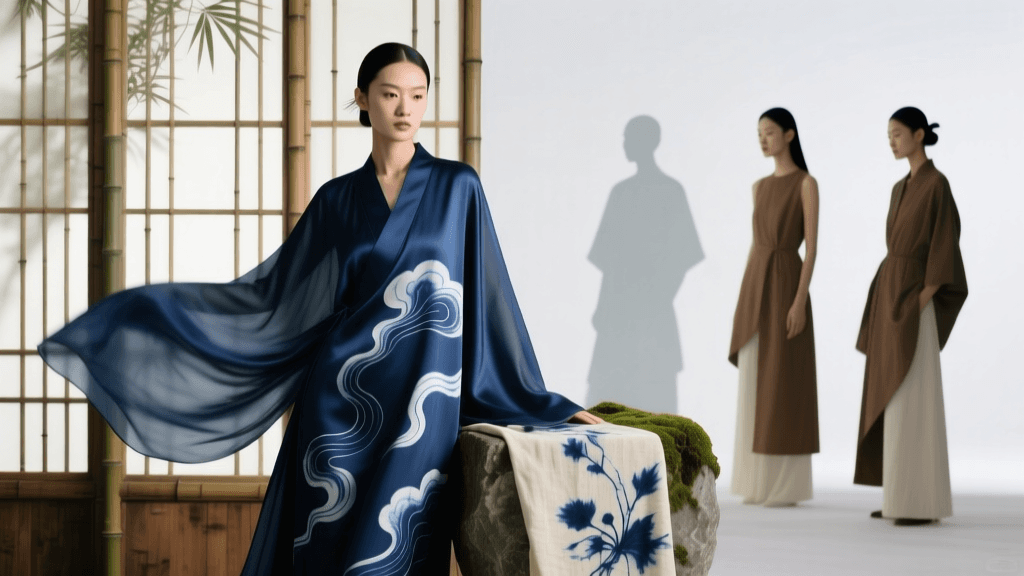
While Xiangyunsha dominates the luxury silk conversation, the revival of Guizhou Miao and Dong indigo dyeing (Laran) is capturing the hearts of the slow-fashion and streetwear communities. Chinese fashion bloggers focusing on ethnic minority textiles have brought the intricate wax-resist batik and fermentation vat techniques of southwestern China to the global stage.
Content creators embedded in the Qiandongnan Miao and Dong Autonomous Prefecture document the creation of 'living vats'—indigo fermentation pots that are fed daily with rice wine and plant ash, sometimes maintained by families for generations. Fashion journalists on Weibo and Xiaohongshu emphasize the profound wellness and meditative aspects of this process. The rhythmic pounding of the indigo plants and the daily tending of the vats are frequently featured in 'digital detox' and mindfulness content, bridging the gap between traditional wellness practices and modern mental health awareness.
In 2026, we are seeing a major editorial shift where fashion journalists are collaborating directly with rural cooperatives to launch limited-edition, naturally dyed Mamianqun (horse-face skirts) and Songku (traditional wide-leg trousers). These pieces are marketed specifically as travel wardrobes for the eco-conscious tourist, prized for their durability, natural insect-repellent properties, and deep, evolving shades of blue that fade beautifully over time.
2026 Textile Comparison: Xiangyunsha vs. Heritage Indigo
To help readers navigate the booming market for heritage textiles, leading Chinese fashion blogs frequently publish comparative guides. Below is a synthesized data table based on 2026 market analyses and creator reviews, detailing the practical differences between these two eco-dyed powerhouses.
| Feature | Xiangyunsha (Gambiered Canton Gauze) | Guizhou Heritage Indigo (Laran) |
|---|---|---|
| Base Material | 100% Mulberry Silk | Cotton, Hemp, or Silk blends |
| Dye Source | Dioscorea cirrhosa tuber & Pearl River mud | Strobilanthes cusia (Indigo plant) & wood ash |
| Processing Time | 15 to 30 days (weather dependent) | 2 to 4 weeks (including vat fermentation) |
| 2026 Avg. Retail Price | 800 - 1,500 RMB per meter | 150 - 400 RMB per meter |
| Best Climate Adaptation | Extreme heat and high humidity | Temperate to cool climates; excellent layering |
| Garment Application | Summer blouses, lightweight Mamianqun, linings | Heavy pleated skirts, structured jackets, outerwear |
| Maintenance | Hand wash in cool water; avoid alkaline soaps | Wash separately; re-dye periodically for depth |
How Fashion Journalists Translate Heritage for Gen Z
The true genius of Chinese fashion content creators in 2026 lies in their editorial translation. They are actively dismantling the notion that traditional garments belong only in museums or during the Lunar New Year. Through innovative styling videos and 'Get Ready With Me' (GRWM) formats, journalists are demonstrating how an indigo-dyed Songku can be paired with a modern, oversized blazer for a high-fashion office look, or how a Xiangyunsha top can elevate a simple pair of denim jeans for a weekend gallery visit.
Industry analysts at The Business of Fashion note that this creator-led education is vital for the survival of intangible cultural heritages. By providing practical, actionable styling advice and contextualizing the garments within modern urban life, these bloggers ensure that the artisan communities have a steady, year-round economic incentive to continue their craft. Furthermore, these digital journalists are fiercely protective of cultural appropriation, using their platforms to educate global audiences on the specific regional origins and ethnic significance of the textiles they promote.
A 2026 Buyer’s Guide to Sourcing Authentic Eco-Dyes
For international readers and sustainable fashion enthusiasts looking to incorporate these heritage textiles into their 2026 wardrobes, Chinese fashion journalists offer the following actionable sourcing advice:
- Verify the Origin: Authentic Xiangyunsha must be produced in the specific microclimate of the Pearl River Delta. Look for creators who provide GPS-tagged visits to the dyeing yards in Shunde or Nanhai. Textiles recognized by global heritage organizations like the UNESCO Intangible Cultural Heritage lists often carry specific regional certifications that reputable sellers will display.
- Understand the Pricing: If a seller is offering Xiangyunsha for under 300 RMB per meter in 2026, it is almost certainly a synthetic imitation or chemically treated polyester. True eco-dyed silk requires immense manual labor and specific environmental conditions, dictating its premium price point.
- Embrace the Imperfections: Natural indigo and plant-based dyes are inherently variable. Fashion bloggers emphasize that slight unevenness in color, known as 'the breath of the dye,' is a hallmark of authenticity, not a defect. Avoid garments that boast perfectly uniform, flat colors if they are marketed as natural.
- Support Cooperative Models: The most ethical way to purchase Guizhou indigo batik is through verified rural women's cooperatives. Many top-tier Xiaohongshu influencers now link directly to these cooperatives' digital storefronts, ensuring that the profits bypass middlemen and go directly to the artisans maintaining the living vats.
- Invest in Modular Pieces: Journalists recommend starting with modular, unlined garments like wide-leg pants or simple wrap tops. These pieces offer the most versatility for global travel wardrobes and allow the wearer to experience the unique temperature-regulating properties of the natural fibers against the skin.
The Future of Asian Traditions in Digital Media
As we move through 2026, the role of the Chinese fashion blogger has fundamentally shifted from mere trendsetter to cultural archivist and sustainability advocate. By leveraging the massive reach of social media, these content creators are ensuring that the ancient, eco-friendly dyeing methods of Xiangyunsha and Guizhou indigo are not lost to time. Instead, they are being reborn as the ultimate standard for conscious, luxurious, and culturally rich fashion in the modern era. For the global fashion community, following these digital journalists is no longer just about discovering the next big trend; it is about participating in the vital preservation of human heritage.