Suzhou Silk Embroidery: Crafting Hanfu and Qipao Masterpieces
The Pinnacle of Chinese Textile Arts: Introduction to Su Xiu
Suzhou embroidery, universally revered as Su Xiu, represents the absolute zenith of Chinese silk textile arts. Originating in the lush, water-laced city of Suzhou in Jiangsu province, this meticulous craft dates back over two millennia to the Spring and Autumn period. Unlike other regional styles that prioritize bold colors or heavy textures, Su Xiu is celebrated for its ethereal delicacy, photographic realism, and impossibly fine silk threads. In recognition of its profound cultural significance, the broader tradition of Chinese sericulture and silk craftsmanship was inscribed on the UNESCO Representative List of the Intangible Cultural Heritage of Humanity. Today, Su Xiu remains a vital, living art form, serving as the premier embellishment technique for high-end traditional garments, most notably the Hanfu and the Qipao.
The Four Great Embroideries of China
To understand the unique position of Su Xiu, one must contextualize it within the broader tapestry of Chinese textile arts. China is historically defined by its Four Great Embroideries, each reflecting the distinct geography, climate, and cultural ethos of its region.
| Style | Origin | Key Characteristics | Common Motifs |
|---|---|---|---|
| Su Xiu | Suzhou, Jiangsu | Delicate, flat, neat, dense, vivid, elegant | Koi fish, peonies, double-sided art |
| Xiang Xiu | Hunan Province | Bold colors, high contrast, loose threads | Tigers, lions, dramatic landscapes |
| Shu Xiu | Sichuan Province | Thick threads, rich textures, satin stitches | Pandas, dragons, auspicious clouds |
| Yue Xiu | Guangdong Province | Vibrant hues, gold/silver thread couching | Lychees, tropical birds, phoenixes |
Technical Mastery: Thread Splitting and Stitching
The true magic of Su Xiu lies in a highly specialized technique known as 'pi si', or thread splitting. A single strand of premium mulberry silk thread can be split by the artisan's fingers into two, four, eight, sixteen, thirty-two, or even sixty-four microscopic filaments. When embroidering the delicate scales of a koi fish or the subtle gradient of a lotus petal, an artisan might use a 1/32nd or 1/64th split, creating a surface so smooth and luminous that it resembles a painted surface rather than stitched textile. According to historical textile analyses preserved by institutions like the Metropolitan Museum of Art, Chinese silk embroiderers developed over forty distinct stitch types to manipulate these split threads. The 'tao zhen' (overlapping stitch) allows for seamless color blending, while the 'da zi' (seed stitch) provides textured depth. For the ultimate display of technical prowess, artisans create 'shuang mian xiu' (double-sided embroidery), where a single piece of sheer silk features two entirely different, perfectly finished images on the front and back, with all knots and thread ends meticulously hidden within the microscopic gaps of the silk weave.
Practical Application: Embroidering the Hanfu
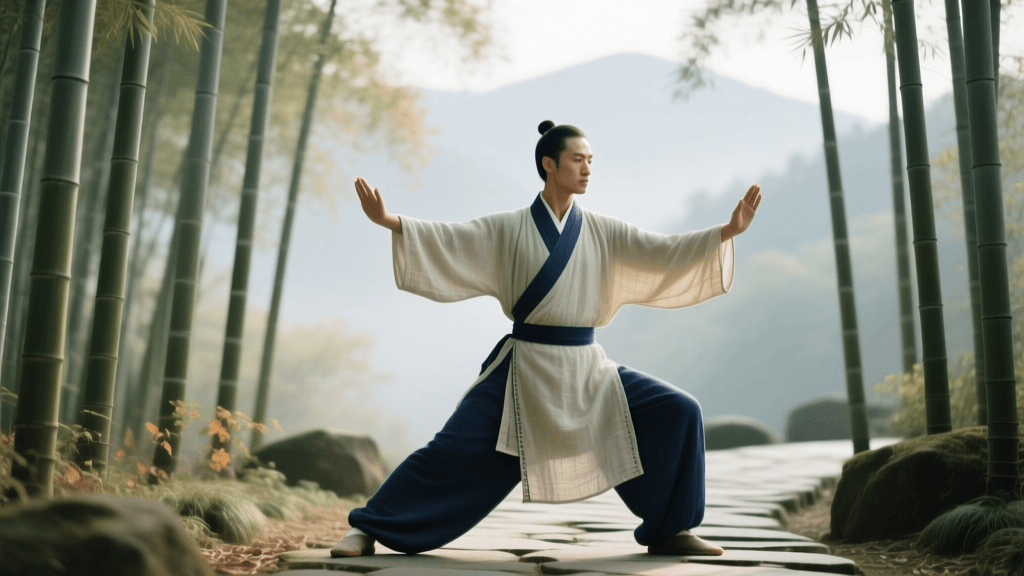
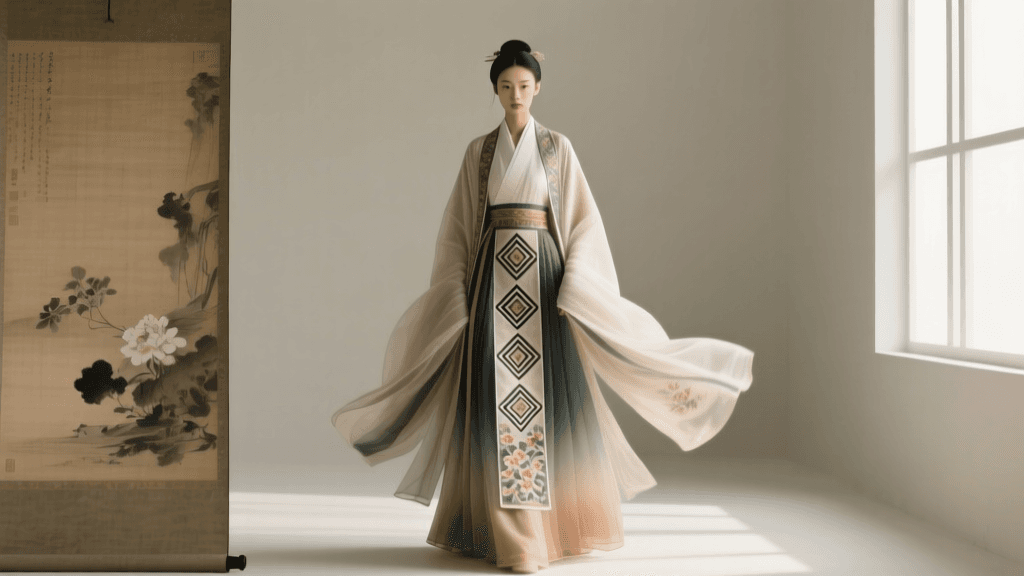
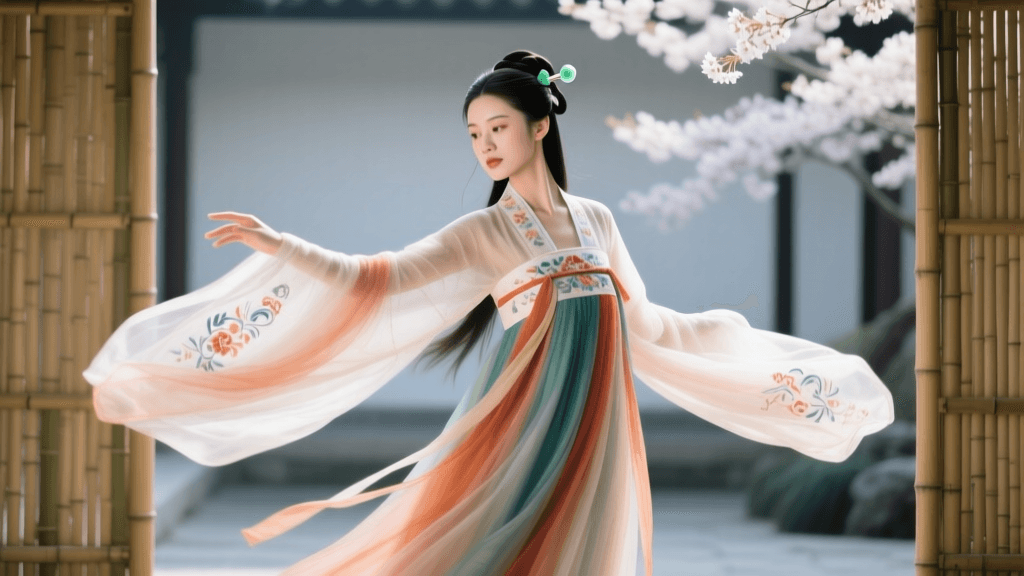
When integrating Su Xiu into the modern Hanfu revival, designers and artisans must carefully balance historical accuracy with the structural demands of the garment. The Hanfu, particularly styles from the Ming and Song dynasties, relies heavily on the drape and flow of the fabric. Therefore, the base fabric must be substantial enough to support the dense embroidery without puckering. For a Ming-style 'Aoqun' (jacket and skirt ensemble), artisans typically select a 22 to 30 momme heavy silk damask or crepe. The 'Mamianqun' (horse-face skirt) offers expansive, flat panels that are perfect for large-scale Su Xiu motifs.
Actionable Advice for Hanfu Embroidery: Placement and Thread Weight
When commissioning or designing a Hanfu, restrict heavy embroidery to the structural hems, the 'yunjian' (cloud shoulders), and the wide sleeve cuffs. Using a 1/16th silk split for the main floral vines ensures durability, while 1/32nd splits should be reserved for intricate details like bird plumage or insect wings. A fully hand-embroidered Ming-style cloud shoulder requires approximately 120 to 150 hours of continuous labor. To maintain the garment's drape, the embroidery density should not exceed 40% of the fabric surface area on the main body panels, preventing the silk from becoming stiff and board-like.
Practical Application: Embroidering the Qipao
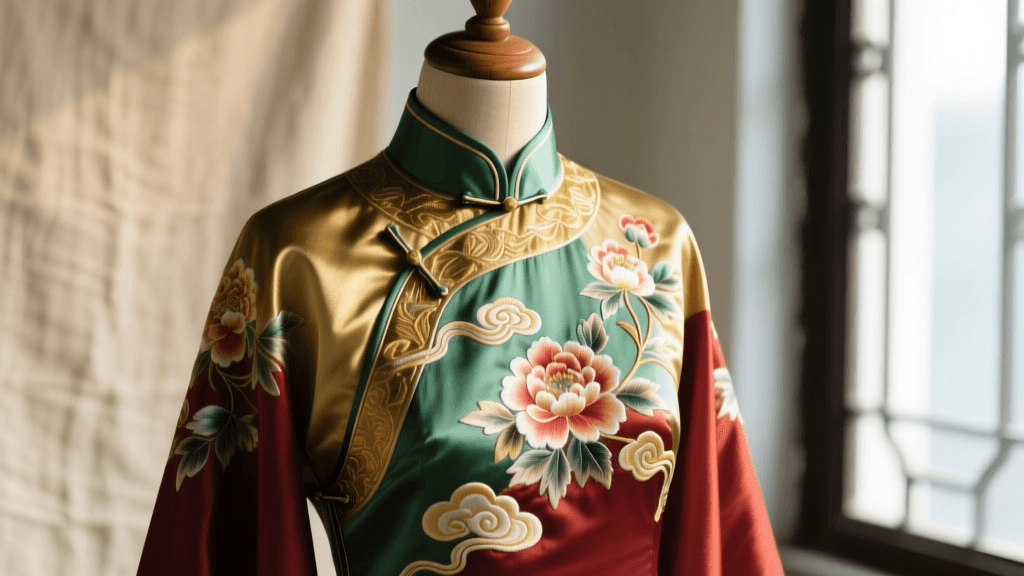
The Republican-era Shanghai Qipao presents an entirely different canvas for the Su Xiu artisan. Unlike the voluminous Hanfu, the Qipao is tailored, form-fitting, and designed to accentuate the natural silhouette. The base fabric is usually a lighter 16 to 19 momme silk charmeuse, crepe de chine, or intricate silk brocade. Because the garment is cut on the bias or features strategic darts, the embroidery must be applied with an understanding of how the fabric will stretch and move across the body.
Asymmetry and the Shanghai Silhouette
Traditional Su Xiu on a Qipao rarely utilizes symmetrical, centered motifs. Instead, artisans employ an asymmetrical, sweeping layout—often a single plum blossom branch, a cascading wisteria vine, or a pair of swallows—that originates at the bottom left hem and curves elegantly upward toward the right shoulder. This draws the eye vertically, enhancing the elongating effect of the Qipao's high collar and side slits. When working with 19 momme crepe de chine, the artisan must use a specialized hoop and tissue paper backing to prevent the delicate silk from warping under the tension of the stitches. The 'ping jin' (gold couching) technique, where fine gold or silver threads are laid flat on the surface and stitched down with microscopic silk ties, is frequently used to outline the primary motifs, adding a touch of Shanghai glamour and catching the light dynamically as the wearer moves.
Commissioning Custom Silk Embroidery: Costs and Timelines
For collectors, brides, or enthusiasts looking to commission authentic, hand-embroidered Su Xiu garments, understanding the market realities is crucial. True hand-embroidery is an investment in time and human artistry. Machine embroidery, while visually similar from a distance, lacks the luminous depth, structural flexibility, and microscopic precision of hand-split silk.
Cost and Timeline Expectations
- Entry-Level Hand-Embroidered Qipao (Minimalist motifs, 1/8th thread split, 3-4 months): $1,200 to $2,500 USD.
- Mid-Range Hanfu Ensemble (Moderate density, 1/16th thread split, cloud shoulders and cuffs, 6-8 months): $3,000 to $6,000 USD.
- Masterwork Bridal Qipao or Ceremonial Hanfu (High density, 1/32nd thread split, double-sided elements, gold couching, 12-18 months): $10,000 to $25,000+ USD.
When sourcing, always request a 'thread split certificate' or detailed macro-photography of the stitches. Authentic Su Xiu will show slight, organic variations in stitch tension and a distinct three-dimensional layering of silk fibers that machines cannot replicate.
Preservation and Care of Embroidered Silk
Garments featuring Su Xiu require meticulous archival care to preserve the integrity of both the base silk and the embroidered threads. Mulberry silk is a protein fiber, making it highly susceptible to protein-eating pests, UV degradation, and moisture-induced mold. Never store an embroidered Hanfu or Qipao on a wire hanger; the weight of the dense embroidery will warp the silk shoulders over time. Instead, pad the garment with acid-free tissue paper and store it flat in a breathable, unbleached cotton garment bag. Cleaning must never involve standard commercial dry cleaning, as the harsh chemical solvents can strip the natural sericin coating from the silk threads, causing them to fray and lose their luster. Instead, rely on specialized textile conservators for spot cleaning, or use a gentle, pH-neutral silk wash for the unembroidered base fabrics, taking extreme care to avoid agitating the embroidered sections. By respecting the technical mastery and historical lineage of Su Xiu, wearers ensure that these wearable masterpieces endure as vibrant testaments to Asian textile traditions.