Decoding Hanfu Fashion in Classical Chinese Scroll Art
The Visual Archive: Art as a Sartorial Encyclopedia
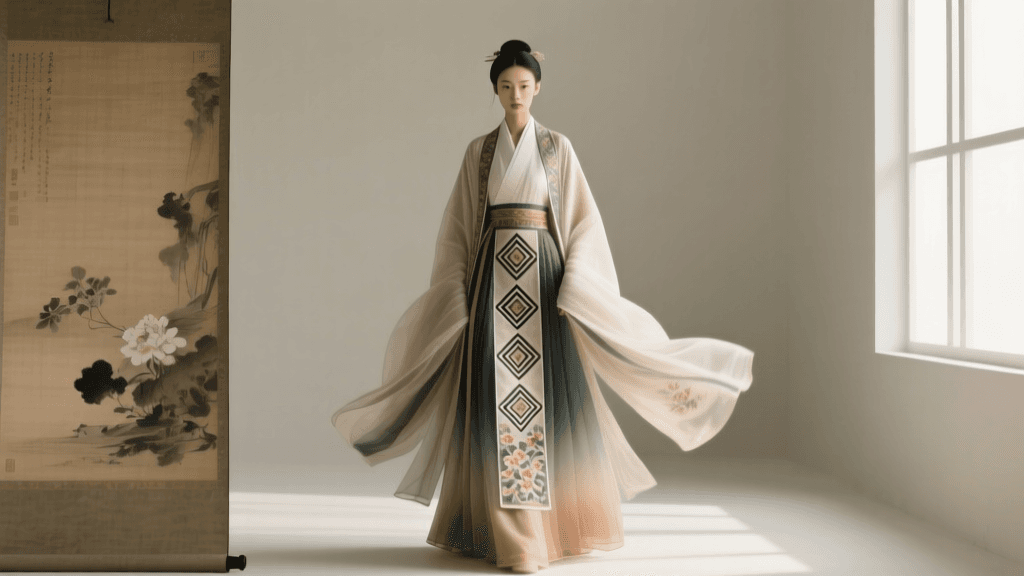
Classical Chinese scroll paintings are celebrated globally for their masterful brushwork, serene landscapes, and profound philosophical undertones. However, for historians, textile enthusiasts, and modern Hanfu makers, these handscrolls serve a radically different purpose: they are meticulous visual encyclopedias of historical Asian fashion. Long before the advent of photography, court painters and artisan scroll makers were tasked with documenting the sartorial elegance of their eras. By studying the intricate folds, layering techniques, and color palettes depicted in these masterpieces, we can decode the evolution of traditional Chinese clothing. This article explores how to analyze classical scroll art to recreate historically accurate Hanfu, offering actionable insights into fabric selection, structural tailoring, and digital archiving.
The intersection of art and historical garments is deeply rooted in traditional painting techniques. According to the Encyclopædia Britannica's guide to Chinese painting, the meticulous "gongbi" (fine brush) technique allowed artists to capture the exact weight, texture, and drape of silk, linen, and brocade. The way a painter rendered the translucency of a summer gauze robe or the heavy, stiff drape of a winter brocade jacket provides modern makers with critical data on historical textile weights and weaving structures.
Masterpieces of Sartorial Documentation
Court Ladies Adorning Their Hair with Flowers (Tang Dynasty)
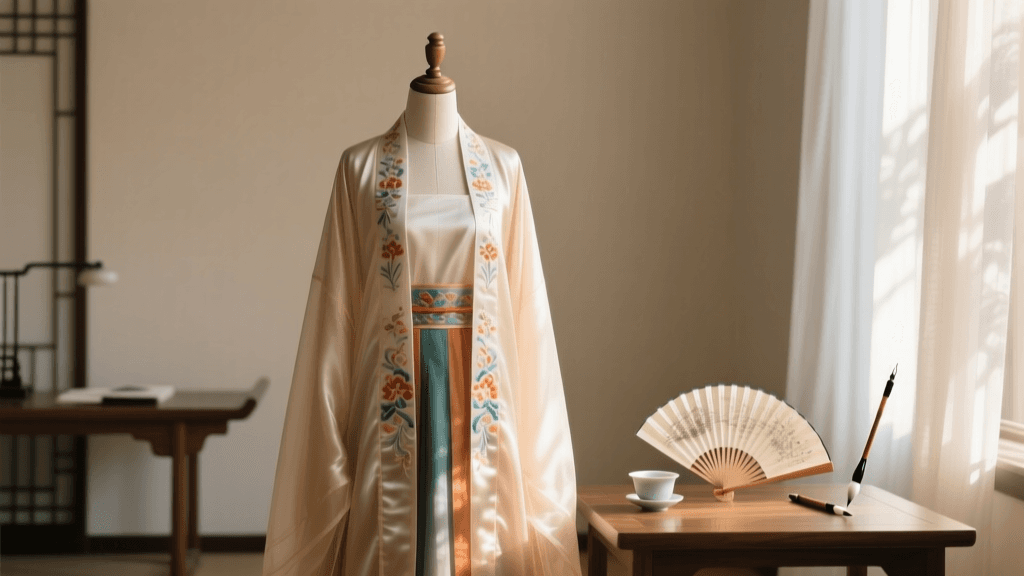
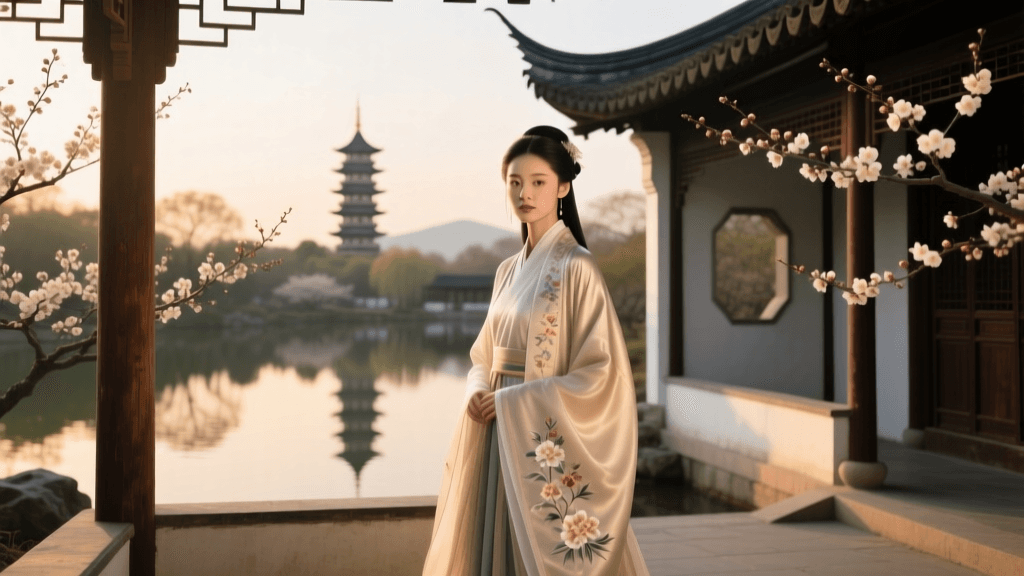
Painted by Zhou Fang during the Tang Dynasty (618–907 CE), this iconic handscroll is a masterclass in depicting the luxurious, voluminous silhouettes of the era. The painting showcases aristocratic women wearing high-waisted "qun" (skirts) tied above the bust, paired with sheer, wide-sleeved "shan" (tops) and elaborate "pibo" (ribbon shawls) draped gracefully over the arms. For modern makers, the scroll clearly illustrates the necessity of using lightweight, translucent fabrics for the upper garments to achieve the painted effect of layered transparency, while the skirts require heavy, flowing materials to mimic the deep, structured folds captured by Zhou Fang’s brush.
Night Revels of Han Xizai (Five Dynasties Period)
Attributed to Gu Hongzhong, this sprawling narrative scroll offers a rare glimpse into the private life of the elite, capturing both men’s and women’s fashion in motion. The figures are depicted in relaxed, dynamic poses, revealing the structural layering of the "banbi" (half-sleeved jackets) worn over long robes. The scroll is particularly valuable for studying how garments behave during movement, showing the tension points at the shoulders and the way silk gathers at the waist when secured with woven sashes. It highlights the transition from the exuberant volume of the Tang to the slightly more structured, layered aesthetics that would define the subsequent Song Dynasty.
Along the River During the Qingming Festival (Song Dynasty)
Zhang Zeduan’s Song Dynasty masterpiece shifts the focus from the imperial court to the bustling streets of the capital, Bianjing. This scroll is an unparalleled resource for studying commoner and merchant fashion. Unlike the flowing silks of the court, the figures here wear practical, narrow-sleeved "beizi" (outer jackets) and shorter tunics suited for labor and trade. The painting demonstrates the widespread use of hemp and linen, depicting the stiffer, more angular folds characteristic of plant-based fibers compared to the fluid drape of silk. As noted in the Metropolitan Museum of Art’s essay on Song Dynasty art, this era favored a more restrained, intellectual aesthetic, which is perfectly mirrored in the modest, tailored garments seen throughout Zhang’s urban landscape.
Actionable Guide: Recreating Scroll-Inspired Hanfu
Translating two-dimensional brushstrokes into three-dimensional, wearable garments requires a methodical approach to fabric sourcing, measurement, and dyeing. Below is a practical guide for Hanfu enthusiasts and historical costumers looking to achieve museum-grade accuracy based on scroll paintings.
1. Fabric Selection and Momme Weight
Silk weight is measured in "momme" (mm). To replicate the sheer tops seen in Tang Dynasty scrolls like Court Ladies Adorning Their Hair with Flowers, source 8mm to 12mm silk chiffon or silk georgette. These fabrics provide the necessary transparency without sacrificing structural integrity. For the heavy, pooling skirts depicted in the same scroll, opt for 19mm to 22mm silk charmeuse or heavy silk crepe. If recreating Song Dynasty commoner garments from the Qingming scroll, bypass silk entirely and source medium-weight linen or hemp blends (around 150-200 GSM) to achieve the stiff, angular drape seen in the artwork.
2. Proportional Measurements and Volume
Scroll paintings often exaggerate volume for artistic effect, but the underlying ratios remain consistent. To achieve the sweeping width of a Tang Dynasty high-waisted skirt, you will need a minimum of 3 to 4 meters of fabric width, gathered tightly at the waistband. For Song Dynasty "beizi" jackets, measure the sleeve width carefully; scroll art shows sleeves narrowing significantly toward the wrist, typically ending at a 15cm to 20cm cuff circumference to facilitate daily tasks.
3. Natural Dyeing: Timing and Costs
The vibrant yet harmonious color palettes in classical scrolls were achieved using natural plant and mineral dyes. Recreating these colors requires sourcing natural dyes like madder root (for the deep crimson seen in Tang court dress) or indigo (for the resilient blues of Song merchant clothing). Actionable Advice: Incorporating natural dyeing into your production pipeline will add approximately 2 to 3 weeks to your creation timeline due to the multiple vats and oxidation periods required. Furthermore, expect your fabric costs to increase by 30% to 50% compared to buying pre-dyed synthetic fabrics. However, the resulting depth of color and historical accuracy is unmatched and highly sought after by serious collectors.
Comparative Analysis: Tang vs. Song Silhouettes in Art
Understanding the stylistic shift between dynasties is crucial for accurate recreation. The table below outlines the primary differences in garment representation across these two pivotal eras in Chinese scroll art.
| Era | Key Garment | Silhouette & Drape | Primary Fabric Representation | Notable Scroll Example |
|---|---|---|---|---|
| Tang Dynasty | Shan & Qun | Voluminous, high-waisted, fluid, and sweeping | Sheer silk gauze, heavy brocade | Court Ladies Adorning Their Hair |
| Five Dynasties | Banbi & Robes | Layered, transitional, dynamic movement | Medium-weight silks, patterned weaves | Night Revels of Han Xizai |
| Song Dynasty | Beizi & Trousers | Narrow, tailored, modest, angular folds | Linen, hemp, opaque silk crepe | Along the River During Qingming |
Where to Study High-Resolution Scroll Archives
To accurately study the minute details of textile weaves and stitching depicted in these paintings, you must access high-resolution, gigapixel digital archives. Relying on low-quality textbook reproductions will obscure the very details you need for pattern drafting.
- The Metropolitan Museum of Art (Open Access): The Met provides incredible high-resolution downloads of Chinese handscrolls. Their Heilbrunn Timeline of Art History offers contextual essays alongside zoomable images of Tang and Song textiles.
- The Palace Museum Digital Archive (Beijing): The official digital repository of the Forbidden City allows users to zoom in on imperial paintings, revealing the exact motif scaling and border patterns used in court garments.
- The National Palace Museum (Taipei): Their online collection features exhaustive detail on the mounting and silk borders of the scrolls themselves, which often utilize the same historical weaving techniques as the garments depicted within the paintings.
"When we look closely at the brushwork of a Song Dynasty master, we are not just looking at a picture of a robe; we are looking at a technical blueprint. The tension of the thread, the bias of the cut, and the weight of the weave are all encoded in the ink." — Dr. Chen, Textile Historian and Curator of Asian Antiquities.
Conclusion: Preserving the Thread of History
Classical Chinese scroll paintings are far more than aesthetic triumphs; they are vital, enduring records of Asian sartorial heritage. By learning to "read" these paintings—analyzing the drape of a sleeve, the translucency of a collar, or the stiff fold of a linen hem—modern Hanfu makers and historians can bridge the gap between ancient art and living tradition. Whether you are sourcing 19mm silk charmeuse to mimic a Tang court lady or dyeing hemp with indigo to honor a Song merchant, the scrolls remain our most trusted, elegant, and detailed guides to the wardrobe of the past.