Modern Qipao Fusion: Styling the Cheongsam for Everyday Wear
The Evolution of the Qipao: From 1920s Shanghai to Modern Fusion
The qipao, widely known in the West as the cheongsam, is arguably the most globally recognized garment in traditional Chinese fashion. Originally emerging in the 1920s as a symbol of modern femininity and progressive social values in Shanghai, the garment has undergone countless transformations. As highlighted by The Metropolitan Museum of Art in their landmark exhibition 'China: Through the Looking Glass', the qipao has always been a canvas for cross-cultural exchange and modernization. Today, a new wave of designers and fashion enthusiasts are reimagining the qipao not as a rigid, formal uniform reserved for weddings and banquets, but as a versatile staple for everyday fusion fashion.
The modern adaptation of the qipao strips away the restrictive elements of its mid-century iterations, embracing comfort, streetwear aesthetics, and contemporary tailoring. This renaissance is part of a broader movement among Gen Z and millennial consumers in China and the diaspora, who are reclaiming traditional garments and integrating them into daily wardrobes. According to BBC Culture, the enduring legacy of the cheongsam lies in its remarkable adaptability, allowing it to survive shifting political landscapes and rapidly changing global fashion trends.
Key Elements of a Modern Fusion Qipao
Silhouette and Cut
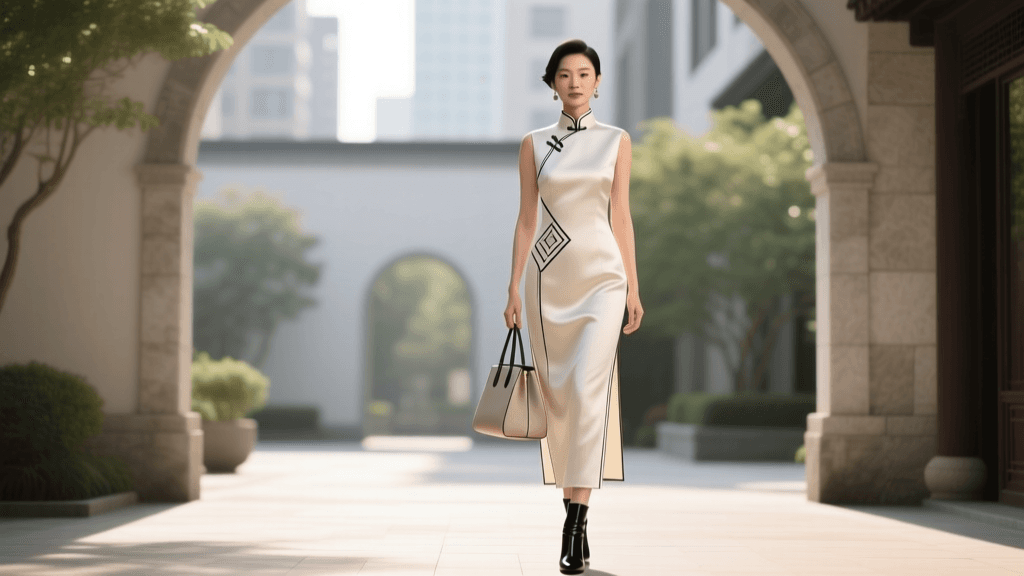
Traditional 1930s and 1960s qipaos were notoriously form-fitting, often featuring high, stiff collars and thigh-high slits that restricted movement. Modern fusion qipaos prioritize ease of wear. The contemporary silhouette often shifts from a skin-tight pencil shape to an A-line, shift, or wrap dress cut. The iconic mandarin collar (yuanling) is frequently lowered from a restrictive 6 cm to a more comfortable 2 to 3 cm, or replaced entirely with a V-neck or scoop neck that retains the traditional pankou (knotted button) detailing at the clavicle.
Fabric Innovations
While heavy silk brocades and glossy satins remain popular for formalwear, everyday fusion qipaos utilize breathable, low-maintenance textiles. Designers are increasingly turning to cotton-linen blends, Tencel, matte crepes, and even upcycled denim. For a summer everyday qipao, look for fabrics with a weight of 120 to 150 GSM (grams per square meter), which provides enough structure to hold the A-line shape while allowing for airflow. In autumn and winter, wool-blend tweeds and corduroy offer a textured, academic aesthetic that pairs beautifully with modern outerwear.
Practical Guide: Tailoring vs. Ready-to-Wear Fusion Qipaos
One of the most common hurdles for those entering the world of traditional Chinese clothing is deciding between bespoke tailoring and ready-to-wear (RTW) fusion brands. Bespoke tailoring offers an unparalleled fit, crucial for the structured bodice of a traditional cheongsam, while RTW brands offer accessibility and trend-driven designs. Below is a comparison to help you decide based on your budget, timeline, and styling needs.
| Method | Estimated Cost (USD) | Turnaround Time | Fit Accuracy | Best For |
|---|---|---|---|---|
| Bespoke Tailoring (Shanghai/HK) | $350 - $900+ | 3 - 6 Weeks | Exact (Multiple Fittings) | Heirloom pieces, premium silks, perfect structural fit |
| Online Made-to-Measure | $120 - $250 | 2 - 4 Weeks | High (Based on submitted measurements) | Custom fabrics, specific length requests, moderate budgets |
| Ready-to-Wear Fusion Brands | $60 - $180 | Immediate (Shipping times vary) | Standard Sizing (S/M/L) | Everyday streetwear, experimental fabrics, quick styling |
Note: When opting for online made-to-measure services, always provide your 'hollow-to-hem' measurement to ensure the hemline hits at the correct point on your calf or ankle, which is critical for maintaining the garment's visual balance.
Actionable Styling: How to Wear the Cheongsam Today
The secret to pulling off a fusion qipao in a modern, urban environment is juxtaposition. By pairing the elegant, structured lines of the cheongsam with relaxed, utilitarian, or edgy contemporary pieces, you prevent the outfit from looking like a costume. Here is a structured guide to styling your qipao for various modern settings.
- Outerwear Contrast: Ditch the traditional silk shawls. For a streetwear look, layer a cropped leather moto jacket or an oversized, boxy denim jacket over a sleeveless or short-sleeved midi qipao. The ruggedness of the denim or leather perfectly offsets the delicate pankou knots.
- Footwear Pairings: Avoid delicate stilettos for daytime wear. Instead, ground your outfit with chunky sneakers (such as New Balance 990s or Nike Air Monarchs) or thick-soled Chelsea boots. The 3 to 4 cm platform of a chunky sneaker balances the midi hemline and adds a distinctly modern, athletic edge.
- Winter Layering: Transform your sleeveless summer qipao into a winter staple by layering a fitted, ribbed turtleneck underneath. Ensure the turtleneck collar sits at least 2 cm below the qipao's mandarin collar to avoid visual clutter around the neckline.
- Accessory Minimalism: Let the garment speak for itself. Swap traditional jade pendants for minimalist geometric metal jewelry, such as thick silver cuffs or structural asymmetrical earrings. A modern micro-crossbody bag or a structured leather tote works much better for daily commutes than a traditional clutch.
Measurements and Fit Guide for the Modern Silhouette
Even when buying ready-to-wear fusion qipaos, understanding how the garment should fit is crucial for comfort and aesthetics. Unlike Western wrap dresses, the qipao relies on precise darting. When reviewing size charts or submitting measurements to a tailor, pay special attention to the following:
- Bust and Over-Bust: Modern fusion qipaos often feature a relaxed fit through the bust. Ensure there is at least 2 to 3 cm of 'ease' (extra room) beyond your actual bust measurement so the fabric does not pull across the chest when you sit or reach forward.
- The Slit (Kaicha): The traditional side slit is necessary for walking, as the skirt portion is typically a narrow tube. In modern adaptations, if you choose an A-line or flared skirt, the slit can be reduced to a modest 10 to 15 cm decorative split at the side seam, preserving modesty while retaining the garment's architectural lines.
- Shoulder Slope: The qipao traditionally lacks a shoulder seam, utilizing a continuous piece of fabric from the front to the back. If you have sloped shoulders, look for modern fusion designs that have incorporated a Western-style set-in sleeve and shoulder seam, which provides a much cleaner, structured fit without fabric pooling at the armpit.
Sourcing Authentic and Modern Designers
The contemporary market for fusion qipaos is thriving, with designers actively bridging the gap between heritage craftsmanship and modern streetwear. As noted by the South China Morning Post, a new generation of Chinese designers is leading this charge, utilizing unconventional materials like neoprene, tech-wear nylons, and vegan leathers to appeal to younger demographics. When shopping, look for brands that explicitly detail their pattern-making process, as the transition from traditional flat-cutting to modern 3D draping is what ultimately dictates the comfort and wearability of a daily-use cheongsam.
Care and Maintenance for Everyday Fabrics
To ensure your fusion qipao lasts through years of daily wear, proper care is essential, particularly for modern blended fabrics. Cotton-linen blends should be washed in cold water on a gentle cycle and air-dried to prevent the linen fibers from shrinking and warping the delicate pankou knots. For wool-blend winter qipaos, dry cleaning is recommended once a season, but spot cleaning with a damp cloth and mild detergent will handle minor stains. Always store your qipao on a padded hanger to maintain the shoulder structure, and avoid wire hangers which can distort the neckline and cause the fabric to stretch unevenly over time.
By embracing modern cuts, innovative fabrics, and contemporary styling techniques, the qipao transcends its historical boundaries. It becomes not just a relic of 1920s Shanghai, but a dynamic, living garment that celebrates Asian heritage while fully participating in the global dialogue of modern fashion.