DIY Kimono Upcycling: Craft Bags and Decor from Vintage Silk
The Renaissance of Vintage Kimono Silk
The global fashion industry is undergoing a massive paradigm shift toward sustainability, and the traditional Japanese wardrobe is at the forefront of this creative revolution. Upcycling vintage kimono and obi (sashes) is not merely a trendy DIY hobby; it is a profound way to participate in circular fashion. According to the Ellen MacArthur Foundation, transitioning to a circular economy in fashion requires keeping products and materials in use for as long as possible. By rescuing damaged, stained, or unwearable vintage kimono, crafters are actively diverting exquisite textiles from landfills.
In Japan, this practice is deeply tied to the concept of mottainai, a Buddhist term expressing a sense of regret over waste. When a silk kimono becomes too fragile to wear, its textile life does not end. Historically, these garments were unpicked, washed, and re-sewn into new clothing or household items. Today, modern sewists and crafters can honor this tradition by transforming these rich, hand-dyed, and woven fabrics into contemporary accessories and home decor.
Essential Tools for Working with Vintage Silk
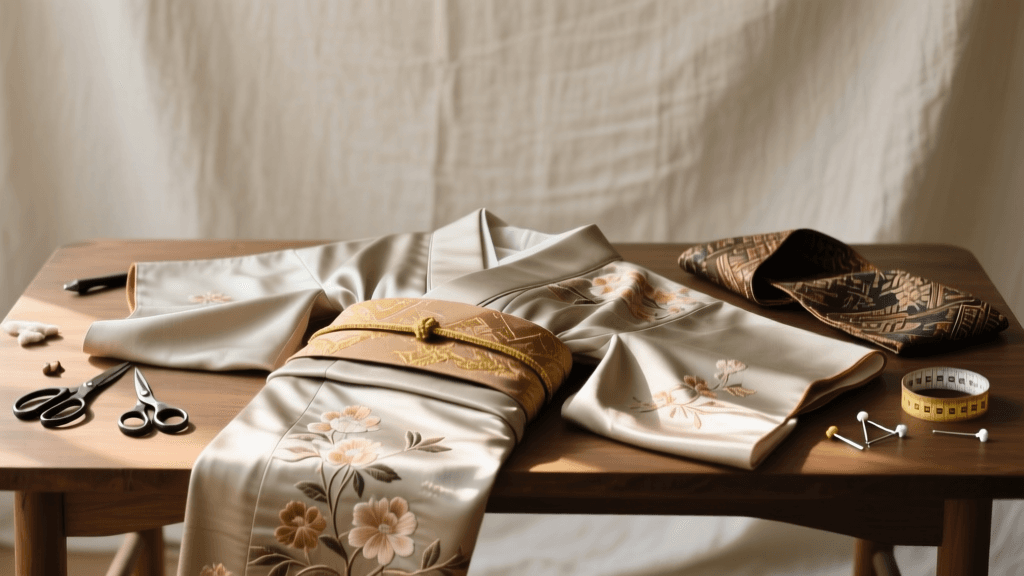
Working with decades-old silk requires specialized tools to prevent snags, puckering, and irreversible damage. Before beginning your upcycling journey, ensure your sewing kit includes the following:
- Microtex/Sharp Needles (Size 70/10 or 80/12): Standard universal needles will push and pull delicate silk threads. Microtex needles have a slim, acute point that pierces silk cleanly.
- Clover Seam Ripper: Vintage kimono are constructed using long, straight basting stitches. A high-quality, ergonomic seam ripper will allow you to deconstruct the garment without slicing the fabric.
- Silk Pins or Fine Glass-Head Pins: Thick pins will leave permanent holes in tightly woven silk like rinzu or chirimen.
- Walking Foot Attachment: When sewing multiple layers of slippery silk or thick brocade obi, a walking foot feeds the top and bottom layers evenly, preventing shifting.
- Pellon Shape-Flex (SF101) Interfacing: Essential for adding structure to silk when making bags or clutches.
Understanding Kimono Textiles: A Guide for Upcyclers
Not all kimono fabrics behave the same way under a sewing machine needle. Identifying your textile is crucial for selecting the right DIY project. Below is a comparison chart of common vintage kimono fabrics and their ideal upcycling applications.
| Fabric Type | Texture & Characteristics | Best DIY Projects | Sewing Difficulty |
|---|---|---|---|
| Chirimen | Crepe silk with a pebbled, textured surface. High drape, slightly stretchy. | Throw pillows, scarves, garment linings, flowing tops. | Medium (Requires careful tension control) |
| Rinzu | Damask silk with woven satin patterns. Smooth, lustrous, and tightly woven. | Clutch bags, wallets, framed textile art, quilt patches. | Easy to Medium (Slippery but stable) |
| Tsumugi | Pongee silk spun from uneven threads. Matte finish, resembles raw cotton or linen. | Tote bags, aprons, table runners, durable patchwork. | Easy (Very stable, grips well) |
| Obi (Brocade/Nishiki) | Heavy, stiff, metallic threads, richly embroidered or woven. | Statement handbags, belts, book covers, coasters. | Hard (Requires heavy-duty needles and walking foot) |
| Ro / Sha | Sheer, woven summer silks with visible gaps in the weave. | Lampshades, window treatments, delicate overlays. | Hard (Fraying is severe, requires French seams) |
Project 1: The Statement Brocade Obi Clutch Bag
The obi is the most resilient part of the kimono ensemble. Woven with metallic threads and heavy silk, an obi can withstand significant wear and tear, making it the perfect candidate for structured accessories. As noted by historians and cultural commentators at the BBC, the obi is often the most expensive and artistically significant component of traditional Japanese dress, featuring intricate motifs of cranes, pine trees, and seasonal flowers.
Materials and Measurements
- Vintage Obi Section: Cut a 15-inch by 10-inch rectangle (38 cm x 25 cm) from the most visually striking part of the obi (the otaiko or drum section).
- Lining Fabric: 15 x 10 inches of cotton or silk dupioni.
- Interfacing: 15 x 10 inches of heavy-duty craft interfacing (like Pellon Peltex).
- Hardware: One 18mm magnetic snap clasp.
- Thread: Heavy-duty polyester or upholstery thread.
Step-by-Step Construction
- Stabilize the Fabric: Iron the heavy-duty interfacing to the wrong side of your obi rectangle. The metallic threads in brocade can scratch your iron, so always use a pressing cloth.
- Create the Flap: Fold the top 3 inches of the obi rectangle down to form the envelope flap. Press firmly.
- Prepare the Lining: Fold the lining fabric in half (right sides together) to create a 15 x 5-inch pocket. Sew the side seams, leaving a 3-inch gap at the bottom for turning.
- Assemble: Place the obi outer and the lining right sides together. Pin around the perimeter. Sew with a 1/2-inch seam allowance, ensuring you backstitch at the flap fold line for durability.
- Turn and Topstitch: Turn the clutch right side out through the gap left in the lining. Hand-stitch the lining gap closed. Topstitch around the edges of the obi flap using a walking foot to keep the thick layers from shifting.
- Attach Hardware: Install the magnetic snap clasp on the flap and the front body of the bag, reinforcing the back of the clasp with small squares of scrap leather or heavy canvas to prevent the metal from tearing the brocade.
Project 2: Silk Patchwork Throw Pillows
If you have a kimono with irreparable stains on the front panels, the back panel (se-ita) and the sleeves (sode) often remain in pristine condition. These large, uninterrupted expanses of silk are ideal for home decor.
To create an 18x18 inch envelope-style throw pillow, you will need one 19x19 inch square of vintage silk for the front, and two 19x14 inch rectangles for the envelope back. Because vintage silk can be prone to fraying once cut, it is highly recommended to finish all raw edges with a serger or a tight zigzag stitch immediately after cutting. When sewing the front to the back, use a French seam to enclose the raw edges entirely, ensuring the pillow cover is durable enough to withstand washing and daily use. Pair a vibrant, hand-dyed yuzen silk pillow with a neutral linen sofa to let the traditional artistry take center stage in a modern living space.
Sourcing, Cleaning, and Cultural Respect
Sourcing vintage kimono is easier than ever. Online marketplaces like Etsy and eBay are treasure troves, as are specialized Japanese recycling shops such as Hard Off or Chicago Shoppers, which sell unwearable 'recycle kimono' for as little as $10 to $30 USD. When cleaning your finds, avoid standard washing machines. Hand wash in cool water with a pH-neutral silk detergent or baby shampoo, and never wring the fabric; instead, roll it in a clean towel to absorb excess moisture and lay it flat to dry away from direct sunlight.
Upcycling these garments is an act of preservation. Institutions like the Victoria and Albert Museum have long recognized the intricate craftsmanship and historical significance of Asian textiles. By repurposing these materials, DIY crafters ensure that the artistry of anonymous Japanese dyers and weavers continues to be seen, touched, and appreciated in the modern era. Whether you are crafting a structural obi bag or a delicate silk lampshade, you are participating in a global dialogue that honors the past while sustainably designing the future.