Modern Mamianqun: Styling the Hanfu Horse-Face Skirt
The Resurgence of the Mamianqun in Contemporary Fashion
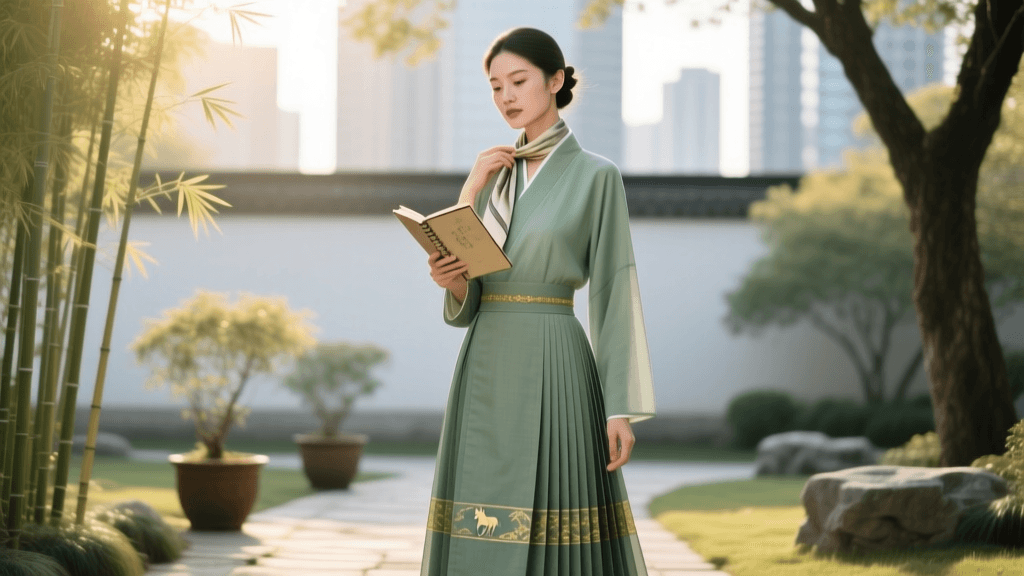
The Mamianqun, historically known as the horse-face skirt, is one of the most iconic garments in traditional Chinese clothing. Originating in the Song Dynasty and reaching its zenith during the Ming Dynasty, this wrap-style skirt is characterized by its flat front and back panels (guangmian) flanked by intricately pleated sides. Today, the Mamianqun has transcended its historical roots to become a cornerstone of the neo-Hanfu movement, seamlessly blending centuries-old craftsmanship with modern fusion fashion.
The global fashion industry took notice of this silhouette in 2022 when a major European luxury house released a midi skirt that bore a striking resemblance to the traditional Mamianqun, sparking widespread discussions on cultural appreciation and intellectual property. As noted by the South China Morning Post, this controversy inadvertently catalyzed a massive surge in domestic and international interest in authentic Hanfu designs. Young consumers began seeking out traditional Chinese garments not as mere costumes, but as versatile, high-fashion pieces suitable for daily wear. According to BBC News, the broader Hanfu market has exploded into a multi-billion-dollar industry, driven by a generation eager to integrate heritage aesthetics into their modern wardrobes.
Anatomy and Fabric Innovations of the Neo-Mamianqun
While historical accuracy is prized by purists, the modern fusion Mamianqun introduces practical adaptations for contemporary lifestyles. The traditional skirt relied on long cotton or silk ties that wrapped around the waist, which could be bulky under modern fitted tops. Today's adaptations frequently feature discreet side zippers, hook-and-eye closures, or elasticized waistbands concealed beneath a traditional-looking sash.
Fabric choice is where the modern Mamianqun truly shines in fusion styling. Historical skirts were often made from heavy silk brocades or woven damasks. Modern iterations utilize a diverse range of textiles:
- Polyester-Jacquard Blends: The most popular choice for daily wear. They offer the raised, ornate patterns of traditional brocade but are machine-washable, wrinkle-resistant, and significantly more affordable.
- Chiffon and Organza: Ideal for summer and spring. These lightweight, semi-sheer fabrics provide a flowing, ethereal silhouette that pairs beautifully with modern crop tops and camisoles.
- Wool-Blend Tweeds: A distinctly modern fusion innovation, winter-weight Mamianqun made from suiting tweeds or houndstooth patterns bridge the gap between traditional Chinese pleating and Western academic or office aesthetics.
Practical Guide: Sourcing, Costs, and Search Terms
Sourcing a high-quality Mamianqun requires navigating the vibrant Chinese e-commerce landscape, particularly Taobao and Tmall. To find skirts designed for modern fusion styling rather than strict historical reenactment, utilize the following Mandarin search terms:
- 马面裙 (Mamianqun): The base term for horse-face skirt.
- 日常 (Daily Wear): Filters for simpler patterns, lighter fabrics, and midi-lengths.
- 通勤 (Commuter/Office): Yields skirts in muted tones (blacks, navies, greys) with subtle jacquard weaves suitable for professional environments.
Cost Breakdown:
- Entry-Level ($30 - $60 USD / 200 - 400 RMB): Mass-produced polyester jacquards. Excellent for experimenting with the silhouette. Brands like Shanyu offer reliable entry-level options.
- Mid-Tier ($80 - $150 USD / 500 - 1000 RMB): High-density woven fabrics, precise pleat heat-setting, and intricate metallic thread embroidery. These skirts drape beautifully and resist pleat-spread.
- Luxury & Designer ($250+ USD / 1500+ RMB): Mulberry silk, real gold-thread weaving (zhuanghua), and bespoke tailoring from heritage-focused ateliers like Minghuatang.
Timing: Many high-end Hanfu shops operate on a pre-order model (预售). Expect to wait 15 to 45 days for production and shipping. For immediate needs, filter searches by '现货' (in-stock).
Measurements and Fit: Getting the Drape Right
The hallmark of a well-fitted Mamianqun is the behavior of the pleats. If the skirt is too tight, the pleats will 'bust' open awkwardly; if too loose, the flat front panels will overlap incorrectly. When ordering, you must provide precise measurements:
- Waist: Measure exactly where you intend the skirt to sit. Modern Mamianqun are often worn at the natural waist (above the belly button) to elongate the legs, unlike historical styles which sometimes sat lower on the hips.
- Hips: Crucial for preventing pleat-spread. Provide your fullest hip measurement.
- Length: For a floor-grazing traditional look, measure from your waist to the floor, then subtract 2 to 3 centimeters to ensure the hem clears the ground when wearing flat shoes. For a modern midi fusion look, aim for the mid-calf (approx. 75-85 cm depending on height).
Fusion Styling: Integrating the Mamianqun into Modern Wardrobes
The true beauty of the neo-Hanfu movement lies in its versatility. As highlighted by cultural commentators at The World of Chinese, modern youth are dismantling the boundaries between historical dress and streetwear. Here are three actionable styling formulas for the modern Mamianqun:
1. The Corporate Fusion (Office Wear)
Pair a solid-colored, midi-length Mamianqun in deep navy or charcoal grey with a crisp, oversized white button-down shirt. Tuck the shirt in and add a slim leather belt to define the waist. Finish with pointed-toe ankle boots or classic loafers. The subtle jacquard pattern of the skirt will catch the light, providing a sophisticated, fashion-forward alternative to the standard pencil skirt.
2. Urban Streetwear (Weekend & Casual)
Contrast the elegance of a metallic-threaded Mamianqun with a vintage graphic tee or a cropped ribbed turtleneck. Layer with an oversized leather bomber jacket or a distressed denim jacket. Footwear is key here: chunky platform sneakers or combat boots (like Dr. Martens) ground the outfit, creating a striking juxtaposition between ancient refinement and modern grunge.
3. Evening Elegance (Formal & Event)
Opt for a floor-length Mamianqun in rich jewel tones (emerald, ruby, or sapphire) featuring auspicious motifs like phoenixes or peonies. Pair with a sleek, modern silk camisole or a structured corset top. Drape a faux-fur stole over the shoulders for winter events. The flat front panel of the skirt provides a perfect canvas for displaying statement jewelry or a delicate clutch.
Comparison Chart: Traditional vs. Modern Mamianqun
| Feature | Traditional Ming Dynasty | Modern Neo-Hanfu Fusion |
|---|---|---|
| Fastening | Long cotton/silk ties wrapped and knotted | Hidden side zippers, hook-and-eye, or velcro |
| Length | Floor-grazing, often sweeping the ground | Midi, tea-length, or floor-clearing (2cm gap) |
| Fabrics | Heavy silk brocade, damask, raw silk | Polyester jacquard, chiffon, tweed, organza |
| Pleat Setting | Hand-stitched or naturally folded | High-heat industrial steam-setting for permanence |
| Waistband | White cotton or contrasting silk | Matching fabric, elasticized backs, or interfaced |
Care and Maintenance for Blended Fabrics
Maintaining the sharp, knife-like pleats of a modern Mamianqun requires specific care routines, especially for synthetic blends that are prone to melting under high heat.
- Washing: Hand wash in cold water (below 30°C) using a mild, pH-neutral detergent. Never wring or twist the fabric, as this will distort the pleats. Instead, press the water out gently and hang to dry in the shade.
- Ironing: If pleats begin to relax, lay the skirt flat on an ironing board. Align the pleats carefully and use a pressing cloth (a clean cotton towel) between the iron and the skirt. Use a low-to-medium heat setting with steam. Never drag the iron; use a press-and-lift motion.
- Storage: Do not hang the skirt by the waistband for long periods, as the weight of the fabric can stretch the waist and pull the pleats. Fold it along the pleat lines and store it flat in a drawer, or roll it gently.
By understanding the construction, sourcing, and styling potential of the Mamianqun, fashion enthusiasts can authentically participate in the neo-Hanfu revival. This garment is no longer confined to museums or historical dramas; it is a living, breathing element of global fusion fashion, ready to be reimagined for the modern wardrobe.