Modern Kimono Styling: Wearing Traditional Japanese Silk to Events
The Renaissance of the Kimono in Contemporary Fashion
The kimono is no longer confined to historical reenactments, strict ceremonial boundaries, or the streets of Kyoto. Today, modern fashion enthusiasts, cultural ambassadors, and global tastemakers are bringing the iconic T-shaped garment into contemporary spaces. From black-tie galas in New York to avant-garde gallery openings in London, the kimono offers a masterclass in sartorial elegance, architectural silhouette, and textile artistry. However, transitioning this deeply traditional garment into modern settings requires a nuanced understanding of its rules, as well as the creativity to bend them respectfully.
As highlighted by the Victoria and Albert Museum's landmark exhibition, the kimono has always been a dynamic garment, evolving through centuries of trade, innovation, and cultural exchange. Styling it for today's events is not about freezing it in the past, but rather participating in its ongoing fashion narrative. This comprehensive guide will walk you through selecting, layering, and accessorizing the kimono for modern occasions, ensuring you look impeccable while honoring the garment's rich heritage.
Decoding Formality: Which Kimono for Which Event?
The most critical step in kimono styling is matching the garment's formality to your event. The Japanese concept of TPO (Time, Place, Occasion) is paramount. Wearing a casual cotton yukata to a formal evening reception is a major faux pas, just as wearing a highly formal black tomesode to a casual daytime brunch would be considered overdressed. Below is a practical comparison chart to help you select the right silk garment for your modern calendar.
| Kimono Type | Formality Level | Best Modern Occasion | Estimated Vintage Cost (USD) | Estimated Rental Cost (USD) |
|---|---|---|---|---|
| Houmongi | High (Semi-Formal to Formal) | Black-Tie Galas, Evening Weddings, Premieres | $150 - $600 | $90 - $180 |
| Iromuji | Medium-High (Semi-Formal) | Gallery Openings, Cocktail Parties, Theater | $80 - $300 | $60 - $120 |
| Edo Komon | Medium (Smart Casual to Semi-Formal) | Upscale Dining, Daytime Receptions, Networking | $100 - $400 | $70 - $130 |
| Yukata | Low (Casual) | Summer Festivals, Casual Outdoor Mixers | $30 - $90 | $30 - $60 |
Black-Tie Galas and Evening Receptions
For events that demand black-tie or formal evening wear, the Houmongi (visiting kimono) is your premier choice. Characterized by its eba-moyo—a continuous pictorial pattern that flows seamlessly across the seams when the garment is spread flat—the Houmongi is visually striking and undeniably elegant. Opt for deep, jewel-toned silks like emerald, sapphire, or plum, heavily accented with metallic gold or silver leaf. Pair it with a Fukuro obi woven with metallic threads to catch the ambient lighting of an evening gala.
Gallery Openings and Cocktail Parties
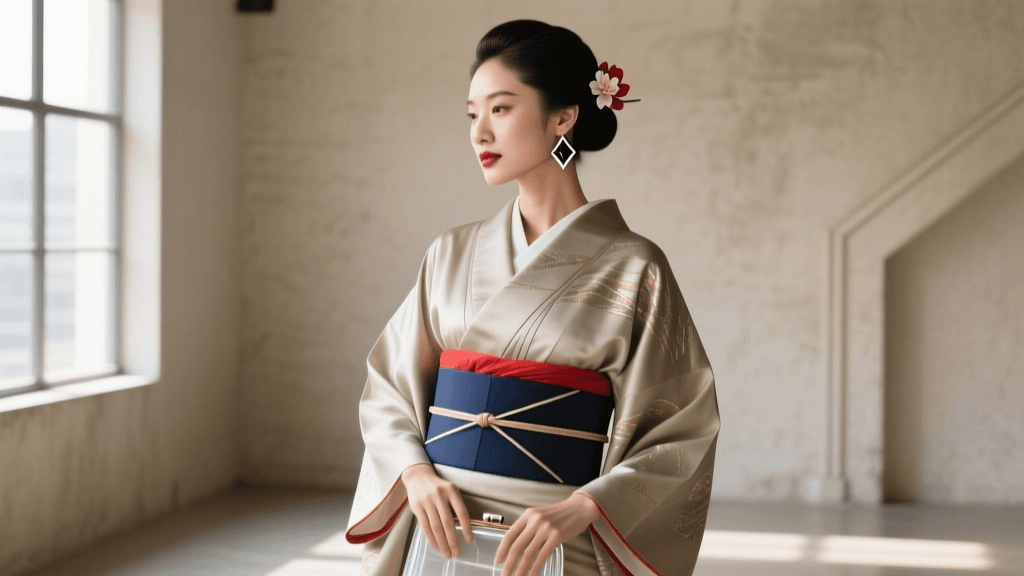
Cocktail hours and art gallery openings call for sophisticated restraint. The Iromuji is a single-color silk kimono that exudes modern minimalism. Because it lacks bold patterns, the Iromuji acts as a stunning canvas for contemporary jewelry and architectural obi knots. A deep charcoal or navy Iromuji paired with a textured, matte-finish obi and modern geometric hair accessories bridges the gap between traditional Japanese aesthetics and contemporary high fashion.
The Architecture of the Obi
The obi (sash) is the structural and visual anchor of the kimono. According to the Metropolitan Museum of Art, the obi evolved from a simple cord to a massive, structurally complex textile that dictates the wearer's posture and silhouette. For modern events, the width, length, and knot of your obi will define your overall look.
- Fukuro Obi: The standard formal sash, measuring approximately 30cm to 33cm in width and 4.5 meters in length. It is heavily brocaded and essential for galas.
- Nagoya Obi: Measuring about 30cm wide but pre-folded and shorter (around 3.15 meters), this is ideal for semi-formal events and cocktail parties. It is easier to tie and less bulky.
- Hanhaba Obi: A narrow, casual sash (approx. 15cm wide). While traditionally for yukata, modern stylists sometimes use vintage, heavily embroidered hanhaba obi to create avant-garde, corset-like silhouettes over komon kimono for fashion-forward events.
The Taiko Musubi vs. The Bunko Musubi
For formal galas and mature elegance, the Taiko musubi (drum knot) is mandatory. It creates a smooth, horizontal, box-like shape at the back, resembling a refined bustle. For younger attendees or semi-formal garden parties, the Bunko musubi (butterfly knot) offers a more youthful, dynamic energy. If you are styling the kimono as a modern dress alternative, some contemporary kitsuke (dressing) artists are experimenting with asymmetrical obi wraps, though this should only be attempted in highly progressive, fashion-centric environments.
The Layering Process: Building the Foundation
A kimono is not simply slipped on; it is engineered onto the body using a precise system of undergarments and ties. Achieving the iconic cylindrical, seamless silhouette requires specific foundational layers. Budget approximately 30 to 45 minutes for dressing, or hire a professional kitsuke stylist (typically costing $80 to $150 in major Western cities).
- Susoyoke: A cotton or silk half-slip worn around the waist to protect the outer silk and provide a smooth base.
- Nagajuban: The under-kimono. This is crucial as it provides the han-eri (decorative half-collar) that peeks out at the neckline, framing the face.
- Datejime: A wide, stiff silk or velcro belt used to flatten the bust and secure the nagajuban, ensuring the outer kimono lies perfectly smooth.
- Koshihimo: Long, narrow cotton cords used to tie the kimono at the waist and adjust the length.
- Obiage and Obijime: The decorative silk scarf (obiage) that hides the obi padding, and the braided cord (obijime) that secures the knot.
Practicalities: Measurements, Timing, and Footwear
Unlike Western garments tailored to exact body contours, the kimono is tailored to a standard length and adjusted on the body via the ohashori—the folded tuck at the waist. A standard women's kimono measures between 150cm and 160cm from shoulder to hem. The ohashori should be visible just below the obi, typically measuring 5cm to 10cm, allowing the hem to fall perfectly at the ankle.
Footwear and Transit
Traditional zori (sandals) and tabi (split-toe socks) are required for formal events. Modern styling allows for luxurious fabric choices: velvet tabi for winter galas, or leather-lacquered zori for a contemporary edge. Be aware that walking in zori requires suriashi—a sliding, deliberate step that prevents the hem from kicking up. When planning your evening, factor in transit time; hailing a cab or navigating crowded venues in a tight hobble-skirt silhouette requires patience and spatial awareness.
Cultural Respect and the Global Stage
Wearing a kimono as a non-Japanese person is generally viewed with immense pride and hospitality by Japanese cultural institutions, provided it is done with respect and adherence to basic rules. The Japan National Tourism Organization actively encourages international visitors to engage with traditional dress, noting that cultural appreciation fosters global understanding.
'The key to respectful kimono styling is avoiding the 'costume' trap. Treat the garment with the same reverence you would afford a vintage Dior gown or a bespoke Tom Ford tuxedo. Ensure the collar is crossed correctly (left over right), the hem is level, and the back seam is perfectly centered.'
Never cross the collar right-over-left, as this is strictly reserved for dressing the deceased. Furthermore, avoid mixing the kimono with overly casual Western outerwear, such as denim jackets or sneakers, unless you are deeply embedded in the Harajuku street-fashion subculture. For modern formal occasions, pair your kimono with a tailored wool overcoat, a sleek leather clutch, and minimalist gold jewelry.
Conclusion
Styling a kimono for modern occasions is a rewarding exercise in cultural appreciation, textile admiration, and personal expression. Whether you are attending a high-stakes charity gala in a metallic Houmongi or sipping cocktails at an art exhibition in a minimalist Iromuji, the kimono offers a silhouette that commands the room. By understanding the rules of formality, mastering the foundational layers, and accessorizing with modern intentionality, you can seamlessly integrate this centuries-old masterpiece into your contemporary wardrobe.