Modern Kimono Styling for Evening Galas and Cocktail Events
The Renaissance of the Kimono in Modern Evening Wear
The global fashion landscape has witnessed a profound renaissance in traditional Japanese garments, transitioning them from strict ceremonial boundaries into the vibrant sphere of modern evening wear. As highlighted by the groundbreaking Victoria and Albert Museum's 'Kimono: Kyoto to Catwalk' exhibition, the kimono is not a static relic but a dynamic, evolving fashion statement. For contemporary enthusiasts, styling a kimono for black-tie galas, cocktail parties, and evening dinners offers a unique opportunity to blend centuries-old craftsmanship with modern avant-garde aesthetics.
'The kimono is not merely a garment of the past; it is a living canvas that adapts to the silhouette and spirit of the modern era, bridging heritage and haute couture.'
Choosing the Right Kimono for Black-Tie and Cocktail Events
Houmongi (Visiting Kimono) vs. Furisode (Long-Sleeved)
When navigating the dress codes of modern evening events, selecting the appropriate kimono type is paramount. The Metropolitan Museum of Art notes that the structural and decorative elements of the kimono have historically denoted social status and occasion; today, they denote fashion fluency. For married women attending black-tie weddings or ultra-formal galas, the Kurotomesode (black kimono with patterns only below the waist and five family crests) remains the pinnacle of formality. However, for most evening galas and cocktail events, the Houmongi (visiting kimono) is the ultimate canvas. Characterized by its eba pattern—a continuous, painterly design that flows seamlessly across the back and sleeve seams—the Houmongi offers a sweeping, dramatic silhouette perfect for grand staircases and ballrooms.
For unmarried women or those seeking a more youthful, dramatic flair, the Furisode features swinging sleeves that can measure over 100 centimeters in length. The kinetic movement of the Furisode sleeves adds a theatrical, captivating element to cocktail parties. Alternatively, the Iromuji—a solid-colored kimono with a single crest—provides a masterclass in minimalist elegance, serving as an ideal backdrop for statement jewelry and highly textured, metallic obi sashes.
Essential Measurements and Tailoring for a Flawless Fit
Achieving a flawless fit requires an understanding of traditional tailoring metrics, adapted for modern evening aesthetics. The standard Mitake (hem length) is traditionally calculated as the wearer's height plus 5 centimeters, allowing the hem to pool slightly at the ankles when secured with the ohashori (the waist fold). However, a prominent trend in modern cocktail styling is the 'ankle-baring' adjustment. By reducing the Mitake to the wearer's height minus 10 centimeters, the hem sits cleanly at the ankle bone. This deliberate adjustment showcases modern footwear and prevents tripping on crowded dance floors.
The Yuki (sleeve length, measured from the center of the back neck to the wrist) typically ranges from 63 to 68 centimeters. For evening wear, ensuring the Sodehaba (sleeve width) is adequately proportioned prevents the fabric from dragging into dinner plates or cocktail glasses. A well-fitted shoulder (Katahaba) ensures the garment hangs elegantly without slipping, maintaining the crucial straight line of the eri (collar) at the nape of the neck, known as the nuki, which is considered the epitome of kimono sensuality and elegance. Furthermore, the Okumi-sen (the front panel seam) should align perfectly with the natural curve of the wearer's hip, ensuring that the lower half of the kimono wraps securely without gaping, a common issue when utilizing Western undergarments instead of traditional hadajuban and susoyoke.
The Art of the Obi: Elevating Your Evening Silhouette
The obi is the structural and visual anchor of the kimono. For evening galas, a Fukuro Obi (a formal, double-woven sash often interwoven with gold or silver metallic threads) is essential. The interplay of ballroom lighting against the metallic brocade of a vintage or contemporary Fukuro Obi creates a luxurious, luminous effect.
- Niju Daiko (Double Drum Knot): The standard for married women, projecting maturity and refined elegance.
- Fukura Suzume (Puffed Sparrow): A voluminous, artistic shape suitable for fashion-forward cocktail events.
- Bunko (Butterfly Knot): A stylized, stiff brocade knot that commands attention and mimics evening gown bows.
To secure the obi, swap traditional cotton obijime cords for silk braids adorned with vintage Art Deco obidome (decorative clasps) featuring cut glass, pearls, or precious stones.
Modern Fusion: Accessories, Lace, and Evening Outerwear
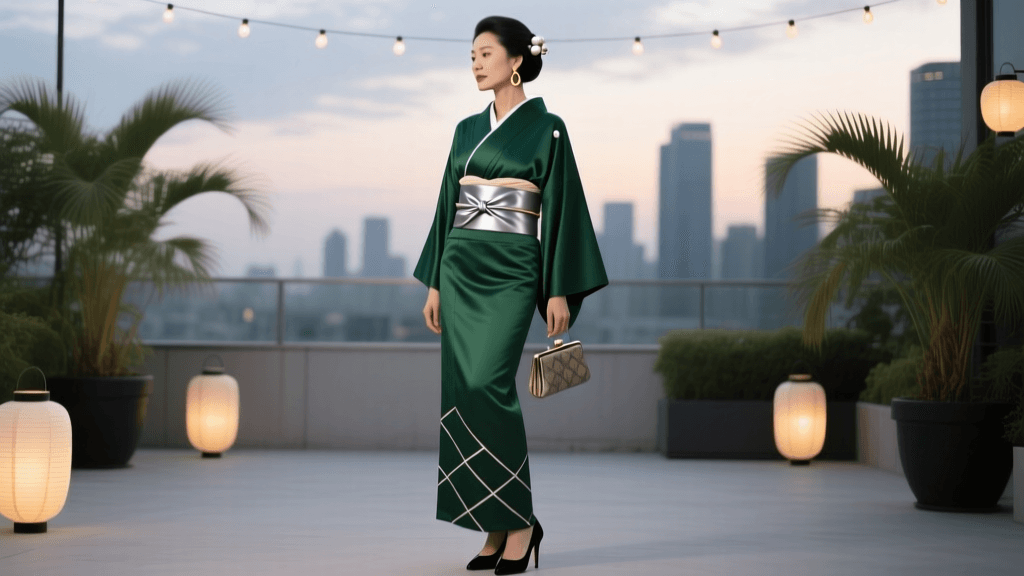
The most exciting aspect of modern kimono styling is the integration of cross-cultural accessories. According to cultural insights from the Japan National Tourism Organization, the preservation of traditional arts is deeply tied to their adaptation in daily and modern life. For evening wear, replace the standard white cotton han-eri (decorative inner collar) with metallic lace, Swarovski crystal-studded fabrics, or deep velvet. This frames the face with a texture that mirrors Western evening gowns.
Outerwear is equally critical for winter galas. A Michiyuki (traditional coat) can be swapped for a plush velvet stole, a faux-fur collar, or an intricately woven cashmere shawl draped over the shoulders. When it comes to footwear, while traditional Zori sandals with brocade straps are correct, modern stylists frequently pair ankle-baring kimonos with Western strappy stiletto heels or velvet pumps, bridging the gap between Kyoto heritage and Parisian haute couture. When navigating cobblestone streets or modern venue entrances, consider the shigure zori, which features treated, water-resistant materials, ensuring your evening ensemble remains pristine regardless of the weather. Furthermore, layering a delicate, sheer organza belt over the traditional obijime adds a subtle, high-fashion texture that catches the dim lighting of upscale lounges and ballrooms. Clutch bags embellished with rhinestones or vintage metal frames replace the traditional hakoseko, providing practical space for modern smartphones and cosmetics.
Comparison Chart: Kimono Formality for Modern Occasions
| Kimono Type | Formality Level | Best Modern Occasion | Key Styling Feature |
|---|---|---|---|
| Kurotomesode | Highest (Married) | Black-Tie Weddings | Five crests, hem-only pattern |
| Houmongi | High (All Women) | Evening Galas, Dinners | Continuous eba pattern across seams |
| Furisode | High (Unmarried) | Cocktail Parties, Proms | Long, swinging sleeves (100cm+) |
| Iromuji | Semi-Formal | Art Gallery Openings | Solid color, one crest, understated |
| Tsumugi | Smart Casual | Creative Industry Mixers | Textured slub silk, edgy/geometric obi |
Hair, Makeup, and the Finishing Touches
Evening kimono styling demands a cohesive approach to beauty. Traditional nihongami updos are often too rigid for modern cocktail parties. Instead, opt for a low, romantic chignon or a sleek, modern French twist that leaves the nape of the neck (nuki) exposed. Adorn the hair with a single, oversized kanzashi (hair ornament) featuring metallic leaves or dark enamel flowers, avoiding the overly bright, floral clusters reserved for daytime festivals.
Makeup should balance the heavy visual weight of the silk and obi. A classic red lip paired with a minimalist, glowing complexion provides a striking contrast to the intricate textile patterns. Avoid heavy contouring; instead, focus on luminous skin and sharp, defined eyeliner to complement the sharp, geometric lines of the kimono's collar and sleeves.
Practical Guide: Costs, Rentals, and Purchasing
Investing in evening kimono attire requires understanding the market. Renting a high-end, silk Houmongi with a premium Fukuro obi from a reputable boutique in Tokyo or Kyoto typically costs between $150 and $300 USD per day, which usually includes professional dressing services (kitsuke)—a necessity for complex evening knots. It is highly recommended to book these rental and dressing appointments at least two to three months in advance, especially during peak seasons like the winter holiday gala circuit or the spring cherry blossom season, when premium silk garments are in high demand.
For those looking to purchase, the vintage market offers incredible value. A pristine, vintage silk Houmongi from the Showa era can be acquired from specialist online dealers or physical antique markets for $300 to $800 USD. However, a newly commissioned, custom-woven Fukuro obi from master weavers in Nishijin (Kyoto's traditional weaving district) can easily range from $1,500 to over $5,000 USD. For modern enthusiasts on a budget, high-quality polyester chirimen (crepe) kimonos from brands like Wataro or Kimonoya offer machine-washable, wrinkle-resistant alternatives priced around $200 to $400 USD, perfect for frequent cocktail attendees.
Conclusion
Styling a kimono for modern evening galas and cocktail events is an exercise in cultural appreciation and personal expression. By understanding the foundational rules of formality, tailoring, and accessory pairing, wearers can transform the traditional garment into a breathtaking piece of contemporary evening wear. The kimono, when styled with intention and modern flair, proves that true elegance transcends time, geography, and the boundaries of conventional Western formalwear.