The Modern Haori: Styling Japan's Jacket for Everyday Wear
Introduction to Everyday Traditional Wear
The traditional Japanese wardrobe is globally celebrated for its elegance, intricate craftsmanship, and deep cultural significance. While the full kimono is often reserved for formal ceremonies, tea gatherings, or coming-of-age festivals, the modern enthusiast often seeks ways to integrate Japanese aesthetics into daily life. Enter the haori. Originally a formal garment worn over the kimono, the haori has evolved into a versatile, everyday jacket that bridges the gap between ancient tradition and contemporary streetwear. In this comprehensive guide, we explore how to select, style, and care for a haori, transforming this historical piece into a staple of your modern casual wardrobe.
The Anatomy and History of the Haori
The haori is a traditional Japanese hip- or thigh-length jacket, characterized by its open front and wide sleeves. Unlike the kimono, which wraps tightly around the body and is secured with an obi sash, the haori is designed to be worn open or loosely tied at the front using a braided cord known as a haori himo. According to The Metropolitan Museum of Art, the evolution of Japanese garments like the kimono and its outer layers reflects centuries of shifting social classes, sumptuary laws, and artistic movements. The haori was originally worn by male samurai to protect their kimono from dust and weather while riding horses. By the Edo period (1603–1867), wealthy merchants and geisha adopted the haori, turning it into a canvas for subtle luxury. Because strict sumptuary laws restricted flashy outerwear, artisans began weaving and dyeing extravagant, hidden linings inside the haori—a practice that speaks to the Japanese aesthetic of iki (subtle, understated elegance). Today, as highlighted by the Victoria and Albert Museum, the global appreciation for Japanese textiles has propelled the haori onto international runways and into the everyday closets of fashion-forward individuals worldwide.
Haori vs. Kimono vs. Yukata: Understanding the Differences
To properly integrate traditional wear into a casual wardrobe, it is essential to understand how the haori differs from other Japanese garments. Below is a structured comparison to help you identify the right piece for your needs.
| Feature | Haori | Kimono | Yukata |
|---|---|---|---|
| Front Closure | Open / Tied | Overlapping (Right over Left) | Overlapping |
| Collar | Thicker, folds back | Standard width | Standard width |
| Formality | Versatile / Casual to Formal | Formal to Semi-Formal | Casual / Summer |
| Layering | Worn as an outer jacket | Base or middle layer | Single layer (usually) |
Sizing, Measurements, and Costs
One of the greatest advantages of the haori for everyday wear is its forgiving fit. Because it is worn open and does not require the complex wrapping and folding of a kimono, sizing is relatively straightforward. However, paying attention to specific measurements ensures the garment flatters your modern silhouette.
- Length: Haori lengths typically range from 80 cm (31.5 inches) to 105 cm (41 inches). A shorter haori (80-85 cm) hits around the hip, making it an excellent cropped jacket to pair with high-waisted jeans or midi skirts. A longer haori (95-105 cm) falls to the mid-thigh or knee, functioning similarly to a modern duster cardigan or lightweight trench coat.
- Sleeve Drop and Width: Traditional haori sleeves are wide and feature a deep drop. The sodeguchi (sleeve opening) is large, allowing for easy layering over thick winter sweaters or summer blouses. The unsewn portion of the sleeve side (the furi) allows for ventilation and movement.
- Costs: You do not need to spend a fortune to acquire a beautiful haori.
- Vintage Silk Haori: $30 to $150. Thrift stores in Japan (like those in Shimokitazawa or Kyoto's Tenjin-san flea market) and online vintage sellers offer incredible silk pieces, often featuring hand-painted yuzen or woven tsumugi textiles.
- Modern Cotton/Linen Haori: $60 to $200. Brands specializing in modern Japanese casual wear produce washable cotton haori, perfect for humid summers and daily commutes.
- Haori Himo (Ties): $10 to $40. These decorative braided cords can be purchased separately to add a pop of color or a touch of formality.
Choosing the Right Motif and Color
When selecting a haori for everyday wear, the motif and color palette play a significant role in how easily the garment integrates with your existing wardrobe. Traditional Japanese motifs are deeply tied to nature and the seasons. For a versatile, year-round piece, look for abstract geometric patterns (such as shippo or interlocking circles), subtle stripes, or solid colors like navy, charcoal, and olive. These designs mimic the neutrality of Western blazers and cardigans. Conversely, if you want a statement piece, seek out seasonal motifs: cherry blossoms (sakura) for spring, maple leaves (momiji) for autumn, or flowing water patterns (seigaiha) for summer. Keep in mind that highly formal haori featuring family crests (kamon) on the back and sleeves are traditionally reserved for ceremonies, though modern fashion rules increasingly allow for the subversion of these norms in casual streetwear.
Practical Styling Guide for Everyday Wear
Integrating a haori into a Western or contemporary wardrobe is surprisingly intuitive. The Japan National Tourism Organization frequently highlights how traditional garments are being adapted by locals for modern lifestyles, proving that cultural heritage can be both preserved and practical. Here are four actionable ways to style your haori:
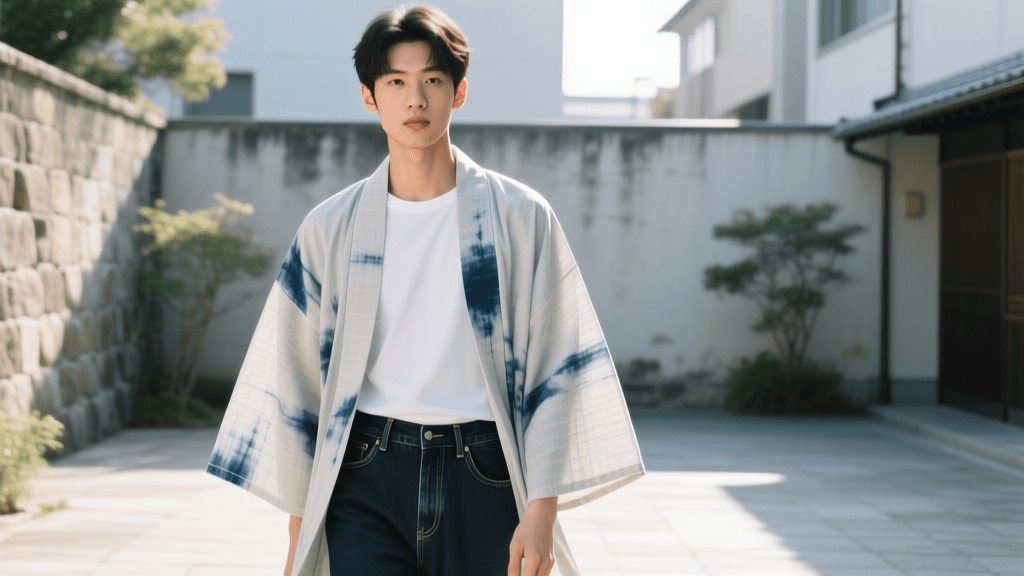
- The Urban Streetwear Look: Pair a mid-length, geometric-patterned vintage silk haori with a plain white oversized t-shirt, straight-leg denim jeans, and white sneakers. The haori acts as a statement outer layer, replacing the standard denim or leather jacket. Roll up the sleeves slightly to show off the intricate inner lining.
- Smart Casual Office Layering: Opt for a solid-colored, matte-finish haori made from tsumugi (slubbed silk) or a high-quality cotton-linen blend. Wear it over a fitted turtleneck and tailored trousers. The structured shoulders and elegant drape of the haori provide a sophisticated, artistic silhouette appropriate for creative workspaces.
- Summer Festival and Beach Cover-Up: During the summer, lightweight, unlined cotton or ro (gauze) haori are perfect for staying cool while protecting your skin from the sun. Wear a sheer ro haori over a simple camisole and linen shorts for a day at the beach, or layer it over a yukata when attending local summer matsuri (festivals).
- Evening Elegance: For a dinner out or an evening event, drape a dark, richly patterned silk haori over a simple black slip dress or a tailored jumpsuit. The flowing sleeves add a dramatic, cinematic quality to your outfit, while the haori himo tie can be swapped for a subtle, minimalist brooch or left entirely untied for a relaxed, effortless vibe.
Fabric Care and Maintenance
Caring for your haori depends entirely on its material. Proper maintenance ensures that these wearable pieces of art last for generations.
- Silk: Vintage silk haori should be dry-cleaned only. Avoid hanging them on wire hangers, as the weight of the silk can distort the shoulders. Instead, fold them neatly along their natural seam lines and store them in a breathable cotton storage bag (tatoushi) with cedar blocks to deter moths.
- Cotton and Polyester: Modern casual haori made from cotton or synthetic blends can often be hand-washed or machine-washed on a gentle, cold cycle using a mesh laundry bag. Always air dry them flat or on a wide, padded hanger away from direct sunlight to prevent the dyes from fading.
- Wrinkle Removal: Avoid direct contact with a hot iron. Use a garment steamer to gently remove wrinkles, or place a pressing cloth between the iron and the fabric on a low-heat setting.
- Travel Tips: When traveling with your haori, roll it gently rather than folding it tightly to prevent deep creases from setting into the silk or cotton fibers. A dedicated garment bag is highly recommended for transit.
Conclusion
The haori is a testament to the timelessness of Japanese design. By understanding its history, selecting the right measurements, and applying modern styling techniques, you can seamlessly incorporate this traditional garment into your everyday life. Whether draped over a casual weekend outfit or used to elevate a smart-casual ensemble, the haori offers a unique blend of comfort, artistry, and cultural appreciation that transcends seasons and trends. Embracing the haori is not just a fashion choice; it is a way to carry the rich narrative of Asian textile traditions into the modern world.