A Visitor Guide to China's Premier Hanfu and Silk Museums
The Intersection of Hanfu Revival and Institutional Heritage
The contemporary Hanfu movement has successfully propelled traditional Chinese clothing from the pages of history books into the bustling streets of modern cities. However, true appreciation of these garments extends far beyond their aesthetic appeal; it requires a deep understanding of the textiles, weaving techniques, and historical contexts that define them. For enthusiasts, scholars, and cultural tourists alike, China's premier textile and silk museums offer an unparalleled opportunity to witness the foundation of Hanfu craftsmanship. These institutions not only preserve fragile historical artifacts but also serve as living repositories of intangible cultural heritage, showcasing the looms, dyes, and embroidery techniques that have shaped Asian fashion for millennia.
Exploring these heritage sites provides actionable insights into how historical garments like the Tang dynasty Banbi (half-sleeve jacket) or the Ming dynasty Mamianqun (horse-face skirt) were constructed. By visiting these museums, you can trace the evolution of Chinese dress, understand the seasonal fabric choices of ancient dynasties, and support the artisans keeping these traditions alive. According to the UNESCO Silk Roads Programme, the exchange of textiles and sericulture techniques was a cornerstone of cross-cultural dialogue, making these museums vital nodes in understanding global fashion history.
China National Silk Museum (Hangzhou)
Located near the scenic West Lake, the China National Silk Museum (CNSM) is the largest silk museum in the world and an essential pilgrimage site for Hanfu enthusiasts. The museum's expansive galleries are divided into thematic exhibitions, with the 'Chinese Silk' and 'Silk Road' halls being the most relevant for traditional garment study.
Key Exhibitions for Hanfu Enthusiasts
The CNSM houses meticulously preserved textile fragments dating back to the Neolithic period, alongside stunning replicas of complete historical ensembles. The Ming dynasty gallery is particularly noteworthy, featuring intricate examples of Zhijin (woven gold) brocades used in formal Aoqun (jacket and skirt) sets. The museum also frequently hosts temporary exhibitions focusing on specific dynastic dress codes, offering a visual masterclass in the structural layering of traditional undergarments and outer robes.
Practical Visitor Information
- Location: 73-1 Yuhuangshan Road, Xihu District, Hangzhou.
- Admission: Free, but advance reservation is mandatory. You must book via the official WeChat Mini Program using your passport or Chinese ID.
- Timing: Arrive at 9:00 AM on a Tuesday or Wednesday to avoid weekend crowds and school groups.
- Pro Tip: Visit the museum's conservation lab viewing area, where you can watch experts restore fragile silk garments using traditional stitching methods. For more detailed logistical planning, refer to this comprehensive visitor guide to the National Silk Museum.
Suzhou Silk Museum (Suzhou)
Suzhou is historically synonymous with Su Embroidery and Song Brocade (Songjin), two of the most prestigious textile crafts in Chinese history. The Suzhou Silk Museum offers a more intimate, craft-focused experience compared to the sprawling CNSM in Hangzhou. Here, the emphasis is on the tactile and mechanical processes of silk production, from mulberry leaf cultivation to the complex operation of traditional wooden drawlooms.
The Art of Song Brocade and Su Embroidery
Song Brocade is renowned for its soft texture and intricate geometric patterns, making it a highly sought-after fabric for modern Hanfu tailors crafting scholarly or formal garments. The museum features live weaving demonstrations, allowing visitors to hear the rhythmic clatter of the looms and observe the painstaking process of passing the weft threads. The embroidery wing showcases the legendary 'double-sided embroidery' technique, where a single piece of silk features different, perfectly finished images on the front and back—a technique often used in high-end Hanfu accessories like Shanhua (folding fans) and decorative pouches.
Practical Visitor Information
- Location: 2001 Renmin Road, Gusu District, Suzhou.
- Admission: Free with passport reservation.
- Timing: Allocate at least 2.5 hours. Combine your visit with a nearby walk through the Humble Administrator's Garden to see how these silks were historically worn in classical garden settings.
Chengdu Shu Brocade Museum (Chengdu)
Shu Brocade (Shujin) originated in Sichuan province and is one of the oldest continuous silk weaving traditions in China, dating back over 2,000 years to the Three Kingdoms period. The Chengdu Shu Brocade Museum is dedicated to this specific regional craft, which is characterized by its vibrant colors, heavy weight, and durability.
Textiles of the Shu Han Dynasty
Because of its weight and structural integrity, Shu Brocade was historically favored for heavy outerwear, winter Shenyi (one-piece robes), and horse trappings. The museum's exhibition halls detail the unique 'warp-faced' weaving techniques that give Shu Brocade its distinctive sheen and durability. For modern Hanfu practitioners, the museum shop is one of the most reliable places to purchase authentic, artisan-woven Shu Brocade fabric by the meter, ensuring your custom-tailored garments use historically accurate materials rather than modern synthetic substitutes.
Comparative Guide: Planning Your Museum Tour
To help you structure your cultural itinerary, here is a comparative overview of China's top three textile heritage sites.
| Museum Name | City | Primary Textile Focus | Admission Cost | Recommended Duration |
|---|---|---|---|---|
| China National Silk Museum | Hangzhou | Comprehensive Silk History, Silk Road Artifacts | Free (Reservation Required) | 3 - 4 Hours |
| Suzhou Silk Museum | Suzhou | Song Brocade, Su Embroidery, Live Loom Demos | Free (Reservation Required) | 2 - 2.5 Hours |
| Chengdu Shu Brocade Museum | Chengdu | Shu Brocade, Sichuan Embroidery, Ancient Looms | Free (Reservation Required) | 2 Hours |
Understanding Textile Classifications in Hanfu
When visiting these museums, you will encounter specific Chinese terminology for silk weaves. Understanding these classifications is crucial for selecting the right fabric for different Hanfu styles and seasons.
- Luo (Gauze): A lightweight, breathable fabric with an open weave. Historically used for summer undergarments or sheer outer layers (Beizi) worn by the nobility in the Song dynasty.
- Chou (Silk Tabby/Twill): A medium-weight, versatile silk used for everyday Ruqun (blouse and skirt) ensembles. It drapes beautifully and takes dye exceptionally well.
- Duan (Satin): A heavy, lustrous fabric with a smooth surface. Ming dynasty Mamianqun are frequently crafted from Duan to provide structure and warmth during autumn and winter.
- Jin (Brocade): The most complex and expensive weave, featuring multi-colored patterns woven directly into the fabric. Reserved for formal court dress, ceremonial Daofu, and high-status outerwear.
Actionable Etiquette and Tips for Hanfu Enthusiasts
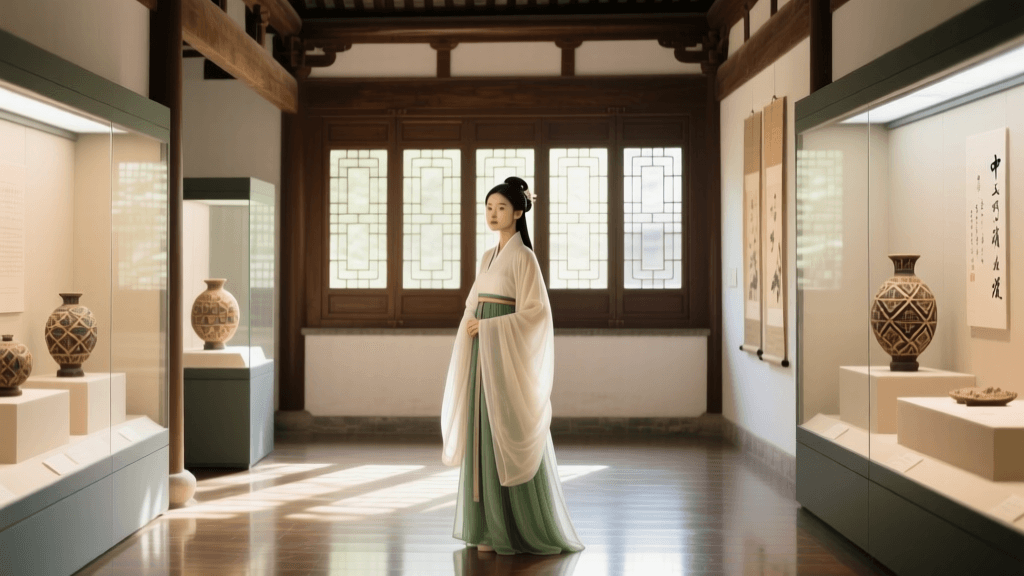
Visiting a heritage museum while wearing Hanfu is a deeply immersive experience, and most Chinese cultural institutions actively encourage it. However, there are specific protocols to follow to ensure the preservation of the artifacts and respect for the space.
Photography and Preservation
Flash photography is strictly prohibited in all textile galleries. The intense burst of light accelerates the photodegradation of ancient dyes and protein-based silk fibers. If you are wearing Hanfu with long, flowing sleeves or a trailing skirt, be mindful of your surroundings. Avoid brushing your garments against display glass or historical wooden looms, as static electricity and friction can damage fragile exhibits.
Hiring Expert Guides
While many museums offer English audio guides, hiring a specialized human guide can vastly improve your understanding of the textile mechanics. Look for guides affiliated with the UNESCO Intangible Cultural Heritage programs or local university textile departments. They can explain the mathematical precision required to program a traditional drawloom and point out the microscopic differences between historical and modern replication techniques.
'To wear Hanfu is to wear history, but to understand it, you must touch the threads of the past. Museums are not just archives; they are the living workshops where the soul of Chinese fashion is preserved.' - Curator's Note, China National Silk Museum Exhibition Catalog.
Conclusion
A journey through China's premier Hanfu and silk museums is an essential rite of passage for anyone serious about traditional Asian garments. From the sprawling historical archives of Hangzhou to the rhythmic looms of Suzhou and the vibrant brocades of Chengdu, these heritage sites bridge the gap between ancient artistry and modern revival. By planning your visit with intention, respecting preservation etiquette, and studying the foundational textiles, you elevate your appreciation of Hanfu from mere fashion to a profound engagement with Asian cultural heritage.