The Tibetan Chuba: Sourcing, Sizing, and Styling Guide
The Anatomy of the Tibetan Chuba: Form Meets Highland Function
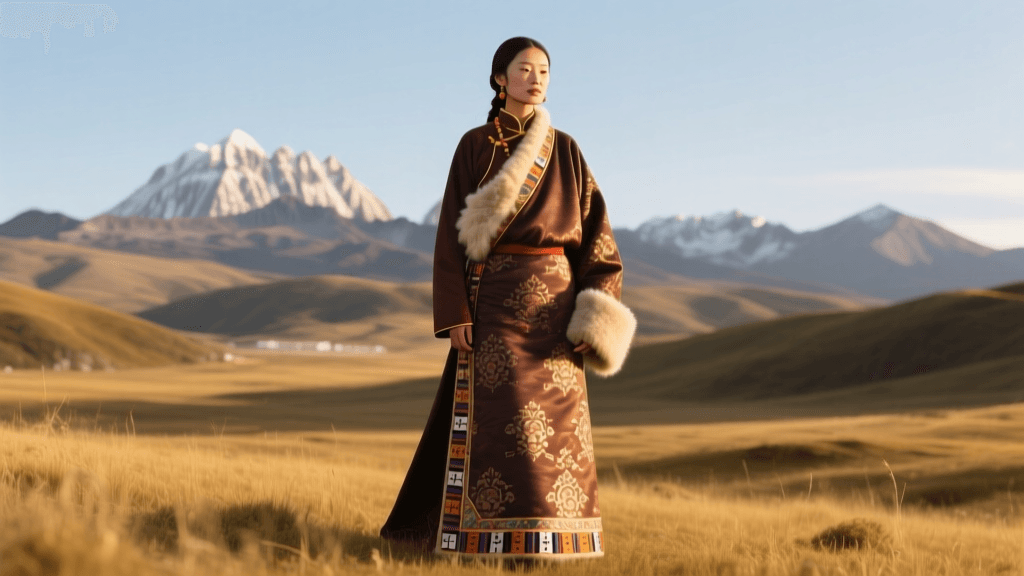
The Tibetan plateau's extreme climate, characterized by freezing winds and intense high-altitude sun, necessitates clothing that is both highly functional and deeply symbolic. The Chuba (also spelled Chu Ba) is the quintessential traditional garment of the Tibetan people. Far from being a simple robe, the Chuba is a masterclass in adaptive design, allowing nomadic herders and urban dwellers alike to regulate their body temperature throughout the day's drastic shifts. According to Britannica's overview of Tibetan traditional life, the Chuba's voluminous design serves not only as insulation but also as a portable storage system, with the bloused pouch above the sash traditionally used to carry everything from infants to trade goods.
Materials and Construction
Authentic Chubas are constructed from a variety of materials, dictated by the season, the wearer's social status, and the specific region. The foundational winter garment is often made from Pulu, a densely woven textile crafted from yak down and sheep's wool. For summer or indoor wear, lighter wool blends or cotton are utilized. The interior lining is crucial; premium winter Chubas are lined with whole sheepskins, tanned to retain the wool for maximum thermal retention.
For festivals, weddings, and religious ceremonies, the outer layer transitions to luxurious silk brocade, often imported historically via the Silk Road or sourced from Chengdu's specialized Tibetan textile markets. The hems and cuffs are traditionally trimmed with otter fur or leopard skin—symbols of wealth and bravery. However, modern sourcing heavily favors ethical, high-quality faux-fur trims that mimic the luxurious aesthetic without contributing to the endangerment of protected species.
Regional Variations: Amdo, Kham, and U-Tsang
When sourcing a Chuba, understanding regional distinctions is vital for collectors, stylists, and cultural enthusiasts. The garment varies significantly across the three traditional provinces of Tibet.
- Amdo Region: Known for heavy, sweeping sheepskin Chubas with exceptionally wide, colorful brocade hems. The silhouette is grand and imposing, designed to shield the wearer from the harsh winds of the northeastern plateau.
- Kham Region: The Kham style reflects the region's warrior heritage. Chubas here often feature slightly shorter sleeves for mobility, bolder color contrasts, and are heavily accessorized with massive coral and turquoise amulets and heroic swords.
- U-Tsang Region (Central Tibet): Home to Lhasa, this region favors refined elegance. The Chubas are tailored more closely to the body, featuring intricate silk brocades and the iconic Pangden—a brightly striped, woven wool apron worn exclusively by married women.
Sourcing Authentic Chubas: Costs, Timing, and Locations
Acquiring an authentic, high-quality Chuba requires knowing where to look and when to buy. While mass-produced costumes are available online, genuine artisan-crafted garments require targeted sourcing.
Where to Buy
The premier location for sourcing is Barkhor Street in Lhasa, where multi-generational tailors craft custom pieces. For those outside Tibet, the Wuhou District (Tibetan Quarter) in Chengdu, Sichuan is the global hub for Tibetan textile commerce, boasting hundreds of boutiques and wholesale workshops. Online, specialized WeChat mini-programs and curated Etsy sellers who partner directly with Xining and Chengdu cooperatives offer the most reliable international shipping.
Cost Breakdown
- Everyday Wool Chuba (Unlined): $120 - $250 USD. Ideal for casual wear or lightweight layering.
- Winter Sheepskin-Lined Chuba: $350 - $600 USD. Heavy, durable, and exceptionally warm.
- Festival Silk Brocade Chuba: $800 - $2,500+ USD. Price scales with the purity of the silk, the complexity of the jacquard weave, and the inclusion of silver-thread embroidery.
- Authentic Pangden (Apron): $80 - $250 USD. Hand-woven on traditional looms in Lhasa or Shannan.
Timing Your Purchase
The best time to commission or purchase a Chuba is 2 to 3 months before Losar (Tibetan New Year, typically falling in February or March) or during the Shoton Festival in August. During these periods, master weavers release their newest brocade patterns, and tailors are fully stocked with premium hides and silks.
Sizing and Measurement Guide
Western sizing does not apply to the Chuba. The garment is intentionally oversized to allow for the signature 'blousing' effect over the waist sash. When commissioning a piece, tailors focus on total length and sleeve span rather than chest or waist circumference.
| Garment Type | Flat Chest Width | Sleeve Length (Shoulder to Cuff) | Total Back Length (Pre-Blouse) | Recommended Wearer Height |
|---|---|---|---|---|
| Standard Men's Wool | 65 cm (25.5 in) | 75 cm (29.5 in) | 145 cm (57 in) | 170 - 180 cm |
| Standard Women's Silk | 58 cm (22.8 in) | 70 cm (27.5 in) | 135 cm (53 in) | 160 - 170 cm |
| Amdo Ceremonial | 75 cm (29.5 in) | 85 cm (33.5 in) | 155 cm (61 in) | 175+ cm |
Tailor's Tip: A Chuba should touch the floor when worn without a sash. Once the sash is tied, the hem should rise to the mid-calf for men (allowing for riding boots) and the ankle for women, creating a deep, functional pouch at the waist.
How to Style and Wear the Chuba Today
Wearing a Chuba correctly requires mastering the sash, known as a skert. The sash is typically a 3-meter long piece of woven wool or silk. To wear it:
- Slip both arms into the sleeves and pull the collar up to the shoulders.
- Hoist the back panel of the Chuba upward so the hem reaches your desired height (mid-calf or ankle).
- Gather the excess fabric at the waist, ensuring the front panels overlap left over right (a strict traditional rule).
- Wrap the sash tightly around the waist twice, securing it with a flat knot at the small of the back. This creates the 'pouch' and locks the heavy garment in place.
Essential Accessories
The Chuba is rarely worn alone. Footwear consists of Lham, traditional Tibetan boots with thick, upturned toes made of yak leather and colorful wool shafts. Jewelry is paramount; collectors should look for the Gau, a silver or gold amulet box worn as a necklace or chest piece, often inlaid with Himalayan turquoise, red coral, and beeswax amber. The visual history of these adornments is extensively documented by Himalayan Art Resources, which notes that the iconography woven into the brocades and cast into the jewelry often serves as a protective talisman.
Ethical Considerations and Modern Alternatives
Historically, the use of wild animal pelts (such as snow leopard or otter) was a marker of high status. Today, the preservation of these endangered species is a global priority, and the Tibetan community has largely embraced sustainable alternatives. When sourcing vintage pieces, buyers must be vigilant regarding CITES regulations concerning the international transport of endangered animal products. For modern wear, high-end synthetic trims and ethically sourced, farm-raised sheepskin provide the same structural weight, thermal properties, and visual grandeur without the ecological toll. Furthermore, supporting cooperatives that preserve the intangible cultural heritage of Tibetan weaving, as recognized by frameworks like UNESCO's Intangible Cultural Heritage initiatives, ensures that the artisans maintaining these ancient loom techniques are fairly compensated.
Care and Maintenance of Highland Textiles
Maintaining a Chuba requires specialized care, particularly for the delicate silk brocades and natural wool dyes.
- Yak Wool and Pulu: Never machine wash. Air out the garment in direct sunlight, which naturally kills bacteria and removes odors. Spot clean with a damp cloth and mild lanolin soap.
- Silk Brocade: Must be professionally dry-cleaned by a specialist familiar with heavy ethnic textiles. Store folded in acid-free tissue paper inside a cedar chest to prevent moth damage and moisture accumulation.
- Sheepskin Linings: Brush the interior wool regularly with a wire slicker brush to prevent matting and maintain its insulating loft.