Hanfu Travel Guide: Destination Styling for Social Media
The Hanfu Tourism Boom: Blending Heritage with Viral Content
The intersection of traditional Chinese clothing and modern destination tourism has created a massive cultural phenomenon known as the Hanfu movement. No longer confined to niche hobbyist circles or museum exhibits, Hanfu has taken over the streets of China's historical capitals and the feeds of global social media platforms. For travel influencers, content creators, and cultural enthusiasts, styling and photographing Hanfu at iconic heritage sites offers a unique opportunity to produce visually stunning, highly engaging content. According to UN Tourism, cultural tourism is one of the fastest-growing segments in the global travel industry, driven by travelers seeking authentic, immersive, and visually shareable experiences. Hanfu tourism perfectly encapsulates this trend, allowing visitors to step directly into the pages of history while creating viral content for platforms like Douyin, Xiaohongshu, and Instagram.
Top Destinations for Hanfu Photography
Choosing the right backdrop is critical for your social media narrative. Different cities in China offer distinct architectural styles, lighting conditions, and historical atmospheres that pair best with specific dynasty aesthetics.
Xi'an (Chang'an): The Tang Dynasty Dream
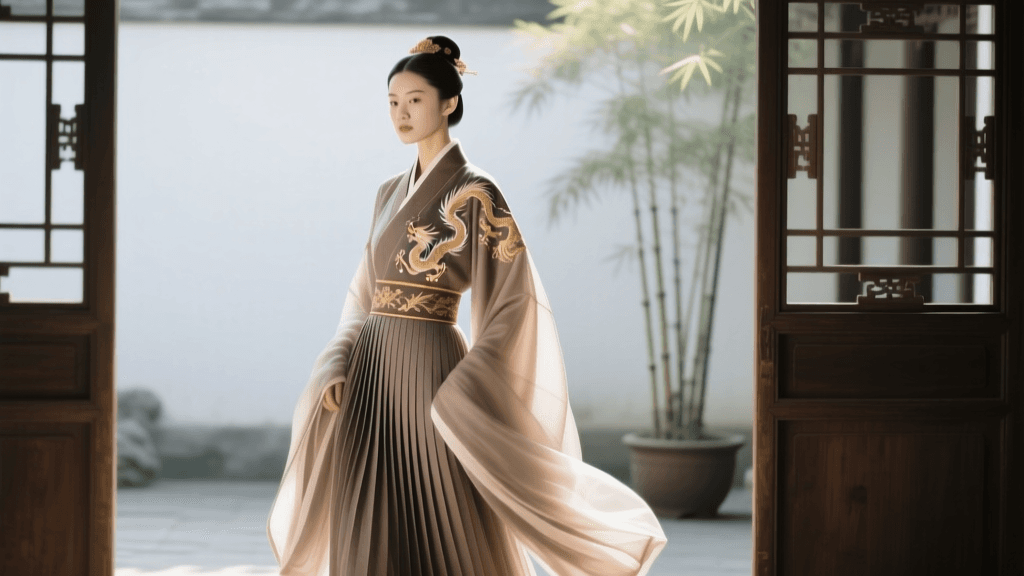
Xi'an is the undisputed capital of Hanfu tourism. The Datang Everbright City (Da Tang Bu Ye Cheng) is a sprawling, pedestrian-only cultural complex designed to replicate the cosmopolitan glory of the Tang Dynasty. For content creators, this is the ultimate location for vibrant, high-energy videos. The architecture features sweeping eaves, vermilion pillars, and massive lantern displays that come alive at dusk. The Tang-style Qixiong Ruqun (chest-high skirt) and Yuanlingpao (round-collar robe) are the most popular choices here, characterized by bold colors, wide sleeves, and luxurious floral brocades.
Hangzhou: Ethereal Song and Ming Aesthetics
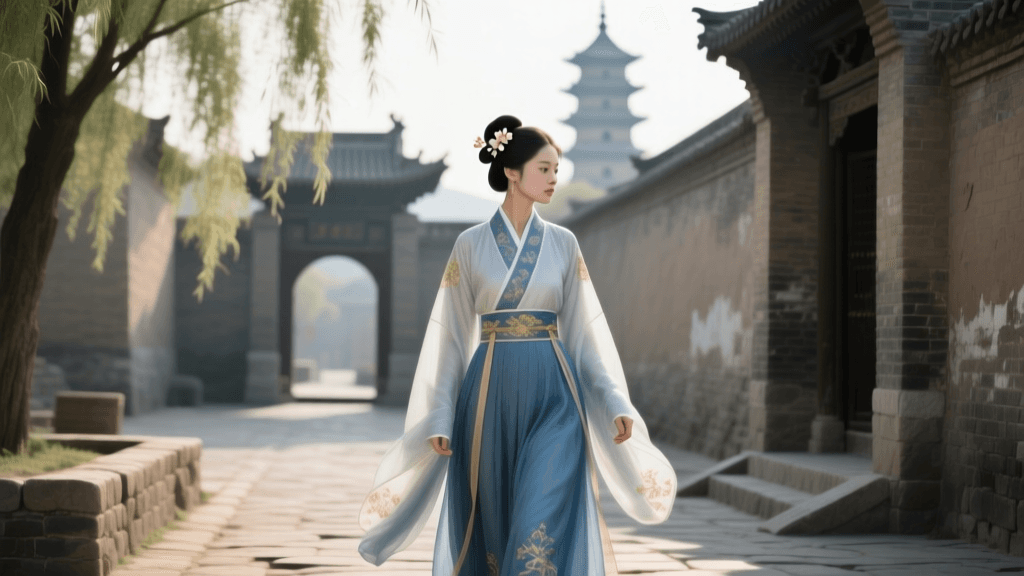
If your social media brand leans towards serene, nature-integrated, and ethereal aesthetics, Hangzhou's West Lake and Lingyin Temple are unparalleled. The misty willow trees, ancient stone bridges, and tranquil waters provide a softer, more melancholic backdrop. This environment is perfect for the understated elegance of Song Dynasty Beizi (long jackets) or the structured, dignified silhouettes of Ming Dynasty Mamianqun (horse-face skirts). Shoot during the early morning mist or the rainy season for a cinematic, wuxia-inspired atmosphere.
Luoyang: Ancient Capitals and Grottoes
Luoyang, another ancient capital, offers a rugged, deeply historical backdrop. The Longmen Grottoes, with their towering Buddhist statues carved into limestone cliffs, provide a dramatic, awe-inspiring setting. Content creators often use Luoyang to showcase Wei, Jin, and early Tang styles, utilizing flowing, unstructured garments that catch the wind against the massive stone carvings.
Renting vs. Buying: The Creator's Dilemma
For destination content creation, deciding whether to rent or pack your own Hanfu involves balancing budget, convenience, and wardrobe variety.
- Renting Locally (The Studio Package): In cities like Xi'an and Luoyang, the streets are lined with Hanfu rental studios. A standard package (typically 150 to 350 RMB, or $20-$50 USD) includes a 24-hour garment rental, professional historical makeup, and intricate hair styling with traditional accessories. This is highly recommended for creators who want to shoot multiple looks without lugging heavy suitcases across the country.
- Bringing Your Own (The Traveling Wardrobe): If you are a dedicated Hanfu enthusiast or require specific, high-end couture pieces for a branded campaign, traveling with your own garments is necessary. Invest in a portable, foldable travel steamer (crucial for removing suitcase wrinkles from silk and chiffon) and pack wrinkle-resistant synthetic blends for daytime walking shoots, saving delicate real silks for stationary, golden-hour photography.
Styling and Fabric Selection for the Camera
Social media video content, particularly slow-motion transitions and wind-catching sequences, relies heavily on the physics of your fabric. The The Metropolitan Museum of Art notes that the historical development of Chinese silk weaving allowed for an incredible diversity of textile weights and drapes, a principle that modern Hanfu makers still utilize today.
| Fabric Type | Visual Effect on Camera | Best Environment & Style |
|---|---|---|
| Chiffon / Organza | Ethereal, floating, catches wind beautifully | Outdoor nature shoots, West Lake, Song dynasty styles |
| Brocade / Jacquard | Structured, rich texture, reflects light opulently | Night shoots, lantern-lit streets, Tang/Ming dynasty styles |
| Raw Silk / Linen | Matte, grounded, historically authentic texture | Temples, grottoes, Wei/Jin scholar aesthetics |
| Satin | High shine, luxurious drape, bold color saturation | Studio-style portraits, vibrant architectural backdrops |
When shooting video, always incorporate a Pibo (a long, flowing silk shawl draped over the arms). The Pibo acts as a natural extension of your body, creating sweeping, dynamic lines in the air when you spin or walk toward the camera, which is a staple of viral Douyin transitions.
Makeup and Hair: The Guochao Aesthetic
Authenticity in your content extends beyond the garment to the Guochao (national trend) beauty aesthetic. Traditional Chinese makeup focuses on porcelain skin, elongated eyeliner, and specific lip shapes (like the cherry lip). For Tang Dynasty shoots, request your makeup artist to apply Huadian (floral or geometric decals painted or pasted on the forehead) and Dianchun (dimple decorations). Hair must be fully styled; leaving modern hair down while wearing Hanfu is a common faux pas that will immediately draw criticism from the knowledgeable Hanfu community in your comment section. Utilize traditional hairpins, jade combs, and velvet flowers (Ronghua) to complete the silhouette.
Social Media Playbook: Maximizing Reach
Creating the content is only half the battle; optimizing it for algorithms is the other. Here is how to tailor your Hanfu travel content for major platforms:
Douyin and Xiaohongshu (Chinese Platforms)
Audiences on these platforms are highly educated on Hanfu history. They appreciate 'transformation' videos (starting in modern streetwear and transitioning into full historical regalia via a seamless edit). Use trending traditional instrumental audio, such as Guzheng or Pipa covers of modern pop songs. Always tag the specific dynasty, the garment's exact terminology (e.g., #明制汉服 - Ming System Hanfu), and the location. Engaging with the community's historical accuracy discussions in the comments will boost your algorithmic ranking.
Instagram and TikTok (Global Platforms)
Global audiences are often drawn to the visual spectacle, the 'Disney princess' or 'cinematic fantasy' aesthetic, and the travel vlog aspect. Focus on the storytelling of your travel experience: the bustling rental shops, the intricate hair-pinning process, and the reaction of locals. Use cinematic color grading to enhance the vermilion and gold tones of the architecture. Reels and TikToks should prioritize the first three seconds—start with a high-motion fabric spin or a dramatic reveal of the Datang Everbright City at night to hook the viewer instantly.
Respecting Heritage While Creating Content
As the Hanfu movement grows, so does the responsibility to treat the culture with respect. The revival of these garments is deeply tied to a renewed sense of cultural identity and historical preservation. The cultivation of the materials themselves is a matter of global heritage; for instance, UNESCO officially recognizes Chinese sericulture and silk craftsmanship as an Intangible Cultural Heritage of Humanity. When you wear these garments, you are participating in a living tradition.
Always be mindful of your surroundings. Avoid posing inappropriately in sacred spaces like active Buddhist or Taoist temples. When visiting historical monuments, stay on designated paths and avoid dragging delicate silk hems over rough, ancient stonework where it might cause damage to either the site or your garment. By combining historical respect with modern digital storytelling, you can create destination content that not only goes viral but also educates and inspires a global audience about the profound beauty of Asian sartorial traditions.