The Modern Hanfu Revival: A Practical Buyer and Styling Guide
The Origins and Scale of the Hanfu Movement
The Hanfu movement, or Hanfu Yundong, is a cultural and sartorial phenomenon that has swept across China and the global diaspora over the last two decades. What began in 2003 when a man named Wang Letian walked the streets of Zhengzhou in a self-made traditional Han Chinese robe has blossomed into a multi-billion-dollar industry driven by Generation Z. According to BBC News, millions of young Chinese citizens now actively participate in this revival, viewing Hanfu not merely as a costume, but as a profound reconnection with pre-Qing dynasty heritage and aesthetic philosophy.
Unlike static historical reenactments, the modern Hanfu revival is highly dynamic. It blends rigorous historical research from the Han, Tang, Song, and Ming dynasties with contemporary manufacturing, e-commerce, and modern street fashion. As noted by the South China Morning Post, the market for Hanfu has exploded, with specialized brands, dedicated social media influencers, and massive offline festivals transforming traditional garments into everyday wearable art. For those looking to participate, understanding the nuances of buying, measuring, and styling Hanfu is essential.
Core Garments for the Modern Enthusiast
The term 'Hanfu' encompasses thousands of years of evolving fashion. However, the modern revival tends to focus on a few highly versatile and historically significant silhouettes. If you are building your first wardrobe, these are the essential categories to explore:
1. Mamianqun (Horse-Face Skirt)
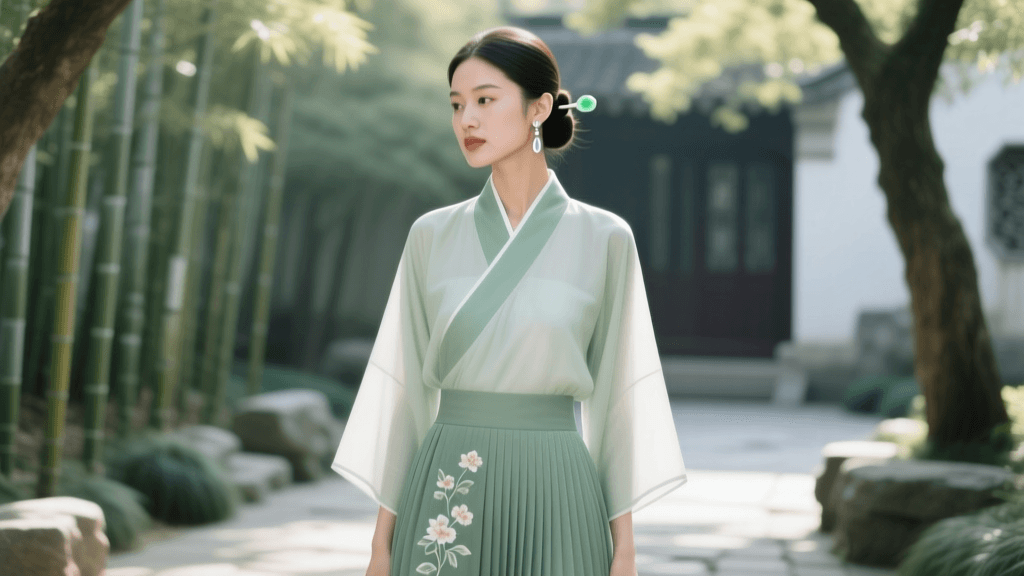
Originating in the Song and Ming dynasties, the Mamianqun is arguably the most popular garment in the modern revival. It features a flat, unpleated front and back panel (the 'horse face') with deep pleats on the sides. Because it wraps around the waist and is secured with ties, it is incredibly forgiving regarding sizing. Today, it is the cornerstone of 'Hanfu fusion' fashion, frequently paired with modern blouses or knitwear.
2. Beizi (Song Dynasty Jacket)
The Beizi is a long, open-front jacket with straight sleeves, typically worn over a camisole and skirt. Its minimalist, elegant lines and lightweight fabrics (like silk gauze or linen) make it an excellent layering piece for spring and summer. Its silhouette is remarkably similar to a modern longline duster or kimono cardigan, making it highly adaptable for everyday office or casual wear.
3. Qixiong Ruqun (Chest-High Skirt Ensemble)
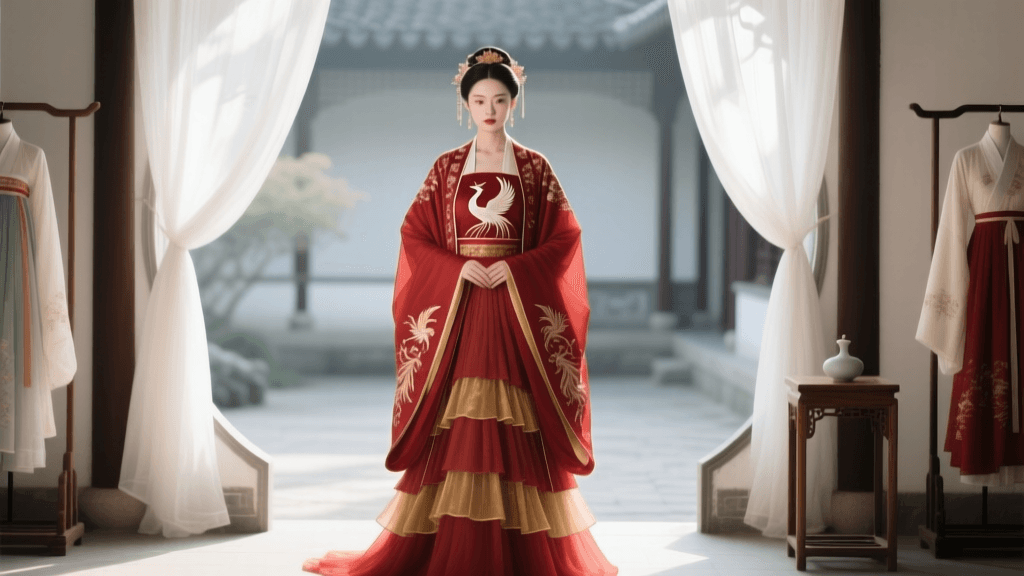
Iconic to the Tang Dynasty, this style features a skirt tied high above the bust, paired with a short jacket or shawl. While visually stunning and highly romantic, it can be challenging for beginners to secure properly without the skirt slipping. Modern manufacturers often add hidden elastic bands or silicone grip strips to the inner waistband to solve this historical inconvenience.
How to Measure and Order Custom Hanfu
While Western clothing relies on standardized S/M/L sizing based on body volume, traditional Chinese tailoring is fundamentally different. Hanfu is cut using flat, geometric patterns that rely on the natural drape of the fabric over the body. Therefore, ordering from specialized Taobao boutiques or international Hanfu vendors requires specific measurements. Always keep a fabric measuring tape on hand and record the following:
- Bust (Xiong Wei): Measure around the fullest part of your chest. This is critical for Ruqun tops and cross-collar jackets to ensure the lapels lay flat without gaping.
- Natural Waist (Yao Wei): Measure the narrowest part of your torso. This is used for Aoqun (waist-high skirts) and the inner ties of jackets.
- Hips (Tun Wei): Measure the widest part of your lower body. Essential for ensuring the flat panels of a Mamianqun sit correctly without the pleats pulling open.
- Height (Shen Gao): Your total height dictates the length of the skirt and the drop of the sleeves. Most vendors offer standard lengths (e.g., 100cm, 105cm, 110cm) based on your height.
- Arm Span / Sleeve Length: Traditional Hanfu sleeves range from 'narrow' (practical for daily use) to 'wide' or 'ground-dragging' (ceremonial). Measure from the base of your neck, over the shoulder, down to the wrist to understand how the dropped-shoulder seams will fall.
Cost Breakdown: Budgeting for Your First Hanfu Wardrobe
The cost of Hanfu varies wildly depending on the historical accuracy, fabric quality, and brand prestige. Below is a practical pricing guide to help you budget for your entry into the movement. For a comprehensive historical and sociological background on how this market developed, refer to Wikipedia's entry on the Hanfu Movement.
| Tier | Price Range (USD) | Materials & Brands | Best For |
|---|---|---|---|
| Budget / Entry | $30 - $60 | Polyester, Chiffon, basic cotton. (Generic Taobao sellers, AliExpress) | First-time buyers, casual street wear, photography props. |
| Mid-Range | $80 - $180 | High-grade Jacquard, silk blends, linen. (Brands: Shisan Yu, Zhongling, Hantime) | Daily enthusiasts, community events, durable long-term wear. |
| Premium / Bespoke | $250 - $800+ | Pure Mulberry Silk, real gold thread embroidery, brocade. (Brands: Minghuatang, Ting Yue) | Collectors, formal ceremonies, historical accuracy purists. |
Note: When purchasing from Chinese platforms like Taobao, utilize shopping agents (such as Superbuy or Wegobuy) if you do not have a Chinese bank account or domestic shipping address. Factor in an additional 15-20% for international shipping and agent fees.
Modern Fusion and Everyday Styling
One of the most exciting aspects of the contemporary Hanfu movement is 'Hanfu fusion'—the practice of mixing traditional garments with modern Western clothing. This approach makes the clothing accessible, practical, and suitable for modern urban environments like subways, offices, and cafes.
The Mamianqun and the Button-Down: The most ubiquitous fusion look involves pairing a richly woven, dark-toned Ming-style horse-face skirt with a crisp, white Western button-down shirt. Tuck the shirt in, add a slim leather belt over the skirt's waistband (or let the traditional silk ties show), and finish with modern leather loafers or Mary Jane shoes. This creates a striking 'dark academia' or intellectual aesthetic that bridges centuries of fashion.
The Beizi as a Duster: In the summer, a lightweight, semi-sheer Song dynasty Beizi can be worn over a simple tank top and denim shorts or a slip dress. The flowing sleeves add a dramatic, romantic silhouette to an otherwise basic modern outfit, providing sun protection and a unique cultural statement without the commitment of a full historical ensemble.
Hair and Accessories: You do not need elaborate, historically accurate updos to wear Hanfu. Modern enthusiasts frequently use minimalist metal hair sticks, jade hairpins, or velvet ribbons to secure a simple low bun or half-up hairstyle. Avoid overly theatrical 'costume' jewelry; instead, opt for subtle pearls, jade pendants, or embroidered canvas tote bags to ground the outfit in everyday reality.
Participating in the Community and Events
The Hanfu movement is deeply communal. If you wish to immerse yourself in the culture, look for local Hanfu clubs or university societies, which are increasingly common in major global cities with Asian diasporas. Key annual events to mark on your calendar include:
- Hua Zhao Jie (Flower Festival): Celebrated in the spring (usually March or April), this festival involves wearing lightweight, pastel Tang or Song dynasty garments, picnicking under blooming cherry or plum blossoms, and participating in flower-appreciation poetry readings.
- Xiqi Festival (Chinese Valentine's Day): Occurring in August on the lunar calendar, this is a popular time for couples to wear matching Ming dynasty wedding-style or formal Hanfu, often participating in traditional archery or lantern-making workshops.
- Hanfu Parades and Cultural Weeks: Cities like Chengdu, Hangzhou, and Xi'an host massive street parades where thousands of enthusiasts walk through historical districts, creating a breathtaking visual spectacle that celebrates living heritage.
Conclusion
The Hanfu revival is much more than a fleeting fashion trend; it is a profound cultural reawakening that allows individuals to wear their history with pride. By understanding the foundational silhouettes, taking accurate measurements, and embracing modern fusion styling, anyone can respectfully and beautifully integrate traditional Chinese garments into their 21st-century wardrobe. Whether you are investing in a premium silk Mamianqun or styling a budget-friendly Beizi for a casual weekend, you are participating in a vibrant, living tradition that continues to evolve with every generation.