Modern Hanbok on 2026 Red Carpets: Global Media Styling Guide
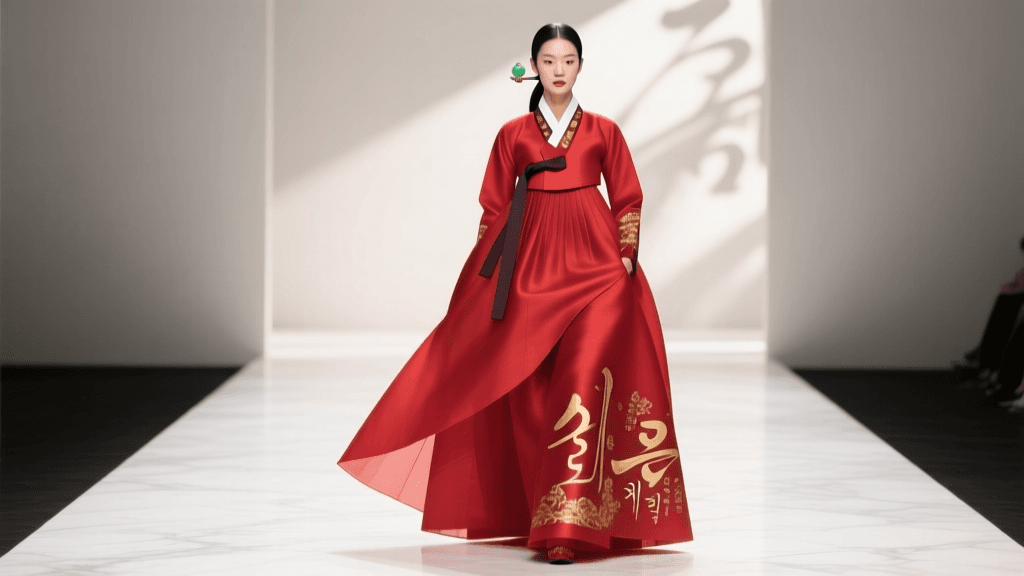
The 2026 Red Carpet Renaissance: Hanbok as Haute Couture
The global fashion media landscape of 2026 has undergone a profound transformation, particularly in its embrace and elevation of Asian traditional garments. No longer relegated to niche cultural exhibitions or treated as mere costume, the modern Hanbok has firmly established itself on the most prestigious red carpets and editorial pages in the world. From the 2026 Met Gala to the Cannes Film Festival, international stylists and haute couture houses are collaborating with Korean heritage artisans to present the Hanbok as a masterpiece of sartorial architecture. This shift represents a critical evolution in global fashion journalism, where the narrative has moved past superficial exoticism to deeply appreciate the structural ingenuity, textile heritage, and sustainable craftsmanship inherent in traditional Korean dress.
For fashion editors, celebrity stylists, and cultural archivists, understanding how to source, style, and contextualize the modern Hanbok in 2026 is essential. The integration of traditional silhouettes—such as the voluminous chima (skirt) and the cropped, structural jeogori (jacket)—into contemporary high-fashion editorials requires a nuanced understanding of both historical precedent and modern textile innovation. According to cultural archives maintained by the National Museum of Korea, the foundational geometry of the Hanbok relies on straight lines and gentle curves, a design philosophy that contemporary designers are now manipulating with striking, avant-garde results on the global stage.
Deconstructing the Silhouette for Global Editorials
In 2026, top-tier fashion magazines like Vogue and Harper’s Bazaar are favoring a deconstructed approach to the Hanbok, blending traditional modesty with high-fashion drama. Stylists are focusing on two primary garments to create striking visual narratives.
The Architectural Jeogori
The jeogori has been reimagined by contemporary couturiers as a statement piece of outerwear and bodice architecture. In recent 2026 editorial spreads, we see the traditional git (collar) and goreum (ties) elongated and crafted from stiffened, sustainable bio-silks that hold their shape against the wind on outdoor red carpets. Stylists are pairing these cropped jackets with bias-cut Western slip dresses or wide-legged, high-waisted trousers, creating a striking juxtaposition of proportions. The dongjeong (white removable collar) is frequently stylized with subtle metallic threading or replaced with detachable, jewel-encrusted collars for evening galas, catching the flash photography perfectly.
The Voluminous Chima and Sustainable Organza
The chima remains the focal point of Hanbok couture. Historically, the fullness of the skirt was achieved through layers of traditional silk and cotton. In 2026, global fashion media is highlighting the use of upcycled organza and cruelty-free peace silk to achieve the signature bell-shaped volume without the heavy environmental footprint. Designers are employing heat-pleating techniques on modern synthetics to create skirts that compress easily for transport but explode into dramatic, sculptural silhouettes once steamed. This innovation has made the Hanbok a favorite among celebrity stylists who require garments that can withstand international travel and rapid wardrobe changes.
2026 Media Coverage: A Shift in Fashion Journalism
The vocabulary used by global fashion critics in 2026 reflects a maturing respect for Asian traditions. Where past decades might have lazily grouped diverse Asian garments under a monolithic 'oriental' umbrella, today's leading fashion journalists are meticulously crediting specific regional techniques, dynastic inspirations, and artisan collectives. The Korean Culture and Information Service has noted a massive surge in international media requests for accurate historical context and artisan interviews, signaling a demand for authenticity over appropriation.
Market analysts at The Business of Fashion have reported that the global luxury market's pivot toward 'heritage craftsmanship' has made authentic, artisan-led Hanbok labels some of the most sought-after rentals and purchases for high-net-worth individuals and A-list stylists. The media is no longer just covering the clothes; they are covering the supply chain, the master weavers of myeongju silk, and the multi-generational embroidery studios in Seoul and Jeonju that make these 2026 red carpet moments possible.
Sourcing Contemporary Hanbok for Editorial and Event Styling
For stylists looking to source authentic, high-fashion Hanbok for 2026 editorials, red carpets, or private galas, the market is divided between heritage houses and avant-garde disruptors. Below is a curated guide to the leading labels dominating the 2026 global fashion media circuit, including their signature silhouettes and estimated editorial rental costs.
| Designer Label | Signature 2026 Silhouette | Avg. Editorial Rental Cost | Notable 2026 Media Feature |
|---|---|---|---|
| Tchai Kim | Deconstructed Hwalot (Robe) | $2,800 / week | Vogue Italia Spring 2026 Cover Story |
| Danha | Eco-Organza Chima & Crop Set | $1,900 / week | Cannes 2026 Opening Night Red Carpet |
| Hwang Jae-Sul | Modernized Wonsam (Court Dress) | $4,500 / week | Met Gala 2026 Archival Exhibition |
| Kim Young-Jin | Architectural Jeogori Outerwear | $2,200 / week | Harper's Bazaar Global Couture Issue |
Practical Guide: Fitting, Care, and Transport for Stylists
Styling a traditional or modern Hanbok for a high-profile 2026 event requires specialized knowledge that differs vastly from Western couture. The garment is not tailored to the skin; rather, it is tied and draped to create space between the fabric and the body. Here are the actionable protocols for global styling teams:
- The Fitting Process: Unlike Western gowns that require precise bust and waist measurements, Hanbok fittings focus heavily on the shoulder slope, the length of the jeogori relative to the bust line, and the exact waist placement of the chima. The skirt must be tied just below the bust or at the natural waist, depending on the era being referenced, using the internal heori (waistband) ties. Never use safety pins on antique or high-end silk Hanbok; rely on the traditional knotting techniques of the goreum.
- Accessory Integration: The norigae (decorative tassel) is a critical styling element. In 2026 editorials, stylists are moving away from pinning the norigae directly to the delicate silk of the goreum. Instead, they are using custom-made, hidden magnetic clasps to secure heavy, gemstone-encrusted tassels without risking fabric tears. Hair styling frequently incorporates the daenggi (traditional ribbon), which is now being woven into modern, sleek chignons for a fusion aesthetic.
- Steaming and Fabric Care: Modern Hanbok frequently utilizes bio-silks and heat-set pleated organza. Stylists must use a continuous-flow commercial steamer at a low-to-medium heat setting. Never press a Hanbok with a flat iron, as this will destroy the three-dimensional volume of the chima and flatten the structural seams of the jeogori. When transporting, the garments should be hung on wide, padded hangers and enclosed in breathable, acid-free cotton garment bags to prevent the silk from oxidizing or trapping moisture during international flights.
Conclusion
The integration of the Hanbok into the upper echelons of global fashion media in 2026 is a testament to the enduring power of Asian traditional garments. By respecting the historical architecture of the clothing while embracing modern, sustainable textiles, global stylists and fashion journalists are ensuring that the Hanbok is celebrated not as a relic of the past, but as a dynamic, living pillar of global haute couture. For those in the fashion industry, mastering the styling, sourcing, and cultural contextualization of these garments is no longer optional—it is the hallmark of a truly world-class editorial vision.