2026 Editorial Hanbok & Qipao: High-Fashion Styling Guide
The 2026 Renaissance of Asian Heritage in Global Editorials
In the current 2026 fashion landscape, the intersection of Asian heritage and global fashion media has reached an unprecedented level of sophistication and respect. Top-tier publications such as Vogue, Harper's Bazaar, and Elle have entirely moved away from the reductive 'costume' or 'exotic' tropes of the past. Today, the Korean Hanbok and the Chinese Qipao (Cheongsam) are treated with the same sartorial reverence as the French corset or the Italian tailored suit. For stylists, fashion editors, and heritage garment enthusiasts, understanding how to adapt these traditional silhouettes for modern high-fashion editorials is no longer optional—it is essential.
This comprehensive guide explores the structural evolution, bespoke tailoring requirements, and editorial styling techniques for the Hanbok and Qipao in 2026, providing actionable advice for sourcing and wearing these garments in a contemporary, high-fashion context.
Deconstructing the Editorial Hanbok
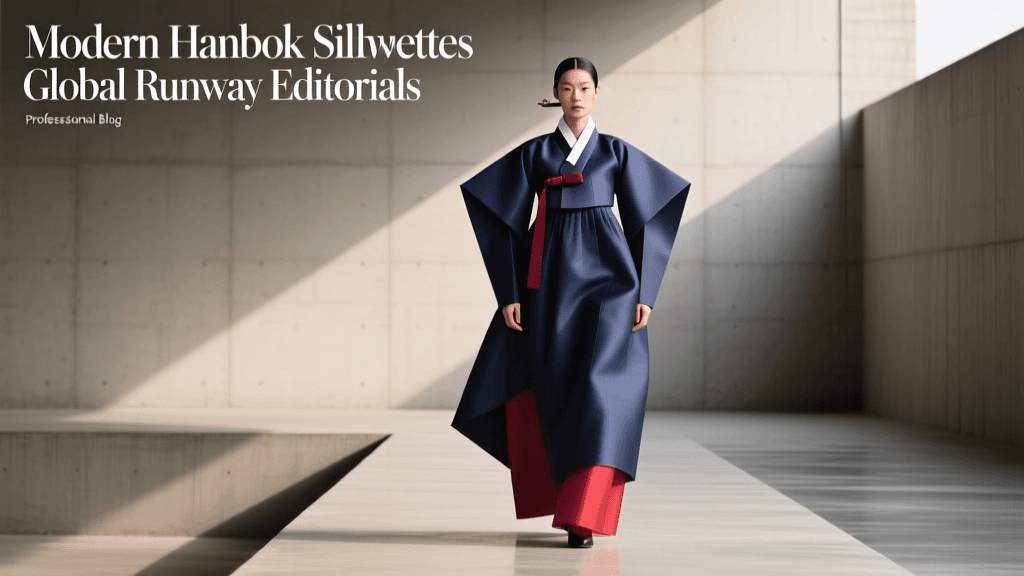
The traditional Hanbok is celebrated for its vibrant colors and simple, elegant lines, primarily consisting of the jeogori (upper garment) and the chima (wrap-around skirt) for women, or baji (trousers) for men. However, the 2026 editorial Hanbok focuses heavily on architectural volume and proportion manipulation.
Proportions and the Modern Jeogori
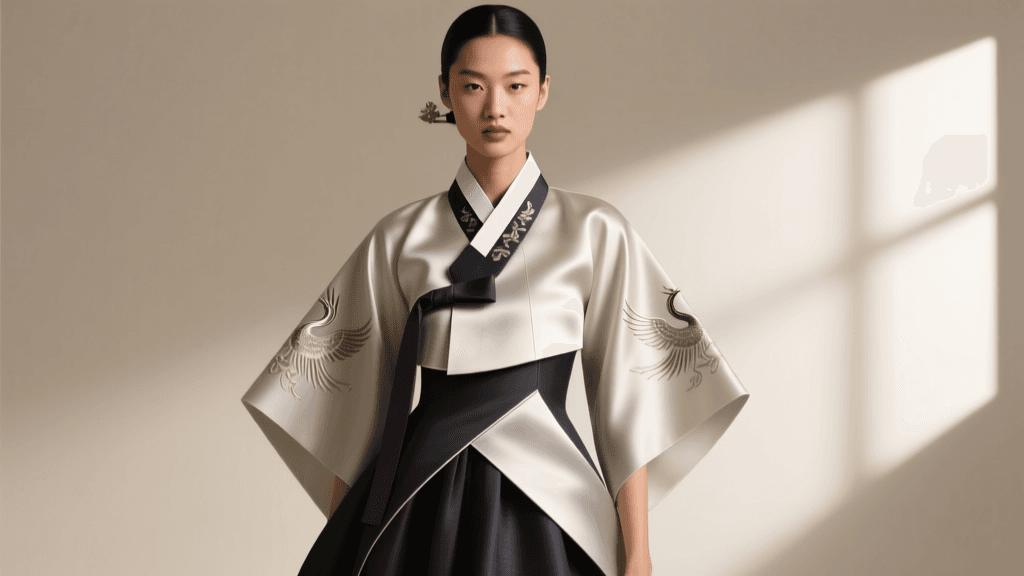
In contemporary high-fashion spreads, global stylists are radically altering the traditional proportions of the Hanbok. The standard jeogori, which historically falls just below the bust, is being cropped even further in 2026 editorials to sit precisely at 18 to 22 centimeters from the shoulder seam. This ultra-cropped silhouette highlights the high-waisted volume of the bottom garment.
Rather than the traditional bell-shaped chima, editorial stylists are frequently pairing these cropped jeogori with high-waisted, wide-leg wool trousers or structured tulle skirts. This creates a sharp, androgynous look that photographs beautifully for avant-garde fashion spreads. Furthermore, the traditional goreum (chest ties) are often replaced by minimalist magnetic closures or oversized, sculptural silk ribbons that trail dramatically down the back.
Fabric Innovation: Peace Silk and Metallic Organza
The textile choices for the 2026 editorial Hanbok reflect a global shift toward sustainable luxury. Traditional heavy brocades are being swapped for sustainable peace silk (ahimsa silk), which offers a matte, organic drape that catches studio lighting beautifully. For evening and haute couture editorials, metallic organza and laser-cut neoprene are being utilized to give the chima a futuristic, structural rigidity that holds its bell shape without the need for excessive petticoats.
The Qipao’s Evolution on the High-Fashion Runway
The Qipao, historically a symbol of 1920s and 1930s Shanghai modernity, has undergone a massive renaissance in global fashion media. As documented in the Metropolitan Museum of Art's Heilbrunn Timeline of Art History, the garment has always been a reflection of shifting cultural and social dynamics. In 2026, the editorial Qipao is defined by deconstruction and artisanal textile manipulation, moving far beyond the hyper-fitted, mass-produced stereotypes of the late 20th century.
Beyond the Silhouette: Artisanal Textile Manipulation
Global fashion directors in 2026 are prioritizing the surface design and structural deconstruction of the Qipao. The iconic mandarin collar (standing collar) is being reimagined—asymmetrical, open at the back, or extended into a subtle cowl drape. The traditional pankou (knotted buttons) are now being crafted from carved jade, recycled aerospace-grade aluminum, or 3D-printed bio-resins, serving as the focal point of the garment.
Fabric manipulation is paramount. Editorial Qipaos now frequently feature 3D floral embroidery, bias-cut heavy crepe de chine that clings to the body without restricting movement, and strategic cut-outs backed by sheer, laser-cut tulle. This approach honors the garment's form-fitting heritage while introducing a modern, breathable edge suitable for global red carpets and high-fashion covers.
Bespoke Measurements for the 2026 Qipao
If you are commissioning a bespoke editorial Qipao for a photoshoot or personal high-fashion wardrobe, standard measurements are entirely insufficient. To achieve the flawless, second-skin fit required by 2026 fashion media standards, you must provide your tailor with the following advanced metrics:
- Shoulder Slope: Measured from the base of the neck (C7 vertebra) to the acromion (shoulder bone). This prevents the fabric from pulling across the collarbone.
- Apex to Hollow Drop: The distance from the collarbone hollow to the bust apex. This ensures that any 3D embroidery or pankou placements sit perfectly on the bodice without warping.
- Hollow to Hem (with footwear): The Qipao slit must be calculated based on the exact heel height you intend to wear. In 2026 editorials, the slit typically begins exactly 2 inches above the knee when standing, allowing for dramatic movement when walking.
- Bicep and Wrist Circumference: Crucial for the cap sleeves, ensuring the armhole is high and tight enough to prevent bunching when the arms are raised.
2026 Editorial Styling Comparison: Hanbok vs. Qipao
When planning an editorial shoot or curating a high-fashion wardrobe, understanding the distinct visual impacts of these two garments is crucial. Below is a comparison chart detailing how stylists are utilizing both garments in 2026.
| Feature | 2026 Editorial Hanbok | 2026 Editorial Qipao |
|---|---|---|
| Core Silhouette | Architectural, Voluminous, Cropped | Columnar, Bias-Cut, Form-Fitting |
| Key 2026 Fabric | Sustainable Peace Silk, Metallic Organza | Heavy Crepe de Chine, 3D Laser-Cut Tulle |
| Styling Focus | Proportion play, wide-leg trousers, sculptural ties | Deconstructed collars, asymmetrical slits, modern pankou |
| Avg. Bespoke Cost | $850 - $1,400 USD | $1,200 - $2,500 USD |
| Best Editorial Footwear | Chunky lug-sole boots, minimalist leather mules | Pointed-toe slingbacks, sculptural architectural heels |
Sourcing Authentic Pieces for Your Editorial Wardrobe
Acquiring high-fashion, editorial-grade Asian traditional garments requires bypassing mass-market costume retailers and connecting directly with contemporary ateliers. For the modern Hanbok, the epicenter of innovation remains Seoul's Dongdaemun Design Plaza (DDP). Independent designers operating out of the DDP incubator spaces are leading the charge in creating ready-to-wear and bespoke Hanbok pieces that blend traditional sewing techniques with avant-garde tailoring. Expect to pay between $400 for a designer ready-to-wear cropped jeogori and upwards of $1,400 for a fully bespoke, hand-dyed silk ensemble.
For the Qipao, Shanghai's Former French Concession remains the global capital for bespoke tailoring. However, in 2026, the most sought-after editorial pieces are coming from a new wave of Shanghai-trained designers who have opened ateliers in Paris and London, blending traditional Chinese garment construction with European haute couture finishing techniques. When sourcing a Qipao, always request a 'toile' (muslin prototype) fitting before the final silk is cut, a standard practice in 2026 high-end bespoke tailoring that ensures the bias-cut fabric behaves correctly on your specific body geometry.
Cultural Appreciation in Modern Fashion Media
As the global fashion industry continues to embrace Asian heritage garments, the line between cultural appreciation and appropriation remains a critical topic of discussion. Institutions like the Victoria and Albert Museum's Asian collections emphasize the importance of understanding the historical, regional, and social contexts of these textiles before they are placed in front of a camera lens.
'The 2026 editorial mandate is clear: Asian heritage garments are not costumes to be worn for a seasonal theme; they are foundational pillars of global haute couture, requiring the same historical respect and technical understanding as any Western sartorial classic.'
For stylists and editors, this means crediting the specific regional origins of the textiles (such as distinguishing between Korean myeongju silk and Chinese xiangyunsha gambiered silk), hiring cultural consultants for major editorial spreads, and ensuring that the garments are constructed by artisans who are deeply embedded in the tradition. By prioritizing authenticity, technical precision, and cultural respect, the global fashion media of 2026 is finally giving the Hanbok and the Qipao the prestigious, enduring platform they deserve.