Modern Hanbok Styling 2026: Pairing Jeogori with Denim & Tailoring
The 2026 Renaissance of Saenghwal Hanbok
The global fashion landscape in 2026 has firmly embraced heritage silhouettes, moving traditional Asian garments out of the museum and into the daily rotation. Among the most prominent of these movements is the widespread adoption of saenghwal hanbok (everyday hanbok). No longer reserved strictly for the Chuseok harvest festival or weddings, the traditional Korean dress has been reimagined by contemporary designers to meet the demands of modern urban life. As sustainable fashion and cultural heritage continue to dominate 2026 style narratives, mixing traditional Korean pieces with Western tailoring and streetwear has become a hallmark of sophisticated, globally-minded dressing.
According to Encyclopædia Britannica's comprehensive guide to Hanbok, the fundamental structure of the hanbok—characterized by its vibrant colors and simple lines without pockets—has remained largely intact since the Joseon Dynasty. However, the 2026 iteration of the jeogori (traditional jacket) and chima (wrap skirt) prioritizes matte textiles, relaxed draping, and modular styling, allowing these historic garments to sit effortlessly beside raw denim and structured wool.
Deconstructing the Modern Jeogori
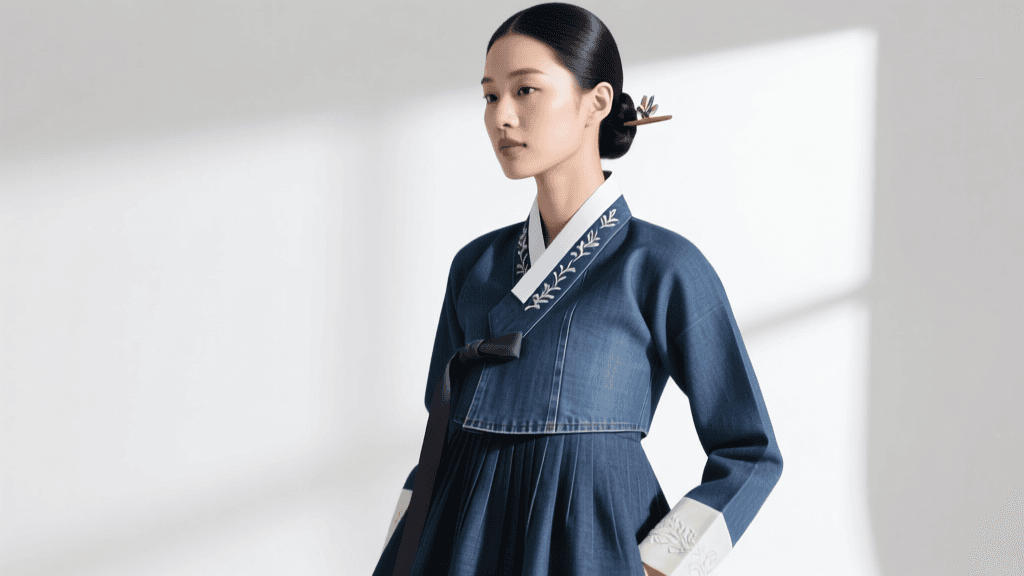
To successfully integrate the jeogori into a contemporary wardrobe, one must first understand its modernized anatomy. While ceremonial hanbok relies on stiff, glossy silks and rigid layering, the 2026 everyday jeogori is defined by its fluidity and matte finishes. Designers are currently favoring structured ramie-cotton blends, heavyweight linen, and matte crepe de chine. These fabrics allow the jacket to drape naturally over modern basics without adding unnecessary bulk.
Key structural elements remain, but with subtle tweaks for modern wearability:
- The Dongjeong (White Collar): Instead of a stiff, detachable paper-lined collar, modern jeogori feature soft, tonal cotton collars that mimic the traditional V-neckline without requiring meticulous daily maintenance.
- The Goreum (Chest Ribbon): The traditional long ribbon has been shortened in many 2026 collections to prevent it from catching on bags or desk edges, often secured with hidden magnetic snaps beneath the knot for all-day security.
- The Baerae (Sleeve Curve): The sweeping, curved underarm seam of the sleeve is slightly narrowed in modern cuts, allowing the jacket to slide easily under tailored overcoats and trench coats.
Lookbook: Mixing Jeogori with Contemporary Bottoms
The true test of heritage styling lies in contrast. Pairing the delicate, historical lines of the jeogori with rugged or highly structured modern bottoms creates a visual tension that is distinctly avant-garde.
The Boardroom: Jeogori and Wide-Leg Wool Trousers
For the modern office, the jeogori serves as an elegant alternative to the standard silk blouse. Choose a jeogori crafted from heavyweight ivory or slate-grey linen. Pair it with high-waisted, single-pleated wool trousers featuring a 2-inch cuff. The voluminous drape of the trousers mirrors the traditional paji (trousers) worn under historical hanbok, but the sharp wool crease grounds the outfit in contemporary corporate tailoring. Tuck the front hem of the jeogori slightly into the waistband to define the silhouette, and finish with minimalist leather loafers. According to recent cultural features on Korea.net's cultural coverage of modern heritage fashion, this blend of historical modesty and modern power-dressing is heavily favored by creative directors and architects in Seoul and London alike.
The Weekend: Cropped Jeogori and Raw Selvedge Denim
Streetwear in 2026 continues to lean into heritage workwear, making raw selvedge denim the perfect anchor for a cropped, boxy jeogori. Opt for a jeogori in a muted indigo or charcoal cotton-linen blend, featuring slightly shortened, straight sleeves. Pair this with 14oz raw indigo denim, cut in a straight or slight taper. The rigidity of the unwashed denim contrasts beautifully with the soft, rounded seams of the jeogori's baerae. Leave the goreum ribbon untied and hanging loose, or tie it in a simple, asymmetrical knot. Complete the look with retro-runner sneakers or suede desert boots.
The Chima (Wrap Skirt) Meets Modern Knitwear
The chima is a high-waisted, voluminous wrap skirt that can easily overwhelm a modern frame if not styled correctly. The secret to wearing the chima in 2026 without looking costumey is to balance its dramatic lower-half volume with fitted, textured knitwear on top.
A fine-gauge merino wool turtleneck in a deep, earthy tone—such as espresso or olive—tucked tightly into a high-waisted, A-line cotton chima creates a stunning, architectural silhouette. To further modernize the look, replace the traditional chest ties with a thin, high-quality leather belt worn over the skirt's waistband. This not only secures the heavy cotton fabric but introduces a distinctly Western accessory into the traditional ensemble. For cooler months, layer a cropped, boxy cashmere cardigan over the turtleneck, allowing the cardigan's hem to hit exactly at the chima's waistline.
2026 Hanbok Styling Matrix: Traditional vs. Modern
To help visualize how traditional elements translate into a 2026 mixed wardrobe, refer to the styling matrix below:
| Garment Element | Traditional Pairing | 2026 Modern Pairing | Best Occasion |
|---|---|---|---|
| Jeogori (Jacket) | Layered over inner garments with chima/paji | Worn as a blouse with wide-leg wool trousers | Office / Gallery Opening |
| Goreum (Ribbon) | Long, sweeping bow tied at the right chest | Shortened, asymmetrical knot or hidden magnetic snap | Streetwear / Commuting |
| Chima (Skirt) | Floor-length, heavily pleated silk | Midi-length, structured cotton-linen with leather belt | Brunch / Casual Friday |
| Footwear | Kkotsin (embroidered silk shoes) | Minimalist leather loafers or suede boots | All Daily Wear |
| Outerwear | Durumagi (traditional overcoat) | Oversized camel hair trench coat or wool topcoat | Autumn / Winter Layering |
Sourcing and Caring for Everyday Hanbok in 2026
Investing in high-quality saenghwal hanbok requires an understanding of modern textile care. Unlike the dry-clean-only silks of ceremonial wear, 2026 everyday pieces are designed for real life, though they still demand mindful maintenance.
- Washing Ramie and Linen Blends: Ramie is highly breathable but prone to stiffness if machine-dried. Always hand-wash ramie-cotton jeogori in cold water with a pH-neutral detergent. Reshape the garment while damp and lay flat to dry to preserve the curved baerae seams.
- Managing the Dongjeong (Collar): Even with modern treatments, the white collar can absorb skin oils. Spot-clean the collar immediately after wearing with a gentle enzyme stain remover, or use a removable, washable cotton collar liner designed specifically for modern hanbok.
- Storing the Chima: Do not hang heavy cotton or linen chima by the ties, as this will stretch the waistband and distort the wrap structure. Instead, fold the skirt along its natural pleats and store it flat in a cedar-lined drawer to protect the fibers from moisture and pests.
- Ironing: Always use a pressing cloth when ironing matte silks or structured linens. Press the goreum ribbon on a low heat setting to maintain its crisp edges, ensuring it ties into a sharp, defined knot.
Conclusion: Honoring the Silhouette
Mixing traditional Asian garments with modern wardrobes is not about erasing history; it is about allowing heritage to breathe and evolve. By pairing the elegant, architectural lines of the jeogori and chima with the rugged utility of denim and the sharp precision of modern tailoring, we create a 2026 wardrobe that is deeply rooted in culture yet entirely functional for contemporary life. As the boundaries of global fashion continue to dissolve, the everyday hanbok stands as a testament to the enduring power of thoughtful, historically-informed design.